
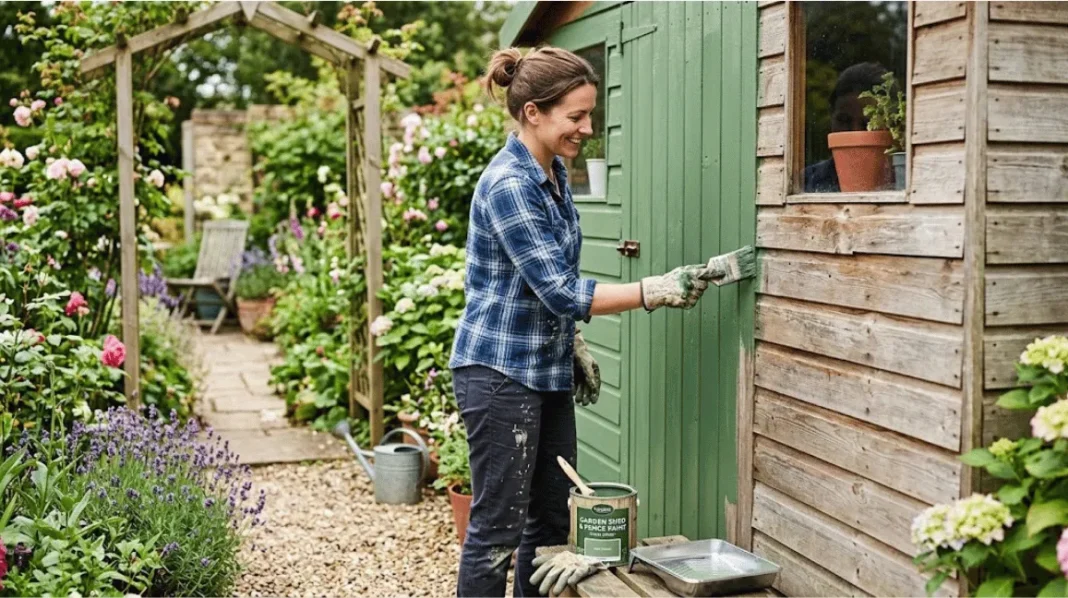
Choosing shed paint for a UK garden is mainly about matching the coating to the timber and its exposure. Rough-sawn boards often suit dedicated shed-and-fence treatments, while smoother timber may need a different exterior system. The right choice protects the wood, gives you the finish you want, and reduces unnecessary maintenance.
| Key decision | What to consider |
|---|---|
| Timber type | Rough-sawn, smooth-planed, pressure-treated or previously coated |
| Finish | Natural wood grain, translucent colour or opaque colour |
| Weather protection | Rain resistance, UV protection and stated protection period |
| Application | Brush, roller or compatible sprayer |
| Preparation | Cleaning, repairs, sanding and primer where required |
| Colour | Natural brown, green, grey, black, blue or a brighter feature shade |
| Maintenance | Check the maker’s stated protection period and recoat instructions |
For a wooden shed in the UK, choose an exterior coating that matches the timber type and any existing finish. Apply it only to sound, properly prepared wood, follow the maker’s coat and drying instructions, and prioritise weather protection over colour alone if the building sits in an exposed garden.
Key takeaways
Match the product to the timber before choosing a colour.
Dedicated shed-and-fence treatments are usually the simplest option for rough-sawn boards.
Opaque garden paints suit people who want a stronger colour change.
Choose a dry weather window and follow the temperature limits on the tin.
Preparation and product compatibility matter more than applying unnecessary extra coats.
How to choose shed paint for a UK garden
Start by checking the surface rather than the colour chart. Rough-sawn timber absorbs coatings differently from smooth-planed wood, and a product made for one surface may not suit another. Cuprinol, for example, specifies its 5 Year Ducksback for rough-sawn wood, while broader garden paints can suit several exterior surfaces.
Next, decide how much of the grain you want to see. A translucent stain or preservative keeps more of the timber character visible, while an opaque coating gives a stronger block of colour. UK buying guides commonly separate stains, preservatives and opaque exterior coatings because they produce different looks and maintenance requirements.
| Coating type | Best suited to | Appearance | Main advantages | Watch-outs |
|---|---|---|---|---|
| Shed-and-fence treatment | Rough-sawn sheds and fencing | Usually matt or translucent | Simple application, good weather protection | Check whether it suits smooth or previously coated timber |
| Opaque garden wood paint | Decorative sheds, summerhouses and garden features | Solid colour | Wider colour choice and greater visual change | Surface preparation becomes more noticeable |
| Woodstain or preserver | Timber where the grain should remain visible | Natural or translucent | Keeps more wood character | May not provide the solid colour some owners want |
The practical choice depends on your shed, not the product name on the front of the tin. Check the manufacturer’s suitable-surfaces section, especially if the structure has an old oil-based, wax-rich or unknown finish. A small test patch can also reveal poor adhesion before you coat an entire wall.
Current UK options compared
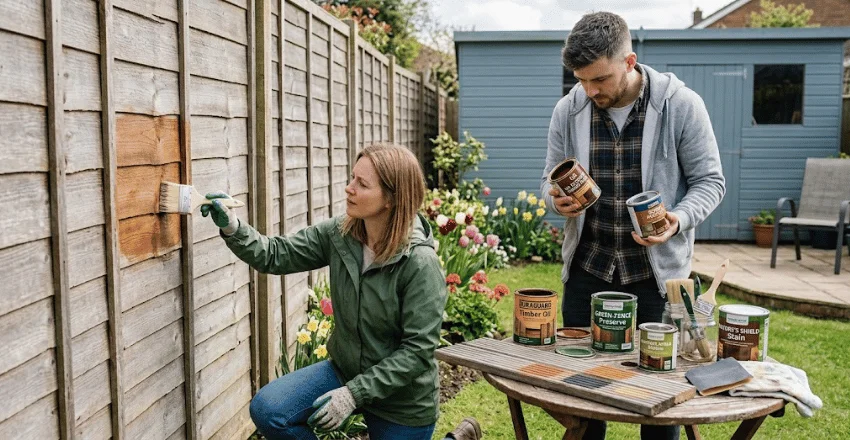
Several familiar UK ranges take different approaches to exterior garden timber. Manufacturer protection periods are useful comparison points, but they assume correct preparation, application and maintenance. Weather exposure and timber condition can shorten the useful life of any coating.
| Product | Intended use | Manufacturer claim | Pros | Watch-outs |
|---|---|---|---|---|
| Cuprinol 5 Year Ducksback | Rough-sawn sheds and fences | Up to 5 years; showerproof in 1 hour | Water-based, wax-enriched and purpose-made for rough timber | Manufacturer warns performance can fall on grey, weathered smooth wood |
| Cuprinol Garden Shades | Garden wood and selected other outdoor surfaces | Up to 6 years on wood; 2 coats | Broad decorative use and semi-matt finish | Not intended for decking; apply in suitable dry conditions |
| Ronseal Garden Paint | Wood, brick, terracotta, metal and stone | Colour protection up to 10 years; rainproof in 1 hour | Useful when several garden features need coordinated colour | Not suitable for decking, plastic, iron or walked-on areas |
| Sadolin Shed & Fence All Weather Barrier | Rough-sawn sheds and fences | Up to 5 years; showerproof in 30 minutes | Two-coat system with wax-enriched water repellency | Designed around brush application and rough-sawn timber |
We recommend choosing by substrate first, then brand. For a typical rough-sawn storage shed, a dedicated shed-and-fence treatment is the most direct fit. If colour choice or matching other garden features matters more, an exterior garden paint approved for your timber can be the better option.
Choosing a colour that works with your garden
Greens, charcoal greys and natural browns help a large garden building sit more quietly among planting and fencing. Lighter greys, pale greens and blues can make a small structure feel brighter, while a contrasting door or trim adds detail without repainting every surface in a bold shade. Current UK inspiration pages continue to feature sage, grey, coastal blues, black and traditional wood tones.
Think about the whole outdoor space before settling on a colour. Pageify’s guide to improving a garden or yard can help you coordinate storage, planting, paths and boundaries. Its article on landscaping within a wider home renovation and the wider Home Improvement section also provide useful ideas for planning exterior projects together.
How much coating will you need?
Use the coverage figure printed on the product rather than relying only on the shed’s nominal size. Measure the paintable wall area, subtract large doors and windows, then multiply by the required number of coats. Rough or weathered timber can absorb more product, so buying with a modest allowance reduces the chance of stopping midway through a coat.
A simple example shows why the calculation matters. If your shed has about 9m² of paintable wall area, two coats mean roughly 18m² of total coverage. At a stated rate of 6 m² per litre, that works out at around 3 litres before allowing for absorption and touch-ups. Sadolin currently states 6 m² per litre for its shed-and-fence product, while other products publish different coverage figures.
How to prepare and paint a wooden shed
Good preparation gives the coating a clean, stable surface to grip. Dirt, algae, loose material and flaking old coatings can weaken the new finish. B&Q and other UK shed guides also advise working with dry timber and removing damaged or loose surface material before coating.
Inspect the timber. Check for rot, loose boards, protruding fixings and damaged sections before decorating.
Confirm product compatibility. Read the tin or technical sheet for suitable timber types and previous coatings.
Clean the surface. Brush away dirt, cobwebs, algae and loose debris, then allow washed timber to dry.
Repair and sand where needed. Fill suitable defects and remove flaking old coatings or rough edges.
Prime only when the system requires it. Some exterior coatings are self-priming, while others benefit from a separate wood primer.
Apply the stated number of coats. Work with the grain and follow the manufacturer’s coverage and drying instructions.
Allow the finish to cure. Keep an eye on rain, temperature, and recoat times rather than rushing the second application.
Pressure-treated timber deserves extra attention because it can retain moisture after treatment. Wait until the surface is sufficiently dry and follow the shed supplier’s coating advice rather than using a fixed waiting period for every building. Paint makers also set their own temperature and weather limits, so the product label should take priority over generic DIY advice.
Pick the right weather window
A dry, settled spell makes application easier and gives the coating time to form properly. B&Q recommends painting only when the timber is completely dry, and rain is not expected for the next few days. Cuprinol Garden Shades also specifies dry conditions and temperatures above 5°C.
Late spring through early autumn often provides more suitable opportunities in the UK, but the forecast matters more than the month. Avoid starting on damp boards after overnight rain, and be cautious with intense direct sun if it dries the surface too quickly. Always use the individual product instructions as your final guide for temperature, rain resistance and recoating.
Mistakes that shorten the life of the finish
Several common problems begin before the brush reaches the timber. Most are avoidable if you check the substrate, weather and product instructions first. Correcting them beforehand is easier than stripping a failed coating later.
Painting timber that is still damp.
Applying a product that does not suit the existing coating.
Leaving loose or flaking material beneath the new finish.
Ignoring damaged timber and expecting the coating to hide it.
Applying the next coat before the stated recoat time.
Buying exactly the theoretical quantity with no allowance for absorbent wood.
Another mistake is assuming that more coats always mean more protection. Manufacturers formulate products around specific coat numbers and film thicknesses, so extra layers are not automatically an improvement. Follow the stated system, and concentrate on even coverage and preparation instead.
Verdict: Which option should you choose?
For a standard rough-sawn timber shed, start with a treatment specifically approved for rough garden wood. Choose an opaque exterior garden paint when colour is the priority and the manufacturer approves your surface. If you want the grain to remain visible, a suitable exterior stain or preservative is usually the more natural-looking route.
Before buying, check four details in the technical information: suitable surfaces, number of coats, coverage per litre and weather requirements. Measure the building, inspect its existing finish and then compare products that genuinely match those conditions. Once you have that information, you can buy the right quantity and plan the job around a suitable dry spell.
FAQs
What is the best shed paint for a wooden shed?
No single product suits every wooden building. For rough-sawn timber, a dedicated shed-and-fence treatment is often the simplest choice, while smooth or decorative timber may suit an approved exterior garden coating. Match the product specification to the surface, existing finish, and level of exposure before brand or colour becomes the deciding factor.
Do I need to sand a shed before painting it?
New, sound timber may need little sanding if the chosen product allows direct application. Remove loose, peeling, or failing material from previously coated timber so the new finish can bond to a stable surface. Light sanding can also smooth repaired areas and obvious roughness before coating.
Do I need primer on a wooden shed?
Not every coating needs a separate primer. Some garden wood products are designed for direct application, while other systems specify primer on bare timber or when changing colours. Read the technical instructions for your chosen coating rather than assuming one rule applies to every shed.
How many coats should I apply?
The right number depends on the product and the surface condition. Current examples such as Cuprinol Garden Shades and Sadolin Shed & Fence specify two coats, while other ranges have their own instructions. Follow the product guidance because colour change, timber absorption and previous treatments can affect the result.
Can I paint a pressure-treated shed?
Yes, as long as the timber is ready to accept the chosen coating. Freshly pressure-treated wood can retain moisture, so allow it to dry and follow the building supplier’s advice before decorating. Also check coating compatibility, because a dry surface alone doesn’t guarantee every product will bond correctly.