
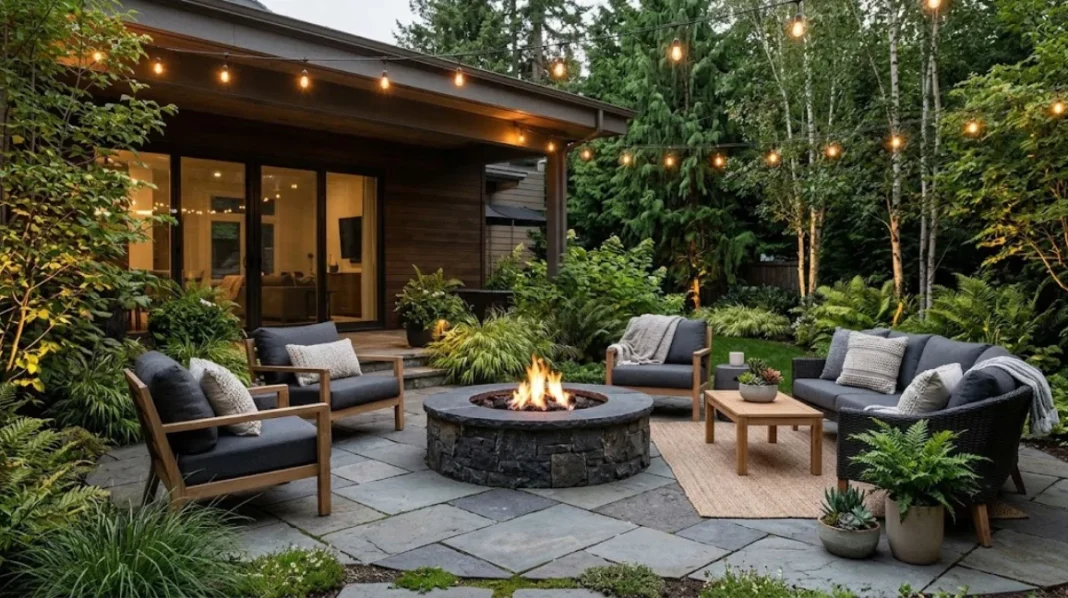
Good patio ideas should make your garden more useful, comfortable, and attractive throughout the year. The strongest designs balance seating, planting, privacy, drainage, and practical maintenance. You don’t need a huge garden or an equally huge budget.
A successful outdoor space starts with how you plan to use it. Dining areas need different layouts from quiet reading corners or family spaces. Your paving, furniture, lighting, and planting should support that purpose.
Quick answer: Start by deciding whether your outdoor area is mainly for dining, relaxing, entertaining, or several uses. Choose weather-suitable materials, leave comfortable walking routes, and add planting around hard surfaces. Good lighting, privacy, drainage, and correctly sized furniture can make even compact UK gardens feel welcoming.
| Design decision | Practical approach |
|---|---|
| Main use | Dining, relaxing, entertaining, cooking, or mixed use |
| Paving | Porcelain, natural stone, concrete paving, brick, or gravel details |
| Furniture | Choose pieces that fit without blocking movement |
| Privacy | Trellis, planting, screens, pergolas, or fencing |
| Planting | Pots, borders, climbers, raised beds, or small trees |
| Lighting | Layer wall, table, festoon, and low-level lighting |
| Weather | Plan shade, drainage, wind protection, and storage |
| Small spaces | Use vertical planting and multifunctional furniture |
Key Takeaways
- Plan the function before choosing paving or furniture.
- Keep small spaces simple and avoid oversized furniture.
- Use planting to soften large areas of hard landscaping.
- Add height with trellis, climbers, pergolas, or small trees.
- Mix practical lighting with softer decorative lighting.
- Think about water drainage before laying new hard surfaces.
- Repeat colours and materials for a more connected design.
15 Patio Ideas That Work Well in UK Gardens
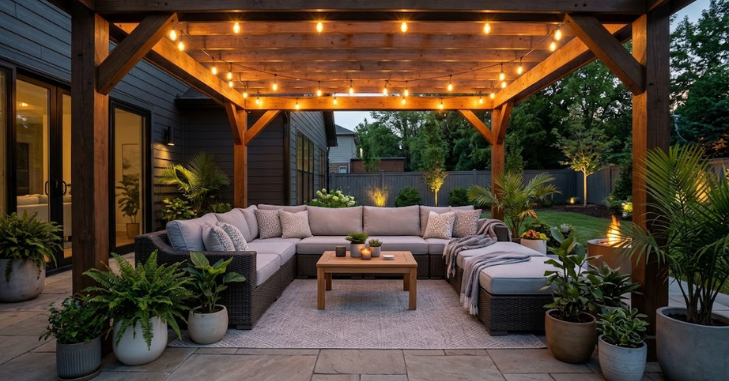
1. Create a Proper Outdoor Dining Zone
Place patio dining furniture where carrying food from the kitchen remains convenient. Leave enough room behind chairs for people to move comfortably. A large parasol can provide useful shade during brighter summer days.
Keep the surrounding design simple if your table becomes the main feature. Planters can define the dining zone without creating permanent walls. Herbs near the table also add scent and useful ingredients.
2. Build a Relaxed Lounge Area
Patio Ideas such as deep chairs or a compact outdoor sofa can create a comfortable place for slower afternoons. Choose proportions carefully because bulky furniture quickly dominates smaller gardens. Weather-resistant cushions make regular maintenance easier.
Position seating towards the most attractive garden view where possible. This might be a planted border, ornamental tree, or feature pot. Avoid facing every chair directly towards a plain fence.
3. Use Large Paving Slabs in Small Gardens
Larger slabs can create fewer visual breaks across a compact surface. A restrained laying pattern also keeps the finished area calmer. Pale or mid-toned surfaces can help darker gardens feel brighter.
Always judge paving samples outdoors before making your decision. Colours can look different under natural light and when wet. Consider how the material will work beside your brickwork, fencing, and planting.
4. Mix Paving With Gravel
Combining paving and gravel can reduce the appearance of one large hard surface. Gravel strips can separate seating from planted areas or soften edges. They can also introduce useful texture without adding another strong colour.
Choose an aggregate that complements the main paving rather than competing with it. Use appropriate edging to keep loose material where intended. Good preparation underneath also reduces movement and unwanted plant growth.
5. Bring Planting Right Up to the Seating Area
Plants prevent outdoor seating spaces from feeling detached from the wider garden. Use pots, borders, raised beds, or narrow planting pockets around the edges. A mixture of heights creates a softer transition from paving.
Repeat several plants rather than filling every container with something different. Repetition gives the scheme a stronger visual connection. Evergreen structure can keep the area attractive outside peak flowering months.
6. Add Trellis for Privacy and Planting
Trellis can increase privacy without creating the weight of another solid wall. It also gives climbing plants valuable vertical growing space. This approach works especially well beside seating and dining areas.
Pageify’s garden trellis guide explains different structures, climbers, and screening approaches for UK gardens. Use strong supports for plants that become heavy with age. Always consider the eventual width and height before planting.
7. Use a Pergola to Define the Space
A pergola can make an open seating zone feel more deliberate. The frame creates height while leaving useful views across the garden. It can also support climbers, lights, or suitable seasonal shade.
Avoid choosing a structure that overwhelms a narrow plot. Mark its footprint on the ground before buying anything. Then place your furniture inside that footprint to test circulation.
8. Make Furniture Work Twice
Storage benches are useful where floor space is limited. They provide seating while holding cushions, garden accessories, or children’s outdoor items. Folding tables can perform a similar role in narrow gardens.
Furniture should earn the space it occupies in compact plots. Stackable chairs and nesting tables provide flexibility when guests arrive. They can then be reduced or stored between gatherings.
9. Turn a Corner Into a Quiet Retreat
Unused corners can become effective reading or coffee spaces. Add one comfortable chair, a small table, and several well-chosen plants. The result needs less space than a full furniture set.
Use planting or a partial screen to create a stronger sense of enclosure. A small ornamental tree can provide height without adding another structure. Keep the route into the corner clear and inviting.
10. Add Warm Lighting for Evenings
Lighting extends how long you can comfortably use an outdoor seating area. Combine practical illumination with softer lights that create atmosphere. Avoid making every part of the garden equally bright.
Wall lights can help near doors and frequently used routes. Low-level fittings can highlight planting or changes in level. Battery or solar table lights can add softer light without complicated installation.
11. Use Colour Without Overloading the Space
Choose a restrained base palette across paving, furniture, pots, and boundaries. Then introduce stronger colours through cushions, flowers, or smaller accessories. These items are easier to change as tastes develop.
Painted timber can connect sheds, fencing, and seating visually. Pageify’s shed paint guide covers exterior colours and maintenance considerations for garden timber. Repeating one finish can make separate elements feel intentionally connected.
12. Plan Around the Sun and Shade
Watch your garden at several times before fixing the main seating position. Morning sun may suit breakfast areas better than evening entertaining. Strong afternoon sun can make exposed seating uncomfortable during warmer periods.
Shade can come from parasols, trees, pergolas, or suitable planting. Avoid blocking valuable light simply to follow a design trend. Your layout should suit the actual orientation of your home.
13. Include a Small Outdoor Cooking Area
An outdoor cooking zone doesn’t require a large built-in kitchen. A barbecue and small preparation surface may provide everything you need. Keep circulation clear around hot equipment and busy dining areas.
Store cooking tools somewhere dry and convenient when possible. Keep combustible materials away from heat sources according to product guidance. A simple arrangement is often easier to maintain than a large permanent installation.
14. Soften Boundaries With Vertical Planting
Walls and fences offer useful growing space when ground area is limited. Climbers can add flowers, greenery, scent, and seasonal change. Wall-mounted planters can create similar effects in suitable positions.
Vertical planting works particularly well beside paved gardens with limited soil. It can also disguise unattractive boundaries without sacrificing much floor area. Match every plant to available light and watering conditions.
15. Connect the Garden With the House
Repeat one material, colour, or visual detail from the house outside. This can make the transition through doors feel more natural. It works particularly well around modern extensions and wide glazed openings.
Pageify’s guide to the role of landscaping in home renovation explores this connection in more detail. You don’t need identical indoor and outdoor materials. A related tone or texture is often enough.
How to Make a Small Outdoor Space Feel Bigger
Keep the number of competing materials under control. Too many paving types, furniture finishes, and colours can make a compact plot look fragmented. A simpler palette usually gives the eye fewer interruptions.
Use the boundaries rather than filling the centre with objects. Vertical planting, slim storage, and built-in seating can preserve valuable floor space. Leave some open paving so the arrangement doesn’t feel crowded.
Choose one clear focal point at the far side. A statement planter, small tree, bench, or attractive screen can draw attention through the garden. This encourages the eye to travel beyond the immediate seating area.
Choosing Materials for British Weather
Porcelain is popular because it offers consistent finishes and many contemporary designs. Natural stone brings more variation and can suit traditional settings. Concrete paving offers broad choices across different budgets and styles.
Slip resistance deserves attention wherever surfaces become wet. Check the manufacturer’s intended outdoor use before purchasing paving. Maintenance needs can also vary significantly between products and finishes.
Drainage matters regardless of the surface you choose. Water should move away from buildings and avoid collecting in low points. More complex levels or drainage problems may justify professional advice.
Think About Drainage Before You Start
Hard landscaping changes how rain moves through a garden. Avoid creating falls that direct water towards the house. Keep existing drainage routes in mind when changing levels.
Rules can differ according to property type, location, and the work involved. Front gardens have additional considerations around permeable surfacing and rainwater management. Check current Planning Portal and local authority guidance before significant work.
Pageify’s driveway guide also explains surface drainage principles for UK homeowners. Although driveways have different requirements, several water-management principles remain useful. Planning drainage early is easier than correcting standing water later.
Common Design Mistakes to Avoid
Don’t buy furniture before measuring the available space carefully. Leave room for doors, chairs, people, and frequently used routes. A showroom arrangement can feel much larger once placed at home.
Don’t cover every available surface with hard landscaping. Plants add shade, movement, wildlife value, and seasonal interest. They also make seating areas feel connected with the garden.
Avoid copying an attractive photograph without considering your own conditions. Orientation, privacy, drainage, maintenance, and storage needs vary between homes. Good design adapts inspiration rather than reproducing it blindly.
Create an Outdoor Space That Fits Your Home
The strongest designs begin with daily use rather than decoration alone. Decide where people will sit, walk, eat, store items, and enjoy planting. Then choose materials and furniture that make those activities easier.
You can improve many gardens gradually instead of completing everything at once. Start with layout and drainage before spending heavily on finishing details. Planting, lighting, and accessories can then develop around that framework.
For more practical outdoor guidance, explore Pageify’s Home Improvement coverage alongside its trellis, landscaping, shed-finish, and driveway resources. Those guides can help you plan connected changes across the whole property. A thoughtful plan usually produces a better result than adding features individually.
Frequently Asked Questions
Which patio ideas are best for a small UK garden?
Start with compact furniture, vertical planting, and a limited material palette. Built-in benches and folding furniture can preserve valuable circulation space. Large-format paving may also create a calmer appearance.
What is the easiest way to improve an existing outdoor seating area?
Start with cleaning, planting, furniture arrangement, and lighting before replacing the surface. These changes can improve how the space feels without major construction. New pots or cushions can also introduce colour cheaply.
What colours make a small garden feel bigger?
Lighter neutral surfaces can help reflect available light in darker spaces. Keeping the overall palette consistent can also reduce visual clutter. Use stronger colours as controlled accents through flowers and accessories.
Do I need planning permission for a new paved area?
Many ordinary ground-level garden projects don’t need planning permission, but exceptions exist. Front gardens, listed buildings, major level changes, and restricted properties can involve different rules. Always check current guidance before starting substantial work.
How can I make an outdoor seating area more private?
Combine planting with trellis, screens, or carefully positioned structures. Partial screening often feels less enclosed than covering every boundary. Consider neighbouring light and applicable boundary rules before adding height.