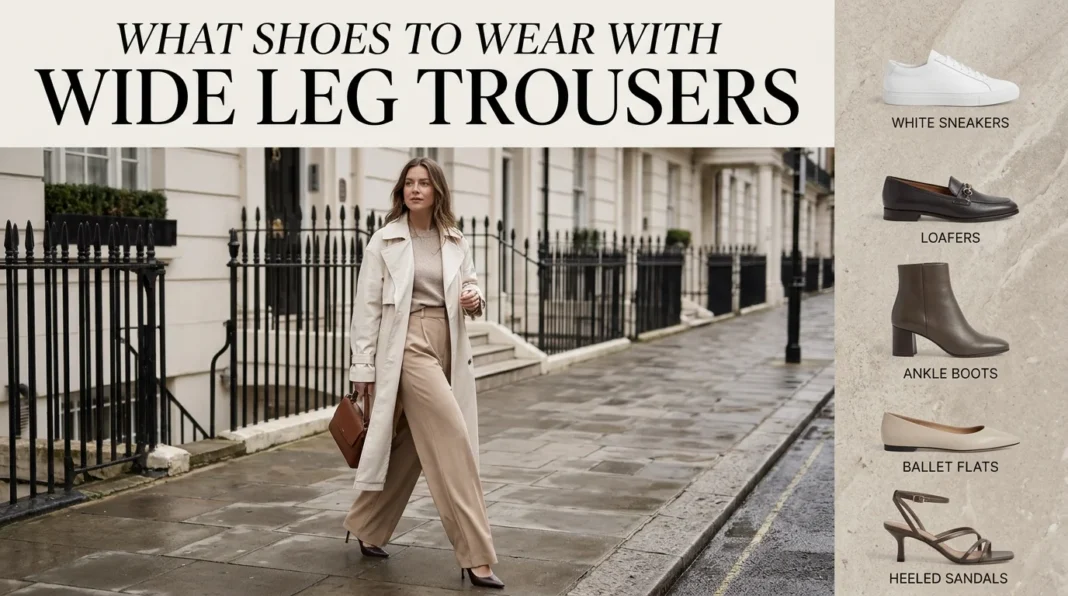
Wide-leg trousers can work with trainers, loafers, boots, flats and heels. The best choice depends on the hem, fabric and occasion. UK weather also makes sole height and ground clearance worth considering.
Direct answer: If you’re wondering what shoes to wear with wide leg trousers, start with the trouser length. Trainers and loafers suit everyday outfits, while pointed heels sharpen tailored pairs. Ankle boots work well in colder weather, and platforms add useful height beneath longer hems.
| Shoe style | Best with | Ideal occasion | Main advantage |
|---|---|---|---|
| Low-profile trainers | Full-length or cropped trousers | Casual days and commuting | Comfortable and modern |
| Loafers | Tailored or cropped styles | Work and smart casual | Polished without heels |
| Pointed heels | Tailored full-length pairs | Office and evening | Creates a longer visual line |
| Ankle boots | Full-length trousers | Autumn and winter | Warm and practical |
| Ballet flats | Cropped or ankle-length pairs | Mild days and smart casual | Light, understated finish |
| Platforms | Long or floor-skimming hems | Casual or evening | Adds comfortable height |
| Strappy sandals | Linen and flowing trousers | Summer and events | Keeps the outfit visually light |
| Block heels | Tailored or occasion trousers | Work, weddings and dinners | Height with more stability |
Key Takeaways
- Check where the hem falls while wearing your chosen shoes.
- Low-profile trainers are an easy everyday option.
- Loafers make tailored trousers feel polished without becoming formal.
- Pointed shoes help create a longer, cleaner line.
- Boots are useful for wet and colder UK weather.
- Platforms can stop longer trousers touching the pavement.
- Cropped trousers give you more freedom to choose statement footwear.
- Match shoe weight to the fabric and volume of your trousers.
What Shoes to Wear With Wide Leg Trousers for Different Outfits
There isn’t one footwear style that suits every pair. A cropped linen design behaves differently from long wool tailoring. Start with hem length, then consider the setting and weather.
A useful rule is to look for either balance or contrast. Substantial shoes can balance heavier fabric and generous volume. Slimmer footwear can create a sharper contrast beneath flowing fabric.
1. Low-Profile Trainers for Everyday Wear
Clean trainers are one of the easiest choices for relaxed outfits. Slimmer shapes usually sit neatly beneath a flowing trouser leg. They also work well for commuting, shopping and weekends.
Avoid letting the hem drag beneath the heel. The relationship between trainer shape and trouser length matters here. Try the full outfit before leaving home, and walk a few steps.
White, cream and neutral trainers work with many colour schemes. Darker footwear can suit autumn outfits or heavier materials. Keep the upper simple if your trousers already make a strong statement.
2. Loafers for Work and Smart-Casual Dressing
Loafers add structure without requiring a heel. They pair especially well with tailored or slightly cropped wide-leg cuts. A thicker sole can also provide useful clearance on wet pavements.
Choose a sleek loafer for formal workwear. Chunkier versions create more contrast with soft or flowing trousers. Both approaches can work when the hem sits cleanly above the shoe.
For colder styling ideas, Pageify’s burgundy tights guide covers loafers alongside boots and other seasonal footwear. Its colour advice can also help with autumn outfits. Black, chocolate and burgundy are easy starting points.
3. Pointed Heels for a Sharper Silhouette
Pointed heels work especially well beneath tailored trousers. The visible toe continues the visual line beyond the hem. That effect can make an outfit feel lighter and more polished.
You don’t need a high stiletto to achieve it. Kitten heels and low pointed courts give a similar shape with less height. A block heel adds more stability for longer periods on your feet.
Keep the trouser hem close to the top of the shoe. Too much fabric can hide the pointed shape completely. A small amount of visible toe is usually enough.
4. Ankle Boots for Autumn and Winter
Ankle boots are practical when British temperatures fall. A slim shaft fits under most wide trouser legs without adding bulk. Leather or weather-resistant finishes also handle damp streets better.
Pointed boots give tailoring a sharper finish. Rounder or heavier boots feel more relaxed with denim and thicker fabrics. Choose enough sole height to keep longer hems away from puddles.
Boots also work naturally with outerwear. Pageify’s women’s barn jacket guide pairs practical jackets with trousers and ankle boots. That combination suits everyday autumn dressing particularly well.
5. Ballet Flats for Cropped and Ankle-Length Styles
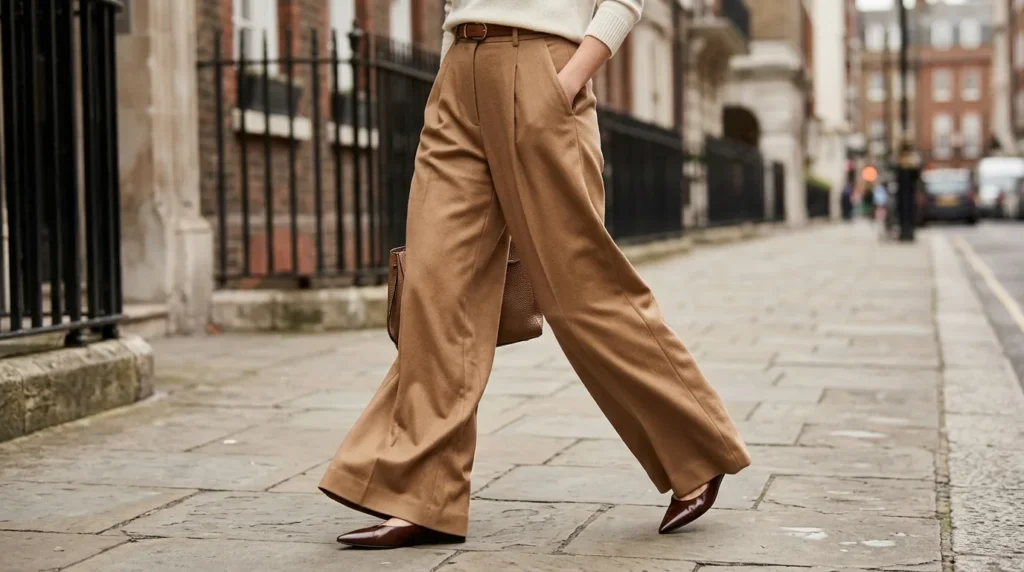
Ballet flats create a light finish beneath shorter hems. They work best when the trousers leave enough shoe visible. A square or pointed toe can add more definition.
Be more careful with floor-length pairs. A thin sole may leave too little clearance between the fabric and pavement. That becomes inconvenient during wet UK weather.
Flats suit lighter fabrics particularly well. Linen, soft tailoring and fluid materials create less visual weight around the shoe. A simple leather or suede finish keeps the outfit restrained.
6. Platforms for Longer Hems
Platforms are useful when trousers are deliberately long. They add height without placing all the pressure on a narrow heel. They can also balance the volume of wider silhouettes.
Choose the platform before altering the trousers. Hemming them for flat shoes may make them too short with elevated footwear. The reverse can leave excess fabric pooling around your feet.
Keep the rest of the shoe fairly simple. Heavy platforms already create a strong base. Too many extra details can compete with the volume above them.
7. Strappy Sandals for Summer
Minimal sandals work well with linen and other lightweight fabrics. Their open construction creates contrast with a generous trouser leg. They are especially useful for holidays, weddings and warm evenings.
A small heel can provide enough clearance for longer styles. Flat sandals suit cropped trousers more easily. Avoid letting delicate straps disappear beneath fabric that touches the ground.
Neutral metallics, tan and black are easy to coordinate. Loose matching with a bag can also create cohesion. Exact colour matching isn’t necessary.
8. Block Heels for Comfortable Height
Block heels sit between flats and narrow heels. They provide useful height while offering a broader base. This makes them practical for workdays and longer events.
They suit tailored trousers, flowing occasion styles and jumpsuit-like silhouettes. Choose a cleaner shape when the trouser fabric is already textured. A simpler shoe usually keeps the proportions controlled.
Block heels can also solve minor hem problems. An extra few centimetres may stop fabric brushing the floor. Check the length before assuming the trousers need altering.
Match Your Shoes to the Trouser Length
Full-length trousers need careful footwear planning. The hem should fall cleanly without getting caught under your heel. Try them with the shoes you’ll wear most often.
Cropped trousers put more visual emphasis on footwear. Loafers, flats, trainers and ankle boots can all become part of the outfit. You can also use colour because more of the shoe remains visible.
Floor-skimming styles usually benefit from some sole height. Platforms, block heels and substantial trainers can all provide it. The aim is practical clearance, not height for its own sake.
Which Shoes Work Best for Petite Wearers?
Petite styling depends more on proportions than fixed rules. Keeping the trouser and shoe colours similar can create a continuous visual line. Pointed toes can produce a similar effect without requiring high heels.
Avoid excessive pooling around the ankle. Too much fabric can overwhelm a smaller frame and hide the footwear. Tailoring the hem can make a bigger difference than changing the shoe.
Platforms can work when you want extra height. Low pointed shoes are another useful option for dressier outfits. Choose whichever lets you walk comfortably and keeps the trouser line clean.
What Should You Wear to Work?
For most offices, loafers, pointed courts and simple ankle boots are dependable choices. Clean trainers may also work in relaxed workplaces. Let your dress code guide the final decision.
Tailored trousers usually look strongest with structured footwear. Smooth leather, suede and simple hardware all work well. Avoid overly sporty details if the rest of the outfit is formal.
Pageify’s black pencil skirt guide also covers loafers, court shoes, boots and clean trainers for workwear. Those same footwear categories transfer easily to trouser-based office outfits. This can make a small shoe collection more versatile.
Match the Shoe Weight to the Fabric
Heavy wool, denim and thick twill can support chunkier footwear. Boots, substantial loafers and platforms provide enough visual weight. Thin sandals may look disconnected beneath these fabrics.
Linen and fluid tailoring usually suit lighter shoes. Flats, slim trainers and simple sandals maintain the softer effect. A narrow pointed shoe can also provide deliberate contrast.
This fabric-first approach helps when individual trends feel confusing. Instead of asking whether a shoe is fashionable, check whether its scale suits the trousers. That makes combinations easier to repeat season after season.
Common Styling Mistakes to Avoid
The first mistake is ignoring the hem. Shoes can look perfect when you’re standing still but catch the fabric when you walk. Always test the outfit in motion.
Another problem is adding too much visual weight. Wide trousers, oversized outerwear and chunky shoes can overwhelm each other. Keep at least one part of the outfit cleaner or more fitted.
Finally, don’t buy new footwear before checking your wardrobe. You may already own trainers, loafers or boots that solve the problem. Pageify’s wider fashion coverage offers more ideas for building outfits around existing pieces.
A Simple UK Shoe Formula
For everyday wear, start with low-profile trainers or loafers. Choose ankle boots when the weather turns wet and cold. Add pointed or block heels for a smarter finish.
Keep platforms for longer hems that need extra clearance. Use flats and sandals more freely with cropped trousers. This small rotation can cover most work, weekend, and evening outfits.
The best pairing should also feel comfortable for your day. An outfit loses its appeal when you cannot walk confidently in it. Fit and practicality should come before a strict styling rule.
Frequently Asked Questions
What shoes to wear with wide-leg trousers if you want to look taller?
Pointed shoes, platforms and heels can all create a longer visual line. Similar shoe and trouser colours can also reduce visual breaks. Correct hem length matters as much as heel height.
Can you wear trainers with wide-leg trousers?
Yes, trainers work particularly well for casual and smart-casual outfits. Low-profile styles create a clean finish beneath wider hems. Chunkier trainers can suit heavier fabrics or more relaxed outfits.
Can you wear loafers with wide-leg trousers?
Yes, loafers work well with tailored and cropped styles. They add structure without requiring a heel. Thicker soles also provide useful ground clearance.
What shoes are best with wide-leg trousers in winter?
Ankle boots and substantial loafers are practical cold-weather choices. Leather and weather-resistant finishes handle damp conditions better than delicate shoes. Make sure longer hems stay clear of wet pavements.
Which shoes work with cropped wide-leg trousers?
Cropped styles work with flats, loafers, trainers, sandals and ankle boots. Because the shoe remains visible, shape and colour become more noticeable. This is a good place to use statement footwear.
Should wide-leg trousers cover your shoes?
They can cover part of the shoe, but they shouldn’t create a walking hazard. A small amount of visible toe often keeps the outfit defined. The fabric should also stay clear of the ground.
Choose the Shoe Around the Hem First
Start with the trouser length before thinking about trends. Then choose footwear for your routine, weather and preferred level of formality. This approach makes wide-leg outfits easier to repeat.
Trainers and loafers handle most everyday situations. Boots make sense during colder UK months, while heels and platforms add height when needed. Once the hem works, the rest of the outfit usually becomes much simpler.