
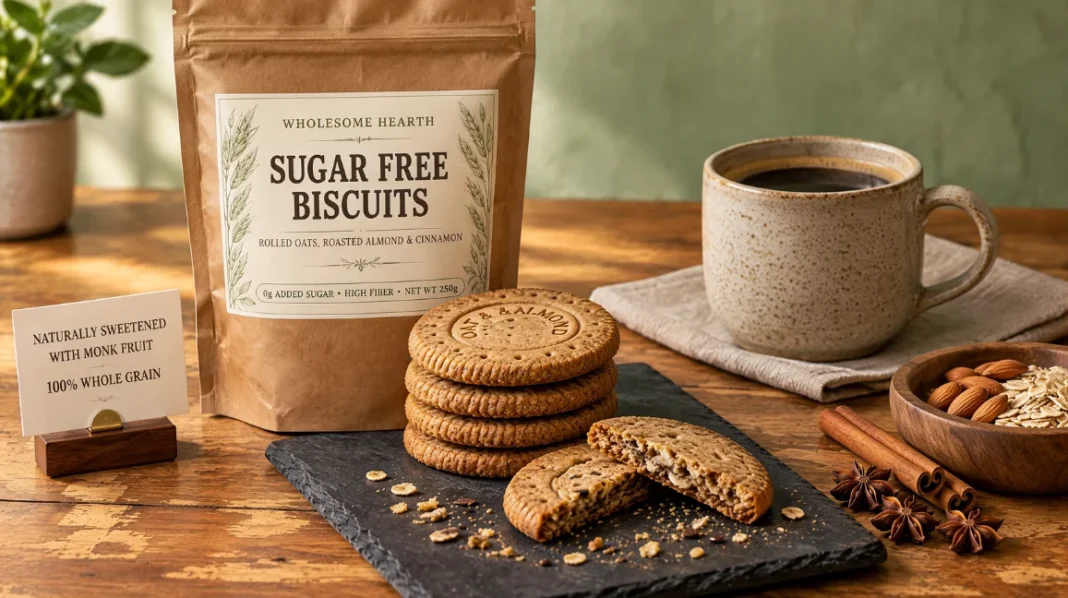
Sugar free biscuits can help when you want a sweet snack with less sugar. However, the label does not automatically mean low-calorie, low-carbohydrate, or healthier. UK shoppers should compare sugars, carbohydrates, sweeteners, fibre, saturated fat, and portion size before choosing.
Quick answer: In the UK, “sugar-free” means a food contains no more than 0.5g of sugars per 100g. Many products use sweeteners instead, including maltitol. Check total carbohydrates, calories, fibre, fat, serving size, and sweetener warnings rather than judging a pack from its front label alone.
| What to check | Why it matters |
|---|---|
| Sugar claim | “Sugar-free” and “no added sugar” mean different things |
| Sugars per 100g | Makes products easier to compare |
| Total carbohydrates | Particularly relevant for people monitoring blood glucose |
| Sweetener type | Some products contain polyols such as maltitol |
| Fibre | Higher-fibre choices may be more filling |
| Saturated fat | Low sugar does not automatically mean low fat |
| Portion size | A realistic serving matters more than marketing claims |
What Does Sugar-Free Mean on a UK Food Label?
UK rules set a specific threshold for the claim. A solid Sugar Free Biscuits product described as sugar-free can contain no more than 0.5g of sugars per 100g. This makes the term different from casual phrases such as “lower sugar.”
“No added sugar” has another meaning. It means sugars or ingredients used specifically for sweetening have not been added. A product can still contain naturally occurring sugars, so shoppers should read the nutrition table.
The NHS says adults should have no more than 30g of free sugars a day, and it distinguishes free sugars from sugars naturally present in whole fruit, vegetables, and milk. UK guidance recommends limiting free sugars rather than treating every form of sugar identically. That context makes the full ingredient list more useful than a single front-of-pack claim.
For more everyday nutrition comparisons, Pageify’s guide to choosing healthier bread explains how fibre, ingredients, and sugar content can change a food’s nutritional profile. The same label-reading habit is useful in the snack aisle. It helps you compare the whole product instead of one headline claim.
Sugar Free Biscuits: Which UK Options Are Worth Comparing?
Several current supermarket products show how much the category can vary. Sainsbury’s lists sugar-free oat, digestive, and vanilla wafer options from Siro. Tesco also lists a wider selection of reduced-sugar and no-added-sugar products, including several Diablo lines.
The important difference is not simply flavour. Fibre, fat, polyols, serving size, and ingredient choices vary between packs. Comparing those details helps you find the option that best matches your priorities.
| Product or style | Label position | Useful features | Possible drawbacks | Best suited to |
|---|---|---|---|---|
| Siro Oaty | Sugar-free | 37% oat flakes and high fibre | Contains maltitol and palm oil | People wanting an oat-based texture |
| Siro Digestive | Sugar-free | High fibre and familiar digestive style | Contains maltitol and remains carbohydrate-rich | Tea breaks and cheesecake bases |
| Siro Vanilla Wafer | Sugar-free | Sweeter wafer-style option | Higher fat and polyol content than plainer styles | Occasional sweeter treats |
| Diablo reduced/no-added-sugar ranges | Varies by product | Broader flavours and formats | Claims differ, so labels need checking | Shoppers wanting more variety |
Siro’s oaty product contains 0.5g sugars per 100g and 11g fibre. Its nutrition panel also lists 63g carbohydrate and 13g polyols per 100g. This is a useful example of why “sugar-free” should not be read as “carbohydrate-free.”
The digestive version follows a similar pattern. Its listed sugars remain at 0.5g per 100g, while carbohydrates are much higher. It also contains maltitol, with the packaging warning that excessive consumption may produce laxative effects.
The vanilla wafers offer another trade-off. They meet the retailer’s sugar-free description but contain 34g fat and 31g polyols per 100g. Their sweeter style may appeal to some shoppers, although portion control becomes more important.
The practical verdict
For an everyday choice, a plainer high-fibre option generally makes more sense than a heavily filled wafer. That recommendation is based on the nutrition panels, not the words “diet” or “healthy.” Taste still matters because a product you dislike offers little practical value.
People who want an oat-style snack may prefer the Siro Oaty option. Those wanting a traditional tea-time texture may prefer the digestive style. A wafer works better as an occasional sweeter choice rather than the automatic winner.
Seven Things to Check Before You Buy
- Read the exact claim. Check whether the pack says sugar-free, low sugar, reduced sugar, or no added sugar. These phrases are not interchangeable under UK food rules.
- Compare products per 100g. Serving sizes differ between manufacturers and can make comparisons confusing. The per-100g column gives you a consistent starting point.
- Check total carbohydrates. A low sugars figure does not mean the product contains few carbohydrates. This point is especially relevant if you monitor blood glucose.
- Look at the sweetener. Maltitol and other polyols are common in reduced-sugar confectionery and baked snacks. Packaging may warn that high consumption can have a laxative effect.
- Check fibre content. Oats, wholemeal flour, and added fibre can change how filling a snack feels. Higher fibre can be useful when comparing two otherwise similar choices.
- Review saturated fat and calories. Removing sugar can require changes elsewhere in the recipe. A sugar claim does not guarantee a low-energy or low-fat product.
- Choose a realistic portion. A product only helps if its serving fits your normal eating pattern. Eating several portions can erase much of the advantage you expected.
Are They a Good Choice for People With Diabetes?
People with diabetes do not generally need a completely sugar-free diet. Diabetes UK advises focusing on an overall healthy eating pattern and reducing foods high in free sugars. It also recommends considering carbohydrates and healthier snack choices rather than relying on specialist “diabetic” foods.
That means the total carbohydrate figure deserves attention alongside sugars. Individual responses can differ, while medicines and personal dietary plans can change what works best. Anyone managing diabetes should follow advice from their healthcare team rather than using a package claim as medical guidance.
Plain oatcakes, nuts, seeds, or other less-sweet snacks may sometimes fit better. NHS-linked dietary guidance also suggests plain alternatives instead of chocolate-coated or cream-filled choices. A sweetened product can still be enjoyed, but it does not need to become the default snack.
Are Sugar-Free Options Healthier Than Regular Ones?
Sometimes they are useful, but the answer depends on what replaces the sugar. A lower sugar figure may suit your goal while the recipe still contains considerable fat or refined flour. Two products therefore need a full nutritional comparison before one earns the healthier label.
The wider diet matters more than one food. Diabetes UK recommends treating foods such as cakes and sweet snacks as occasional choices within a balanced pattern. The NHS similarly advises reducing free sugars rather than pursuing an unnecessary zero-sugar diet.
If you are reviewing other everyday carbohydrates, Pageify’s healthiest bread guide covers fibre, whole grains, and label reading. Those same principles work well when judging packaged snacks. Looking across the complete nutrition panel usually gives the clearest answer.
Sweeteners and Maltitol: What Should You Know?
Maltitol is a polyol used to provide sweetness without ordinary table sugar. Several current Siro products list maltitol as their sweetener. Their packaging also carries a warning about possible laxative effects from excessive consumption.
Tolerance differs between individuals, so portion size matters. Eating several servings together may be less comfortable than having a small portion. The warning deserves particular attention when trying a maltitol-sweetened food for the first time.
Sweeteners also change flavour and texture. Some shoppers enjoy them, while others notice an aftertaste or different mouthfeel. Product reviews for current supermarket lines show both reactions, making personal preference an important buying factor.
What About Homemade Low-Sugar Baking?
Making your own snacks gives you more control over sweetness, flour, fibre, and portion size. BBC Good Food currently lists lower-sugar baking ideas, including a biscuit recipe made without conventional sugar. Homemade versions can also help you adjust flavours without depending on commercial sweeteners.
A homemade recipe is not automatically nutritionally superior. Butter, flour, dried fruit, syrups, or large portions can still add substantial calories and carbohydrates. The benefit is control, rather than a guaranteed health advantage.
Pageify readers interested in baking can also browse the Food and Recipes section for more cooking ideas. The mince pie guide is useful when comparing ingredients, fillings, and seasonal treats. These internal resources can help readers think beyond one snack category.
How to Make a Better Choice in the Supermarket
Start by deciding what you are trying to reduce. Someone limiting free sugars may judge products differently from someone prioritising calories or fibre. A shopper monitoring carbohydrates will have another reason to inspect the nutrition panel closely.
Next, compare two or three realistic products rather than searching for a perfect option. Check sugars, carbohydrates, fibre, saturated fat, sweeteners, and portion size side by side. Ignore health-style packaging unless the nutrition information supports the impression.
Finally, choose the product you can enjoy in a sensible portion. A less-sweet oat-based option may work well with tea or coffee. A filled wafer may fit better as an occasional dessert-style treat.
Choose the Label, Not the Marketing
A sugar claim can be useful, but it tells you only one part of the nutritional story. Stronger buying decisions come from comparing carbohydrates, fibre, fat, sweeteners, ingredients, and realistic serving sizes. That approach works whether you are reducing free sugars or choosing more carefully.
Before your next shop, compare two or three packs using their per-100g nutrition panels. Keep the option that best matches your dietary needs and taste preferences. For more practical food guides, continue through Pageify’s Food and Recipes coverage.
Frequently Asked Questions
Are sugar-free biscuits completely free from sugar?
Not necessarily in the literal sense. UK rules allow the claim when a product contains no more than 0.5 g of sugar per 100g or 100ml. That small permitted amount explains why some nutrition tables still show a measurable sugar figure.
Is “no added sugar” the same as sugar-free?
No, because the claims have different legal meanings. “No added sugar” concerns whether sugars or sweetening foods were added during production. Naturally occurring sugars may still remain in the final product.
Can sugar-free products still contain carbohydrates?
Yes, and current supermarket examples demonstrate this clearly. Flour and other ingredients contribute carbohydrates even when the sugars figure is tiny. Anyone tracking carbohydrate intake should therefore check the full nutrition panel.
Can sweeteners upset your stomach?
Some products containing polyols carry warnings about laxative effects from excessive consumption. Current Siro lines using maltitol include this warning on their listings. Keeping portions moderate can be sensible when trying such products.
What is the best option to buy?
There is no universal winner because priorities differ. For routine snacking, a plainer, higher-fibre product is a sensible starting point. Compare the actual label, then choose a flavour and portion that you can enjoy comfortably.