
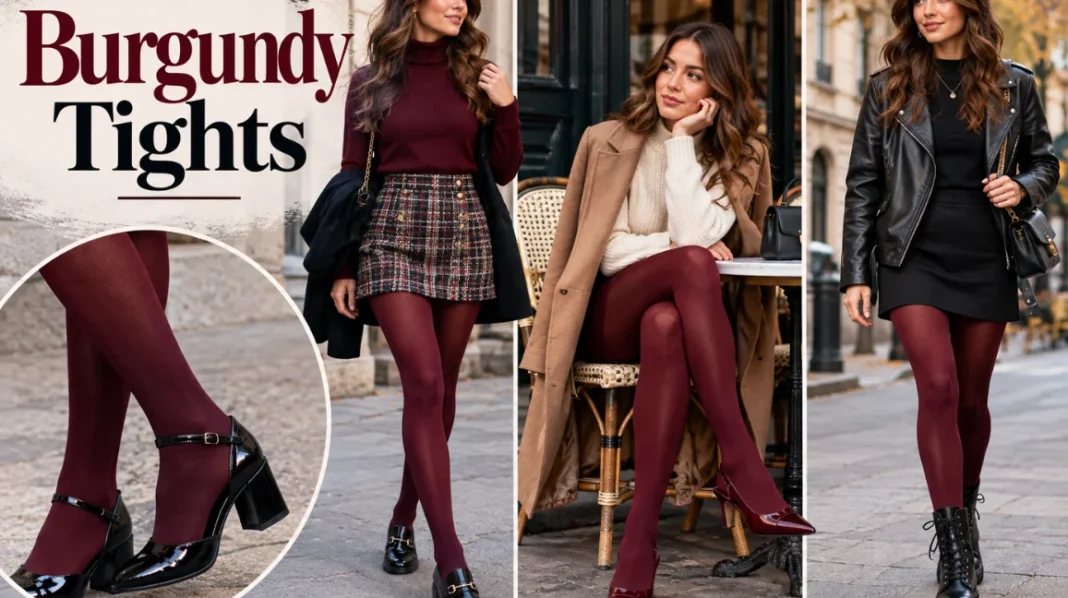
Burgundy tights offer an easy way to bring rich color into an autumn or winter wardrobe. The deep wine shade feels softer than bright red but more distinctive than standard black hosiery. Better still, it pairs well with many colors already in a typical UK wardrobe. The easiest approach is to treat burgundy almost like a dark neutral.
Pair it with black, charcoal, navy, cream, chocolate brown, or other wine shades. Then choose the denier and footwear based on the weather, occasion, and how much color you want to show.
| Styling choice | Easy option |
|---|---|
| Best neutral colors | Black, charcoal, cream, and grey |
| Rich color pairings | Navy, chocolate, plum, and berry |
| Easy daytime shoes | Loafers, ballet flats and ankle boots |
| Cold-weather shoes | Knee-high or chunky boots |
| Subtle finish | Sheer or semi-sheer tights |
| Stronger color | 40–80 denier opaque tights |
| Easy first outfit | Black dress, wine tights, and black shoes |
| Tonal approach | Burgundy hosiery with plum or wine clothing |
Direct answer: Burgundy hosiery works best when its color clearly relates to the rest of your outfit. Wear it against black or grey for contrast, navy for a rich combination, or wine shades for tonal dressing. Black shoes are the simplest finishing touch, while matching footwear creates a stronger statement.
Why This Color Works So Well
Black tights remain useful because they disappear easily into an outfit. A wine-coloured pair does something different by becoming part of the colour scheme. That small change can make familiar skirts, dresses, and coats feel less predictable. The shade also sits between statement colour and practical neutral. Burgundy is easier to style than vivid red while remaining bolder than brown.
That balance helps explain why the color works across understated and more expressive wardrobes. Recent fashion coverage has continued to feature colored hosiery rather than treating it as a short-lived novelty. Navy, grey, and black outfits all provide useful starting points for the shade. Readers weighing where to shop for affordable basics may also find this Voghion vs. Shein comparison useful before planning a wider wardrobe update.
What Colors Go With Burgundy Tights?
Choosing the surrounding colours matters more than following one fixed outfit formula. Burgundy contains enough depth to sit comfortably beside dark neutrals, yet its red character also works against pale shades. Start with one of the combinations below and adjust the proportions to suit your style.
Black for the Simplest Combination
Black is probably the easiest partner because it gives the wine shade space to stand out. Try a black mini dress, dark tights, and black loafers for a straightforward daytime outfit. A black skirt, knit, and ankle boots create the same effect with separate pieces. Keeping the shoes black also creates a useful visual anchor. This works particularly well when you don’t want every accessory to match the hosiery.
Add a burgundy bag or scarf only if the outfit needs another connection to the color.
Grey for a Softer Winter Outfit
Charcoal and mid-grey create less contrast than black, producing a softer result. A grey jumper with a pleated skirt is an easy autumn and winter combination. Dark wine hosiery then adds warmth without competing heavily with the clothes. Grey also gives you freedom with outerwear.
A charcoal wool coat keeps everything muted, while camel introduces another warm color. Black boots or loafers can finish either version without adding another competing shade.
Navy for Rich Color Without Looking Loud
Navy and burgundy pair well because both colors have plenty of depth. A navy dress with wine hosiery creates noticeable color without becoming too bright. The combination feels distinctive while remaining restrained enough for everyday dressing. Try a navy knitted dress with dark wine tights and black knee-high boots.
Alternatively, use a navy skirt with a cream jumper for more contrast near the face. A black or dark brown coat can then pull the winter layers together.
Cream and Beige for Contrast
Cream makes burgundy appear richer because the difference between the colors is more noticeable. A cream knitted dress with opaque hosiery is especially easy during colder months. Brown boots can soften the outfit further, while black footwear makes it sharper. You don’t need to wear large amounts of cream either.
An oatmeal jumper above a black skirt can provide enough lightness. The tights then become the main color rather than one of several strong elements.
Burgundy, Plum, and Berry for Tonal Dressing
Tonal dressing uses neighboring shades rather than matching every item exactly. Burgundy can sit beside plum, merlot, berry, and deep red without requiring identical colors. Slight variation often adds depth to the outfit. Keep one element neutral so the palette doesn’t become overwhelming.
For example, combine a wine skirt and tights with a charcoal jumper. Black shoes and a dark coat can then frame the richer shades.
7 Outfit Ideas That Are Easy to Copy
You don’t need unusual clothes to make colored hosiery work. Most successful combinations start with familiar wardrobe pieces and swap black tights for a deeper red shade. These seven formulas cover casual days, work-friendly dressing, and evening plans.
- Black mini dress and loafers: Choose a simple black dress and add opaque wine tights. Finish with black loafers and a structured coat for an easy city outfit.
- Grey jumper and pleated skirt: Wear a charcoal knit with a grey or black pleated skirt. Add loafers for a preppy finish or ankle boots when temperatures fall.
- Navy knitted dress and boots: A navy dress creates rich contrast without becoming too bright. Black knee-high boots make the outfit practical for colder UK weather.
- Cream jumper and black skirt: Keep the clothing neutral and let the hosiery provide the main color. A dark coat stops the pale knit from feeling too spring-like.
- Burgundy skirt and tonal tights: Choose similar, not perfectly matching, wine shades. Add a black or grey top to break up the color.
- Checked skirt and oversized blazer: A muted check with brown, grey, or burgundy can tie the whole outfit together. Wear a plain top underneath so the pattern remains manageable.
- Little black dress for evening: Swap sheer black hosiery for sheer burgundy. Pointed shoes and simple jewelry keep the result polished rather than costume-like.
Sheer or Opaque: Which Denier Should You Choose?
Denier describes the weight of the fibers used in hosiery. Lower numbers generally create a sheerer look, while higher numbers provide more coverage. Your best choice depends on temperature, occasion, and how strongly you want the color to appear.
| Denier range | Appearance | Useful for |
|---|---|---|
| 10–20 | Sheer | Evenings and milder weather |
| 20–40 | Light to semi-sheer | Transitional dressing |
| 40–80 | Opaque | Autumn and everyday winter outfits |
| 80+ | Dense and warm-looking | Colder days and strong block color |
Sheer versions give the legs a subtle wine tint rather than a solid color. They can work well with evening dresses, tailored skirts, and lighter footwear. The lower coverage also makes them a useful introduction if opaque colored hosiery feels too bold. Opaque versions make burgundy a much stronger part of the outfit.
Around 40–80 deniers is a wearable range when you want clear colour with practical coverage. Thicker options also make sense when you need more warmth in colder weather.
What Shoes Look Best With This Color?
Black shoes are the easiest option because they work across most of the color combinations above. Black loafers can create a polished daytime outfit, while ankle or knee-high boots suit colder conditions. Ballet flats provide another option during mild transitional weather. Brown footwear can work particularly well with cream, camel, and chocolate clothing.
Choose a sufficiently deep brown so the shoes don’t feel disconnected from the rich hosiery. Dark chocolate usually creates a smoother transition than pale tan. Matching wine-colored footwear produces a different effect. The similar shades create a longer, more continuous block of color down the leg. You don’t need an exact match, but noticeably clashing red undertones can make the combination harder to balance.
How to Wear the Color to Work
Start with familiar workwear shapes, and let the hosiery provide the color. A knee-length navy dress, dark tights, and black shoes can look polished without feeling overly experimental. A charcoal skirt with a fine knit offers another straightforward formula. Consider your workplace before choosing opacity or hem length. More conservative offices may suit a deeper, less vivid shade with longer skirts and simple shoes.
Creative workplaces naturally allow more room for patterned clothing, shorter hems, or stronger color combinations. Keep accessories controlled when the hosiery is already noticeable. A black leather bag and simple jewelry may be enough. Repeating the wine shade once through a scarf or small accessory can create cohesion without making everything match.
How to Style Them for a Night Out
Evening outfits give you more freedom to make the color prominent. Try sheer wine hosiery with a black mini dress, pointed heels, and a dark coat. The result feels more deliberate than standard black tights while staying easy to assemble. Texture can also change the mood. Velvet, satin, and smooth leather all pair well with deep red shades.
If you’re coordinating beauty details too, Pageify’s almond nail design ideas offer another way to think about color and finishing touches. For a bolder version, use a tonal dress or skirt with similar hosiery. Black shoes can break up the colour and prevent the outfit from becoming too uniform. Metallic jewelry adds contrast without introducing another major shade.
How to Wear It Without Looking Overdone
The simplest rule is to give the colour a clear purpose. Either make the tights the main accent or connect them to one other part of the outfit. Problems usually arise when several unrelated bright colours compete for attention. Start with neutrals if coloured hosiery is new to you. Black, charcoal, cream and navy give the shade a stable background. Once that feels comfortable, introduce checks, plum shades or matching accessories.
You also don’t need every wine-coloured item to match exactly. Small differences between merlot, berry and deep burgundy can make tonal outfits more interesting. Keep their undertones reasonably compatible and use a neutral piece to separate them.
When Can You Wear Them in the UK?
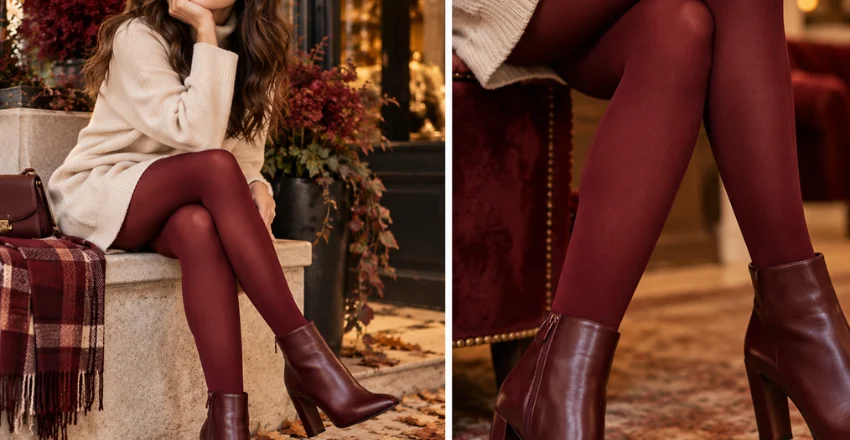
Autumn is the natural starting point because wine shades sit comfortably beside wool, checks, leather and heavier footwear. Opaque pairs also provide extra coverage as temperatures begin dropping. Burgundy can continue through winter with boots, knitted dresses and long coats.
The colour isn’t limited to cold weather. Sheer versions can work during early spring with lighter grey, cream or pale blue clothing. Choosing a lower denier helps the outfit feel less heavy as the season changes. Weather still matters more than a fashion calendar. A chilly April day may suit tights better than an unusually mild October afternoon. Choose thickness for comfort first, then build the colours around it.
Common Styling Mistakes to Avoid
Wearing too many statement colours at once can make the tights look accidental rather than considered. Start with one dominant accent and let neutrals support it. This is especially useful with opaque hosiery because the colour occupies a large visual area. Don’t assume matching every accessory creates a better outfit.
Burgundy shoes, bag, belt, coat, and hosiery together can become excessive unless you’re deliberately creating a monochrome look. One repeated accent is often enough. Ignoring denier can also change the result you expected. A sheer pair gives a much softer impression than an opaque one, even when both carry the same colour name. Check the product photographs and denier before deciding how the pair fits your planned outfit.
Caring for Coloured Tights
Check the care label because fibre blends and washing instructions vary between products. A laundry bag can help prevent hosiery catching on zips or hooks during an appropriate machine wash. Hand washing is another practical option for delicate pairs when their label permits it. Take care when putting tights on as well.
Remove sharp jewellery first and gather each leg before pulling the fabric gradually upwards. This reduces unnecessary stretching and lowers the chance of catching the material with a nail. Store pairs away from rough fastenings and loose jewellery. Folding them separately can prevent snagging inside a crowded drawer. Good care matters especially with coloured pairs because pulls and uneven wear may be more noticeable.
Burgundy Tights FAQs
Are burgundy tights in style in 2026?
Yes, the colour remains a natural fit for current interest in richer fashion shades. Opaque styles work particularly well in autumn, while sheer versions offer a subtler take. Pageify’s wider fashion and lifestyle coverage can provide further inspiration for seasonal style and everyday choices.
What colours pair best with them?
Black, grey, navy, cream and chocolate brown are reliable choices. Plum, berry and similar wine shades also work for tonal outfits. Start with two or three colours if you want the finished outfit to feel restrained.
Can you wear black shoes with them?
Yes, black footwear is one of the easiest combinations. Loafers, ankle boots, knee-high boots and heels can all work depending on the outfit. Black also provides a useful visual anchor when the hosiery is the main coloured element.
Can you wear them with a black dress?
A black dress is an excellent starting point because it lets the hosiery provide the colour. Choose opaque tights for a stronger daytime or winter look. Sheer versions can create a lighter finish for evening wear.
What denier is best for this shade?
There isn’t one correct denier for every outfit. Around 40–80 denier provides noticeable colour and useful coverage for autumn or winter. Lower deniers create a softer, sheerer effect for milder weather and evening outfits.
Can you wear them in spring?
Yes, particularly during cooler early-spring weather. Choose a sheerer pair and combine it with cream, light grey, or other softer colours. Lighter clothing helps the deep shade transition away from a heavy winter palette.
Make Burgundy Work With the Clothes You Already Own
You don’t need to rebuild your wardrobe around coloured hosiery. Begin with a black dress, grey knit, navy skirt, or another piece you already wear regularly. Replacing your usual black pair with a wine shade is often enough to change the character of the whole outfit. Choose the denier based on the weather, and decide whether you want subtle or strong colour.
Then keep the rest of your palette focused, with black, navy, grey, cream, or brown as reliable partners. That approach makes burgundy tights far easier to wear beyond a single trend-led outfit.