
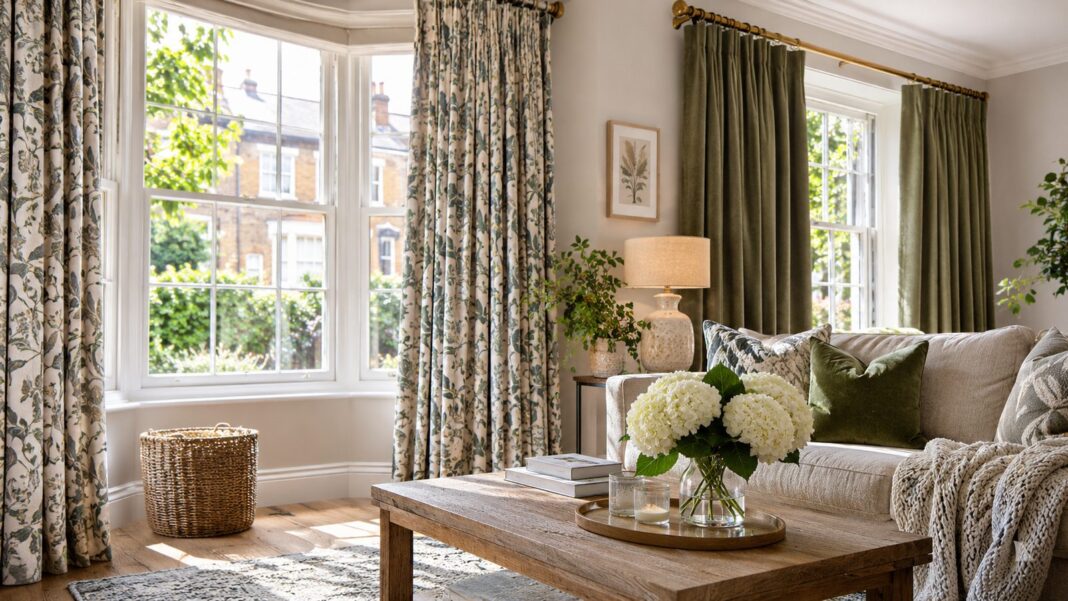
Living room curtains affect far more than the appearance of your windows. They control daylight, privacy, warmth, and how balanced the room feels. The right choice should suit your space while supporting how you use it every day. Living room curtains should balance light control, privacy, proportion, and style. Floor-length designs usually create the cleanest look in lounges. Choose lighter fabrics for brightness, lined fabrics for privacy, and heavier options when warmth matters. Measure the fitted pole or track before ordering.
Living Room Curtains at a Glance
| Choice | Best suited to | Main benefit | Consider |
|---|---|---|---|
| Sheer curtains | Bright or overlooked rooms | Soft daylight | Limited night-time privacy |
| Linen-look curtains | Modern and relaxed interiors | Natural texture | Creasing and light control |
| Velvet or chenille | Larger or cosy rooms | Rich texture and fuller drape | Greater visual weight |
| Lined curtains | Most UK living rooms | Privacy and improved drape | Usually heavier |
| Thermal curtains | Colder or draughty spaces | Helps reduce heat loss | Must not cover radiators |
| Blackout curtains | TV rooms and strong sunlight | Strong light control | Can darken smaller rooms |
| Eyelet headings | Modern curtain poles | Easy movement | Pole remains visible |
| Pencil pleats | Traditional or flexible schemes | Adjustable fullness | Needs hooks or rings |
Key Takeaways
- Start with function before choosing colour or pattern.
- Fit the pole or track before taking final measurements.
- Floor-length curtains usually make a lounge feel more considered.
- Light fabrics keep smaller rooms open, while heavier fabrics add depth.
- Lining improves privacy, shape, and light control.
- Test fabric samples beside your sofa, flooring, and wall colour.
- Keep curtain cords secured if young children use the room.
How to Choose Living Room Curtains That Work in Your Home
Start by deciding what the window covering needs to do. A street-facing lounge may need privacy throughout the day. A south-facing room may need stronger control over glare and direct sunlight. Next, consider the room’s proportions and existing furniture. Curtains should support the sofa, walls, flooring, and architectural details instead of competing with them. Pageify’s guide to choosing furniture for daily life can help with wider room planning. Finally, think about how the room feels at different times. A fabric that looks airy at midday may feel exposed after dark. A heavier curtain can feel inviting at night but overpower a small space during daylight.
Which Curtain Fabric Is Best for a Living Room?
Linen and linen-look fabrics suit relaxed, modern, and Scandinavian-inspired rooms. Their visible texture adds interest without needing a strong pattern. Lighter shades also help daylight spread through smaller living spaces. Cotton and cotton-blend curtains offer a practical middle ground. They can suit both traditional and modern interiors. Many options are also easier to care for than delicate natural fabrics. Velvet and chenille create a fuller, heavier appearance. They work well in rooms that need extra softness or a more formal finish. Their visual weight can also balance large windows and substantial furniture. Sheer fabrics work best when daylight matters more than complete privacy. They soften direct sunlight while keeping the room feeling bright. Pairing sheers with heavier outer curtains gives you more flexibility after dark.
Should You Choose Lined, Thermal or Blackout Curtains?
Standard lining gives fabric more structure and improves privacy. It can also protect the face fabric from strong sunlight. For many lounges, this provides a useful balance between appearance and everyday performance. Thermal linings are worth considering in colder or draught-prone homes. The Energy Saving Trust says heavy curtains can reduce winter heat loss through windows. Curtains should not cover radiators because this restricts heat entering the room. Blackout lining is useful where strong daylight affects television viewing. It can also help with privacy on busy streets. Complete blackout performance depends on the fabric, lining, and gaps around the window.
How Long Should Curtains Be in a Living Room?
Floor-length curtains usually provide the most polished result. They create a strong vertical line and can make windows appear taller. A hem that finishes close to the floor also avoids excess fabric collecting dust. Shorter curtains can still work where furniture or radiators limit the drop. They may suit traditional homes with deep windowsills. The final length should look deliberate rather than stopping at an awkward point. Extra-long curtains can pool slightly on the floor for a softer effect. This style works better in low-traffic rooms where regular cleaning is manageable. It is less practical in busy family spaces or homes with shedding pets.
How to Measure Curtains Correctly
Measure after your pole or track has been fitted whenever possible. John Lewis recommends positioning tracks or poles around 10–15cm above the window. It also suggests extending them about 15–20cm beyond each side for better coverage. Measure the full usable width of the pole or track. Do not measure only the glass or window frame. Curtain fullness depends on the heading style and the manufacturer’s sizing instructions. For length, measure from the correct hanging point to your chosen finish. Eyelet curtains usually measure from the top of the pole differently from hooked headings. Check the retailer’s measuring method before placing an order.
Which Curtain Colours Work Best in UK Living Rooms?
Warm neutrals remain flexible because they work with many furniture finishes. Beige, stone, cream, and soft taupe can make a room feel calm without appearing stark. Pageify’s beige colour guide explains how undertones affect surrounding colours. Sage, olive, terracotta, navy, and rust can add more personality. These colours work especially well when repeated elsewhere through cushions, artwork, or smaller accessories. Repeating a shade once or twice helps the room feel connected. Dark curtains can frame a pale room and create stronger contrast. Light curtains can soften a room with dark furniture or intense wall colours. Neither approach is automatically better, because natural light changes how each colour appears. Always check samples in the actual room before ordering. Look at them during the morning, afternoon, and evening. Artificial lighting can alter warm and cool undertones after sunset.
Should Curtains Match the Sofa?
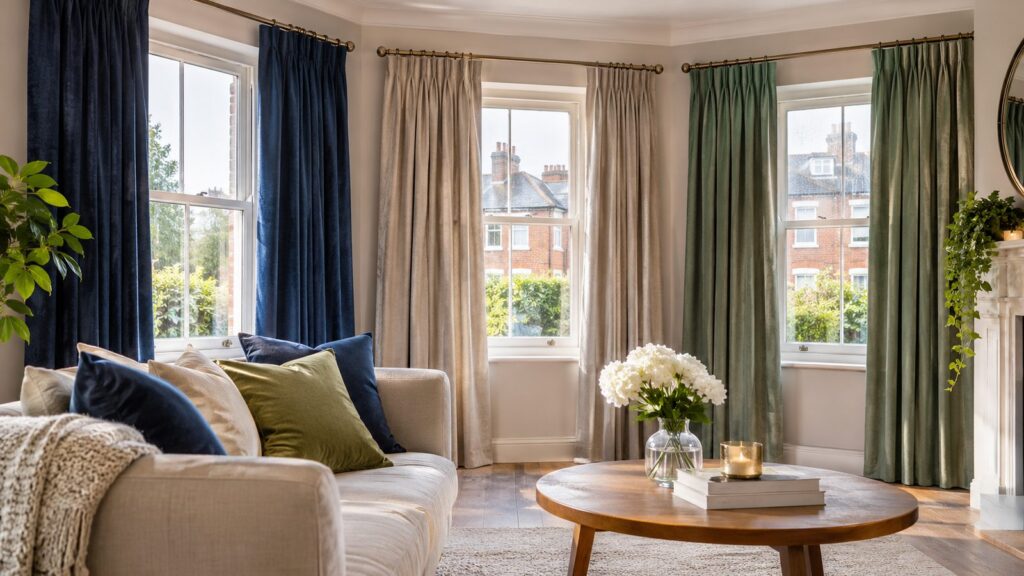
Your curtains do not need to match your sofa exactly. An exact colour match can make a room feel flat if every large surface uses one shade. A related tone or controlled contrast usually creates more depth. A dark sofa can work well with cream, warm beige, or muted green curtains. A pale sofa can support stronger colours such as navy, rust, or deep olive. Patterned curtains should borrow at least one colour already present in the room. Texture matters as much as colour. Smooth upholstery can look stronger beside linen, woven cotton, or velvet. Combining different textures adds detail without filling the room with competing patterns.
How Can Curtains Make a Small Living Room Look Bigger?
Mounting the curtain pole above the window can emphasise vertical height. Extending it beyond the frame also allows fabric to sit farther from the glass. More visible glass can make the opening feel wider when the curtains are open. Choose simple fabrics if the room already contains several patterns. Large, high-contrast prints can dominate limited wall space. Soft plains, subtle stripes, and gentle textures usually create a calmer background. Light colours can support an airy feeling, but they are not mandatory. A darker curtain can still work when the wall and curtain colours are closely related. Lower contrast prevents the window wall from feeling visually divided.
Pair Curtains With the Rest of the Room
Curtains work better when they connect with other design choices. Wall treatments, flooring, lighting, and furniture all affect how fabric appears. Pageify’s wall panelling ideas can help if you are building a more detailed feature wall. Lighting also changes the appearance of curtain colour after dark. Warm lamps can make beige, rust, green, and cream feel richer. Pageify’s guide to layered home lighting explains how different light sources shape a room’s atmosphere. Try to avoid choosing each element separately. Place curtain samples beside paint cards, upholstery, flooring, and wood finishes. This simple comparison often reveals colour clashes before you spend money.
Common Curtain Mistakes to Avoid
Buying before measuring is one of the easiest mistakes to make. Standard curtain sizes vary between retailers and heading styles. Always check whether the listed width covers one panel or the full pair. Another mistake is choosing fabric based only on appearance. A beautiful unlined curtain may not provide enough privacy for a street-facing room. A heavy blackout design may make a shaded room unnecessarily dark. Do not ignore radiators, sockets, window handles, or nearby furniture. Long fabric covering a radiator can reduce heat reaching the room. Nearby sofas can also affect how curtains hang and stack. Safety deserves attention in homes with young children. RoSPA advises keeping curtain and blind cords short and out of children’s reach. Cleats, cord tidies, clips, or ties can help secure accessible cords.
Living Room Curtains: Ready-Made or Made-to-Measure?
Ready-made curtains suit standard windows and simpler budgets. They are widely available in common widths, drops, colours, and heading styles. They also make future replacement easier when your decorating scheme changes. Made-to-measure designs suit unusually wide, tall, or awkward windows. They also offer more control over fabric, lining, heading style, and finished length. The added flexibility can matter in bay windows or rooms with difficult proportions. Choose based on fit rather than prestige. A correctly sized ready-made pair can look better than expensive curtains with poor proportions. Measure first, then compare suitable options.
Frequently Asked Questions About Living Room Curtains
What type of curtain is best for a living room?
There is no single fabric that suits every lounge. Lined cotton or linen-look curtains provide a flexible starting point for many homes. Choose heavier or blackout options when warmth, privacy, or glare control matters more.
Should curtains be lighter or darker than the sofa?
Either approach can work if there is enough contrast and repetition elsewhere. Lighter curtains often soften rooms containing dark upholstery. Darker fabric can add definition when the sofa and walls are pale.
Should living room curtains touch the floor?
Floor-length curtains usually look cleaner when they finish close to the floor. Leaving a small gap keeps the hem away from dust and regular foot traffic. Pooling fabric is more decorative but needs greater maintenance.
Do thermal curtains help keep a living room warm?
Heavy or thermally lined curtains can help reduce heat loss around windows. The Energy Saving Trust includes thermal curtains among affordable window-efficiency improvements. Keep fabric clear of radiators so heat can circulate properly.
Are sheer curtains suitable for overlooked homes?
Sheers can increase daytime privacy while allowing natural light into the room. Their privacy becomes weaker after dark when interior lights are switched on. Pair them with lined outer curtains or another suitable window covering.
Make Your Final Choice With the Whole Room in Mind
Start with privacy, light, warmth, and window measurements before thinking about trends. Then choose a fabric, colour, and heading that complement the room’s existing features. This order reduces the risk of buying attractive curtains that perform poorly. Take samples home whenever the retailer offers them. Compare them against the sofa, walls, flooring, and evening lighting. Small differences in texture and undertone can become much more noticeable across a large window. Once the windows are planned, review the rest of your scheme as one connected space. Pageify’s Home Improvement section offers more practical ideas for decorating and improving UK homes. A measured, coordinated approach will usually age better than following one short-lived trend. —