
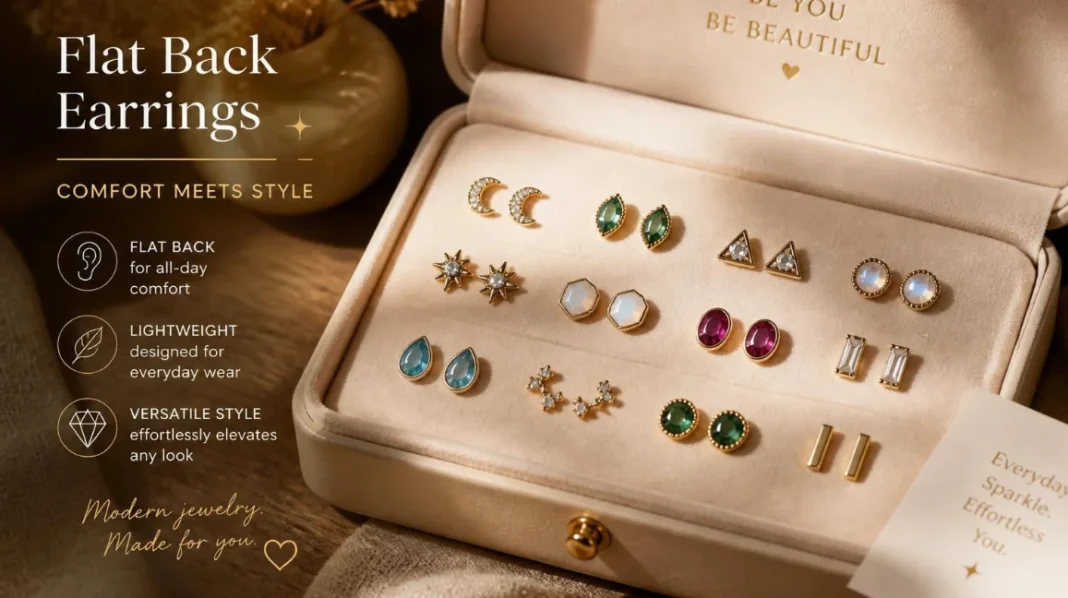
Flat back earrings replace the familiar butterfly fastening with a smooth disc that rests against the ear. This low-profile design can reduce poking and snagging during everyday wear. They’re available for lobes and many cartilage placements, with several materials and fastening systems to consider.
Direct answer: Flat back earrings have a smooth, flat disc behind the ear instead of a butterfly fastening. Their low-profile shape can feel more comfortable during extended wear and may catch less on hair or clothing. Choosing the right material, post length, gauge, and fastening is essential for a comfortable fit.
| Key point | What to know |
| Back design | A small flat disc sits against the rear of the piercing |
| Common placements | Lobes, helix, tragus, conch and other suitable ear piercings |
| Common closures | Internally threaded and threadless or push-fit |
| Materials | Implant-certified titanium, suitable grades of steelsteel, and solid gold are ableavailable. able |
| Main advantage | Smooth, low-profile backing for comfortable everyday wear |
| Important sizing | Gauge and post length must suit your piercing and anatomy |
| Fresh piercings | Jewellery should be selected with a qualified professional piercer |
What Are Flat Back Earrings?
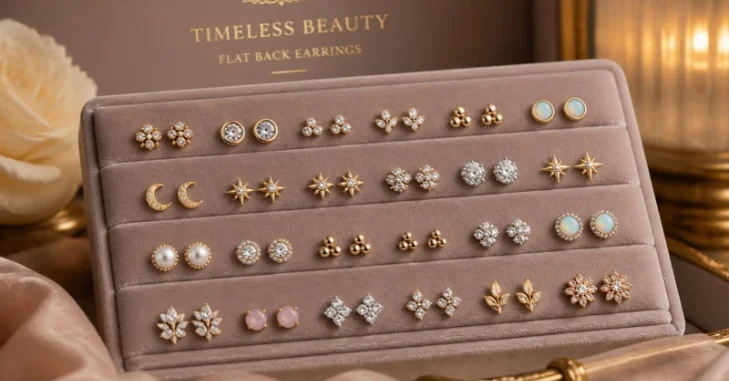
Flat back earrings are studs with a small disc positioned behind the ear. Unlike butterfly backs, they don’t leave a pointed post extending behind the piercing. The result is a cleaner profile that many people find comfortable for longer periods.
You may also see these pieces described as labret studs or flat back labrets. The decorative ends sit at the front, while the disc stays behind the ear. Depending on the design, the decorative end either screws or presses into the post.
They aren’t limited to elaborate cartilage piercings. Suitable designs can work in ordinary lobe piercings, second lobes, helix piercings, tragus placements, and conch piercings. Your anatomy and existing piercing size still determine which post will fit correctly.
Pageify covers a broad range of fashion and lifestyle topics for UK readers. Understanding jewellery construction is especially useful because similar-looking earrings can fit very differently. Checking the specifications before buying can prevent an uncomfortable or incompatible purchase.
Why Have Flat Back Studs Become Popular?
Comfort is the main attraction for many wearers. A traditional butterfly fastening can protrude behind the lobe and press against the skin. A properly fitted flat disc creates a smoother surface at the rear.
The design can also make an ear stack look less cluttered. Small gems, stars and simple metal shapes can sit beside hoops or huggies without bulky backs. This flexibility suits people who like mixing several pieces across one ear.
Another benefit is reduced snagging compared with some conventional backs. Hair, jumpers and towels have fewer projecting parts to catch around the rear of the jewellery. No earring design eliminates snagging completely, so normal care still matters.
Current UK retailers sell everything from inexpensive steel pieces to solid-gold designs. Prices and specifications therefore vary considerably rather than following one standard. Compare the material, gauge, and fastening instead of choosing based on appearance alone.
Flat Back Earrings vs Butterfly Backs
Both designs can work well in healed lobe piercings. Their differences become clearer when comfort, fitting, and frequent wear matter. The table below shows the practical distinctions.
| Feature | Flat back | Butterfly back |
| Rear profile | Smooth disc | Wing-shaped fastening |
| Exposed post | Usually none when fitted correctly | Often extends beyond the fastening |
| Snag potential | Generally lower | Can catch more easily |
| Closure | Threaded or threadless | Friction fitting |
| Common uses | Lobes and several cartilage placements | Mainly lobe earrings |
| Changing jewellery | Can be fiddly initially | Usually simple |
| Sizing | Gauge and length matter | Post dimensions are often less prominent |
Neither style is automatically right for every person. Butterfly backs remain convenient for earrings you remove frequently. Flat designs become attractive when you prioritise a smooth back and a low-profile fit.
How to Choose the Right Material
Material matters because jewellery remains in close contact with your skin. Product descriptions such as “surgical steel” can cover different alloys and standards. Buyers with sensitive skin should therefore look beyond broad marketing terms.
The Association of Professional Piercers lists specific material standards for initial piercing jewellery. These include ASTM F136-compliant titanium and certain compliant steel grades. It also identifies suitable solid gold, platinum and other materials under defined conditions.
Implant-certified titanium is a common choice when nickel sensitivity is a concern. Titanium is lightweight and can also be anodised into different colours. For fresh or healing piercings, ask a professional piercer to confirm both material quality and suitability.
Gold jewellery needs similar attention. Colour alone tells you little about the material touching your piercing. Before buying, check whether an item is solid gold, plated, vermeil, or another construction.
Threadless vs Internally Threaded Designs
Two pieces can look nearly identical while connecting in completely different ways. Internally threaded jewellery has a smooth post with the screw thread inside it. The decorative front carries the matching threaded section.
Threadless jewellery works through tension instead—a small pin on the decorative end presses into a hollow post. The Association of Professional Piercers recognises internally threaded and threadless systems for suitable initial jewellery.
Don’t assume decorative tops and posts from different brands will fit together. Gauge, threading, and connection dimensions can vary between systems. Buy compatible components or confirm compatibility with the retailer before mixing parts.
How to Choose the Correct Size
Gauge describes the post’s thickness, while wearable length describes how much post sits through the piercing. Both measurements matter. A beautiful stud can still be uncomfortable when either measurement is wrong.
There isn’t one universal gauge for every ear piercing. UK retailers currently sell multiple thicknesses and post lengths across this jewellery category. For example, some ranges use 0.8mm posts while piercing-focused ranges commonly offer thicker options.
An excessively long post can move and catch unnecessarily. One that is too short may create pressure or leave insufficient room for swelling. The Association of Professional Piercers specifically advises choosing jewellery dimensions appropriate for individual anatomy and placement.
Don’t guess the size of an existing cartilage piercing from photographs. Ask your piercer or measure suitable healed jewellery using an appropriate gauge tool. Professional advice becomes especially important when changing jewellery in a piercing that is still healing.
Can You Sleep in Flat Back Earrings?
A smooth disc can make these earrings more comfortable for sleeping than studs with projecting posts. Less hardware behind the ear presses against your head. This advantage explains why several UK retailers market the style for extended wear.
Comfort doesn’t mean you should place constant pressure on a new piercing. Healing cartilage can become irritated by pressure and movement regardless of the jewellery style. Follow the aftercare instructions your professional piercer provides.
For healed piercings, check how the earrings feel after several hours before wearing them overnight. A painful, tight, or swollen piercing needs attention, not a tighter fastening. Persistent discomfort can indicate poor sizing, irritation, or another problem.
How Do You Put Flat Back Earrings In?
First, determine whether your jewellery is threaded or threadless. Wash and dry your hands before handling the earring. Work over a clear surface so tiny components cannot disappear easily.
For many labret-style designs, the flat post enters from behind the ear. The decorative front then connects from the visible side. Threaded fronts screw into the post, while threadless fronts press into a compatible hollow post.
Never force a component that won’t connect smoothly. You could have the wrong fastening type or incompatible components. A professional piercer can insert difficult jewellery without unnecessary experimentation around the piercing.
Are Flat Back Earrings Suitable for Sensitive Ears?
The shape alone doesn’t determine whether an earring suits sensitive skin. Material composition and manufacturing quality matter more than the flat backing itself. A comfortable shape made from an unsuitable alloy can still cause problems.
Look for clearly stated material specifications rather than relying solely on “hypoallergenic” wording. Implant-certified titanium can help people concerned about nickel sensitivity. Suitable precious metals can also be options when their composition meets appropriate standards.
Stop wearing non-essential jewellery if a healed piercing repeatedly becomes irritated after inserting a particular piece. New or healing piercings need more careful handling. Seek advice from a qualified piercer or healthcare professional if symptoms persist or are concerning.
What About New or Healing Piercings?
Fresh piercings shouldn’t be treated like ordinary accessory holes. Jewellery dimensions must allow for anatomy, placement, and expected swelling. Material and surface quality also matter during healing.
Professional piercing guidance supports suitable internally threaded or threadless jewellery with smooth surfaces for initial piercings. The jewellery still needs the correct dimensions and material standard. Don’t change a healing piercing simply because another earring looks more comfortable.
Watch for signs that need medical attention. The NHS lists increasing swelling, pain, heat, marked redness or darkening, pus, and feeling unwell as possible signs of infection. It advises seeking urgent medical help when you think a piercing is infected.
How to Build a Comfortable Ear Stack
Start with the piercings you already have rather than copying someone else’s arrangement. Anatomy determines where jewellery can sit comfortably. Mixing tiny studs with one or two hoops often creates visual contrast without crowding the ear.
Keep neighbouring pieces proportional. A larger decorative stud can become the focal point, while smaller stones or plain metal ends fill the surrounding spaces. Repeating one metal colour can make different shapes feel connected.
You can also mix metals when the combination looks intentional. Pageify’s comparison of Voghion and Shein shows how price, quality, and practical details can differ between online fashion retailers. Apply the same comparison mindset when buying jewellery rather than focusing on photographs alone.
Jewellery can also make a practical present when you already know the recipient’s preferences and piercing sizes. Pageify’s gift ideas for teen girls offer wider inspiration for building a personalised gift. For piercing jewellery, confirm material preferences and sizing before ordering.
What Should UK Buyers Check Before Ordering?
Start with the complete product specification. Confirm the metal, gauge, wearable post length, and fastening type. Check whether the listing sells one earring or a pair, because piercing jewellery is frequently sold individually.
Then consider where you plan to wear the piece. A lobe, tragus, and conch can require different dimensions even on the same person. Retailer size suggestions are useful starting points, but they can’t replace individual fitting.
Finally, read the returns policy before ordering body jewellery. Hygiene restrictions can affect whether you can return opened jewellery. Checking the policy before opening the packaging can prevent an expensive mistake.
Choosing a Pair That Works for You
The strongest reason to choose this style is practical comfort,not fashion alone. A smooth rear disc can reduce the poking and catching associated with some traditional studs. The wide range of decorative fronts also makes the design easy to incorporate into an existing ear stack.
Focus on material, gauge, post length, fastening, and piercing placement before choosing colour or stone. Those details determine whether an attractive earring also fits comfortably. For a fresh or troublesome piercing, make sizing and jewellery changes with professional guidance.
Once those essentials are right, choosing the design becomes the enjoyable part. Compare reputable UK sellers, read the full specifications, and choose a style that suits your existing jewellery. A well-fitted pair should look considered without demanding constant attention.
Frequently Asked Questions
What are flat back earrings?
Flat back earrings use a smooth disc behind the ear instead of a conventional butterfly fastening. The front can feature a simple ball, gemstone, or decorative shape. Many designs use either an internally threaded or threadless connection.
Are flat backs better than butterfly backs?
They offer different advantages rather than being universally better. A flat disc can reduce protruding hardware and may feel more comfortable during extended wear. Butterfly backs remain convenient for many conventional lobe earrings.
Can you wear flat backs in normal lobe piercings?
Many designs work well in healed lobe piercings. The post gauge and length must still match your piercing. Don’t force a thicker post through a narrower existing hole.
Can you sleep with them in?
Many people choose the style because the smooth rear disc can be comfortable overnight. A healed piercing and correctly fitted jewellery remain important. Avoid unnecessary pressure on new or irritated piercings.
Why is my flat back earring uncomfortable?
The post may be too short, too long, or the wrong gauge. Material sensitivity or an irritated piercing can also cause discomfort. Persistent pain, swelling, or other concerning symptoms deserve professional advice.
Do all flat back fronts fit every post?
No, compatibility varies by manufacturer and connection system. Threadless and internally threaded components work differently. Even components using the same general system may have different specifications.