
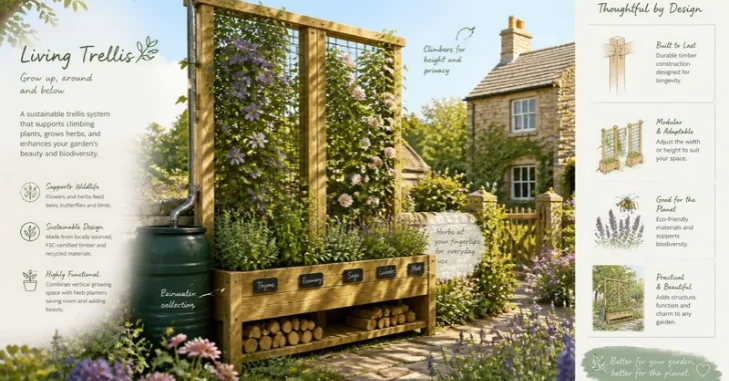
A garden trellis can turn an unused wall, plain fence, or overlooked corner into valuable growing space. It can support climbers, increase privacy, divide planting areas, and introduce height without making a garden feel enclosed. For UK gardens where outdoor space is often limited, that versatility makes trellis particularly useful.
Choosing the right design starts with its purpose rather than its appearance. A lightweight panel may suit annual climbers, while mature roses or wisteria need stronger support. Position, material, plant choice, and maintenance also affect how well the finished feature works.
Quick answer: Trellis works well for supporting climbing plants, screening overlooked areas, adding height, and making better use of small gardens. Choose a structure strong enough for the mature plant, position it for suitable light, and install secure supports before planting. Timber, metal, wall-mounted, and freestanding designs suit different spaces.
| Consideration | What to check |
| Main purpose | Plant support, privacy, decoration, screening or zoning |
| Location | Wall, fence, border, patio, container or freestanding position |
| Material | Timber, metal, wire or composite |
| Plant weight | Allow for the climber’s mature size and weight |
| Light | Match the plant to sun, partial shade or shade |
| Fixing | Secure wall fixings, fence posts or ground anchors |
| Maintenance | Pruning, tying, painting, staining and structural checks |
Why Trellis Works So Well in UK Gardens
Garden Trellis vertical growing makes more use of a limited footprint. The RHS notes that climbing plants take up relatively little ground space. This makes them particularly useful where borders are narrow or patio space matters.
Trellis also introduces structure before plants reach their full size. It can soften fencing, break up large brick walls, or create a visual boundary between different areas. Pageify’s guide to landscaping and home renovation explains how thoughtful outdoor features can connect garden and home design.
Privacy is another common reason for installing a panel. Open lattice can provide screening while allowing light through the gaps. Plants can then increase coverage gradually without creating the visual weight of another solid boundary.
9 Garden Trellis Ideas for Different Outdoor Spaces
The right approach depends on what your outdoor space lacks. Some gardens need privacy, while others need colour or a stronger focal point. These nine ideas cover practical situations found in many UK homes.
1. Add Trellis Above an Existing Fence
A trellis topper can increase visual screening while keeping the upper section relatively open. This approach suits patios and seating areas overlooked by neighbouring properties. Climbing plants can soften the boundary further as they mature.
Check the complete boundary height before making changes. Local planning restrictions can affect fences and other boundary treatments. Rules may also differ around listed properties, highways, and conservation areas.
2. Turn a Plain Wall Into a Vertical Garden
Bare brick or rendered walls offer useful vertical growing space. Fixing a framework in front creates support for suitable climbers without sacrificing much ground area. This can work particularly well beside patios and narrow paths.
The RHS recommends positioning wall supports away from the surface so plants have room to grow. Its guidance suggests about 5cm between supports and walls or fences. Secure battens or suitable fixings can create this space.
3. Use Trellis to Screen Bins and Utility Areas
Bins, composters, water butts, and garden equipment are necessary but rarely attractive. A freestanding screen can reduce their visual impact without building a solid enclosure. Leave enough access for regular use and cleaning.
Plants can make the screen feel like part of the garden rather than a disguise. Evergreen foliage provides longer screening, while flowering climbers add seasonal interest. Avoid letting growth obstruct lids, paths, gates, or ventilation.
4. Create a Green Divider
Large gardens sometimes feel flatter when every area is visible at once. A freestanding panel can separate dining, growing, and relaxation areas without constructing a full fence. Partial screening also creates a stronger sense of depth.
This approach can work in smaller gardens too. Use an open design so light still reaches neighbouring beds. Positioning matters more than adding a large amount of screening.
5. Combine Trellis With Containers
You don’t need a large border to grow upwards. A planter with an integrated support can bring climbing plants onto patios, balconies, and paved gardens. Containers also make planting possible where digging isn’t practical.
Choose a pot large enough for the plant’s mature root system. Container compost dries faster than garden soil during warm weather. Regular watering and suitable feeding will therefore become more important.
6. Make a Trellis Feature Around a Seating Area
Trellis can frame a bench or dining space without enclosing it completely. Climbing foliage introduces texture and can make the seating area feel more established. Fragrant plants can add another layer during flowering months.
Keep the eventual plant size in mind before planting beside furniture. Vigorous climbers may need regular pruning to keep paths and seats clear. Thorny plants also require careful placement around narrow access routes.
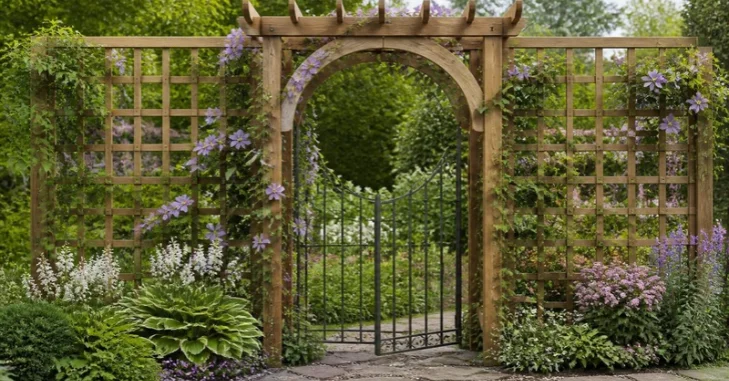
7. Use an Arch to Mark a Transition
An arch can mark the entrance to a lawn, vegetable plot, or seating zone. It creates height while providing support on both sides. Flowering climbers can turn a simple pathway into a stronger garden feature.
Choose an arch wide enough for comfortable access after plants mature. Secure it carefully because foliage increases the structure’s wind resistance. Heavier climbers also need a frame designed for their eventual weight.
8. Grow Edible Climbers Vertically
Vertical supports aren’t limited to ornamental plants. Runner beans, climbing French beans, peas, and some trained fruits can use upright structures. This can help productive planting fit into relatively compact spaces.
Match the support to the crop rather than relying on one design. Light netting can suit peas, while heavier perennial plants require stronger construction. Position edible crops where their light and watering needs can be met.
9. Paint Timber Trellis as a Design Feature
Timber doesn’t have to disappear behind plants. A carefully chosen paint or stain can connect the structure with fencing, sheds, or exterior joinery. Dark colours can create contrast with green foliage, while softer shades provide a lighter backdrop.
Outdoor timber finishes need suitable preparation and periodic maintenance. Pageify’s UK shed paint guide covers preparation, exterior finishes, and maintenance principles for garden timber. Always follow the coating manufacturer’s instructions for the product and timber involved.
Which Trellis Material Should You Choose?
Timber remains popular because it works with traditional and contemporary planting schemes. It can be painted or stained, and panels are widely available in several patterns. Regular inspection helps identify loose joints, damaged coatings, or early decay.
Metal can provide a slimmer appearance while supporting substantial growth when properly anchored. Wire systems are even less visually dominant and work well against suitable walls. The correct choice depends on plant weight, location, budget, and the look you want.
| Material | Good for | Main advantage | Main consideration |
| Timber | Fences, screens and general planting | Warm, familiar appearance | Needs periodic maintenance |
| Metal | Decorative panels and strong supports | Slim and potentially durable | Fixings must suit the load |
| Wire | Walls and discreet plant training | Minimal visual impact | Requires secure anchor points |
| Planter trellis | Patios and paved spaces | No border required | Containers need more watering |
Best Climbing Plants for a Trellis in the UK
Clematis is a versatile choice because different varieties suit different seasons and conditions. Honeysuckle can provide flowers, fragrance, and wildlife value. Climbing roses offer long-term structure but need tying and pruning because they don’t attach themselves directly.
Star jasmine can suit sheltered positions and provides evergreen foliage in suitable conditions. Wisteria creates impressive mature growth but becomes heavy, so substantial support is essential. Annual climbers such as sweet peas offer a lighter option for seasonal colour.
The plant should always suit the site’s aspect and available space. South-facing positions receive different conditions from shaded north-facing walls. Check expected height, spread, hardiness, soil requirements, and attachment method before buying.
How to Install and Position Trellis
Install the support before planting whenever possible. This avoids disturbing roots later and gives young shoots somewhere to grow immediately. The RHS recommends putting supports in place before planting most climbing plants.
Don’t assume the driest spot beside a wall is the best planting position. Walls and fences can create a rain shadow near their base. RHS planting guidance recommends placing climbers roughly 30–60cm from a wall where growing conditions are often better.
Wall-mounted supports also need clearance behind them. Around 5cm gives stems space and improves access for training. Use fixings suitable for the wall material and expected mature load.
How to Train Plants Across the Support
Young stems often need guidance before they cover the available area. Spread suitable shoots across the framework instead of directing every stem vertically. This encourages broader coverage and can reduce bare areas near the base.
Use soft garden ties where the plant cannot attach itself securely. Ties should hold stems without cutting into expanding growth. Check them during the growing season and loosen or replace them when necessary.
Pruning requirements vary between species and varieties. Check instructions for the specific plant rather than using one pruning schedule for every climber. Good training from the beginning usually makes later maintenance easier.
Common Trellis Mistakes to Avoid
Choosing a structure only for its appearance can cause problems later. A delicate panel may look suitable when the plant is young but struggle under mature woody growth. Check eventual plant size before choosing the support.
Poor positioning is another frequent issue. A sun-loving climber won’t perform well if an attractive panel happens to sit in deep shade. Match the plant, position, and support as one decision.
Maintenance also deserves attention. Timber coatings, fixings, ties, and mature stems should be checked periodically. Pageify’s wider Home Improvement section provides related ideas for maintaining and improving spaces around the home.
Making Trellis Work in a Small Garden
Small gardens benefit from features that perform more than one job. A vertical support can provide planting space, privacy, and visual height without occupying much floor area. This makes it useful beside patios, narrow borders, and compact seating areas.
Avoid covering every boundary with dense growth. Leaving some open areas helps maintain light and can make the garden appear less enclosed. One well-positioned feature often has more impact than several competing panels.
Create More Useful Vertical Space
A trellis works best when the structure, planting, and location are planned together. Start with the problem you want to solve, whether that’s privacy, limited growing space, or an unattractive boundary. Then choose a support capable of carrying the plant after several years of growth.
For a UK garden, practical decisions matter as much as appearance. Check sunlight, mature plant size, fixings, maintenance needs, and relevant boundary rules before installation. A well-planned vertical feature can then add greenery and structure without taking valuable space from the rest of your garden.
Frequently Asked Questions
What is the best garden trellis for climbing plants?
The best garden trellis depends on the mature weight and attachment method of the plant. Lightweight annuals need less support than woody roses or wisteria. Choose a durable structure with secure fixings and enough space for future growth.
How far should trellis be from a wall?
RHS guidance recommends fixing supports about 5cm away from walls and fences. The gap gives plants space to grow behind the framework. It also makes training stems across the support easier.
What plants grow well on trellis in the UK?
Popular options include clematis, honeysuckle, climbing roses, jasmine, and suitable varieties of wisteria. Annual sweet peas can provide seasonal colour without developing heavy woody growth. Always match the species and variety to the garden’s aspect and conditions.
Can trellis provide garden privacy?
Yes, particularly when open lattice is combined with suitable climbing plants. It can soften sightlines without creating the same solid appearance as full fencing. Check applicable boundary and planning rules before increasing the height of an existing structure.
Should I install trellis before planting a climber?
Yes, installing support first is generally preferable. The RHS recommends having supports ready before planting climbers that require them. This reduces disturbance and lets new growth be trained from the beginning.