
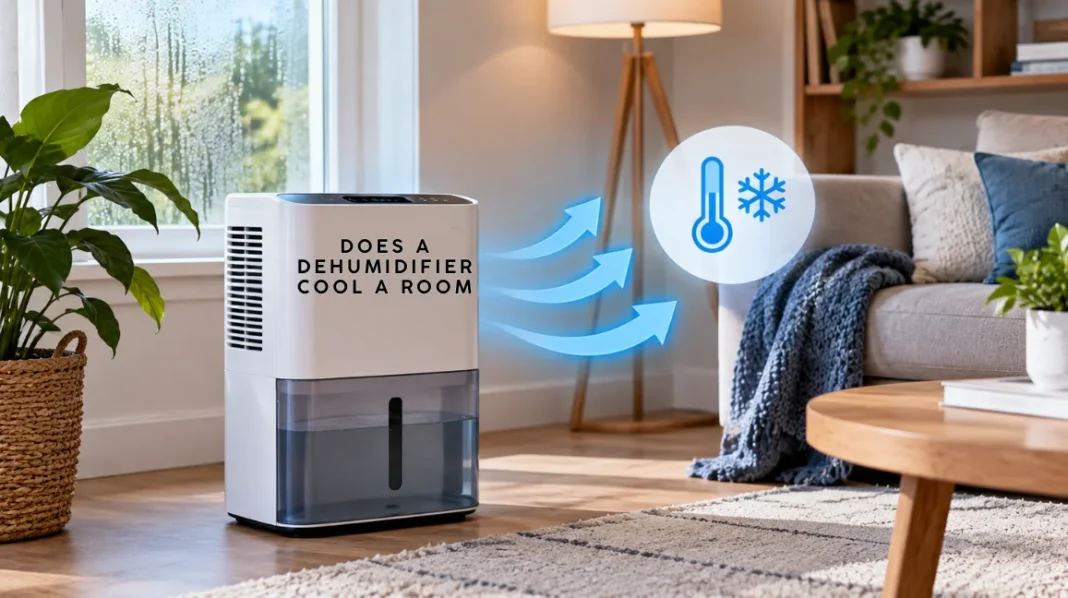
If you’re asking, does a dehumidifier cool a room? “The short answer is no: it does not lower room temperature like air conditioning. It can remove excess moisture, making muggy air feel less oppressive because sweat evaporates more easily. In a closed space, the unit may even raise the actual temperature slightly because it releases heat while operating.
| Does a Dehumidifier Cool a Room | Quick answer |
|---|---|
| Does it lower room temperature? | No |
| Can the room feel cooler? | Yes, when humidity is high |
| Can it make the room slightly warmer? | Yes, depending on the type and conditions |
| Useful UK humidity range | Around 40–60% relative humidity |
| Best option for actual cooling | Fan for airflow; air conditioner for lowering temperature |
| Useful for condensation and damp? | Yes, when excess indoor moisture is the cause |
| Compressor or desiccant? | Usually compressors are in normal heated rooms; desiccant can suit colder spaces. |
Direct answer: No. A dehumidifier doesn’t remove heat from a room the way an air conditioner does. It removes moisture, which can make humid air feel less sticky and more comfortable, while the machine itself may add a small amount of warmth as it runs.
Key takeaways
Lower humidity can make hot, muggy conditions feel more comfortable.
The thermometer may stay the same or rise slightly while the appliance operates.
UK guidance commonly places comfortable indoor relative humidity around 40–60%.
A fan improves airflow, while an air conditioner is the right choice for reducing actual temperature.
Compressor models normally suit heated living spaces, while desiccant technology can work better in cold rooms.
Moisture control can also help with condensation, damp conditions, and indoor laundry.
Does a dehumidifier cool a room or only change how it feels?
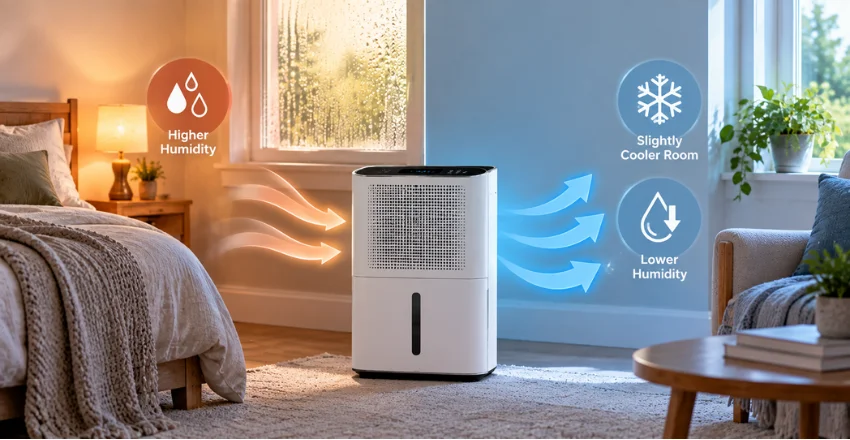
The appliance changes humidity rather than removing heat from the building. Air is drawn through the machine, moisture is extracted, and drier air is returned to the same space. Unlike an air-conditioning system, there is no outdoor component carrying unwanted room heat away. That distinction explains why a room can feel fresher without becoming colder on a thermometer.
High relative humidity slows sweat evaporation from your skin, which can make warm weather feel clammy and uncomfortable. Reducing moisture gives your body a better chance to lose heat through evaporation, so your comfort can improve even when the measured temperature does not fall.
This effect is most useful during humid summer weather rather than a dry spell. If the room is already hot and dry, extracting more moisture will not solve the main problem. In that situation, shade, ventilation, a fan, or proper air conditioning will usually make a bigger difference.
Why does drier air often feel cooler?
Your body continually manages heat, and evaporation is one way it does this. When surrounding air contains plenty of moisture, perspiration evaporates less readily, and you can feel sticky. Drier air lets evaporation happen more effectively, which is why two rooms at the same temperature can feel different.
Indoor humidity still needs balance rather than being pushed as low as possible. A UK government review of indoor environmental quality identifies 40–60% relative humidity as a useful range for limiting many problems linked with excessively damp or dry indoor conditions. For an ordinary British home, that makes a hygrometer more useful than guessing whether the air feels damp.
Moisture levels can also vary sharply between rooms and activities. Cooking, showering, and drying and washing indoors can produce short-term humidity peaks, even if the rest of the property is comfortable. Checking the reading where the problem occurs helps you decide whether moisture removal will improve conditions.
Can the appliance make a room warmer?
Yes, the actual air temperature can rise a little while the machine runs. Electrical energy powers the fan and moisture-removal process, and much of that energy eventually becomes heat inside the same room. The effect may be hard to notice in a large space but more obvious in a small room with closed doors and windows.
Compressor models cool incoming air internally so that water condenses, then pass the air through warmer components before releasing it again. The cold coil, therefore, does not mean the appliance works like an air conditioner. Heat created during operation remains indoors instead of being expelled outside the building.
Desiccant technology can produce a more noticeable warming effect because it uses an internal heater to regenerate its moisture-absorbing material. UK manufacturer Meaco says its desiccant models suit colder spaces and return noticeably warmer air. That can be useful in a chilly utility room or garage, but it is less attractive if your only goal is summer cooling. Where lasting winter warmth is the real aim, a dedicated system answers it far better, and Pageify’s breakdown of underfloor heating costs sets out what installing one involves.
What humidity level should UK homes aim for?
A sensible general target is roughly 40–60% relative humidity, although short peaks in kitchens and bathrooms are normal. Persistently high readings can encourage condensation and create conditions in which mold is more likely to develop. Unnecessarily low readings can also make the air uncomfortable.
A small digital hygrometer makes moisture control much easier because it separates temperature from humidity. If a warm room already sits comfortably within the normal range, running a moisture extractor solely to feel cooler may achieve little. If the reading remains high and the air feels clammy, reducing moisture is more likely to improve comfort.
Avoid treating a machine as a cure for every damp problem. Leaks, penetrating damp, damaged ventilation, or structural defects need the underlying cause corrected. Moisture extraction can manage indoor humidity, but it cannot repair a defective roof, blocked extractor, or leaking pipe.
Which type suits British summer and winter conditions?
The two main domestic technologies behave differently as room temperature changes. Which? explains the distinction between refrigerant and desiccant models, and model choice should reflect where the machine will operate. For most heated living rooms, bedrooms, and hallways, compressor technology is usually the natural starting point.
| Type | Best suited to | Temperature effect | Main UK use |
|---|---|---|---|
| Compressor/refrigerant | Normal heated rooms | Slight warmth | Condensation, everyday damp, laundry |
| Desiccant | Colder or unheated spaces | More noticeable warmth | Garages, conservatories, utility spaces, winter use |
| Air conditioner | Rooms that need real cooling | Lowers room temperature | Hot bedrooms and living spaces |
| Fan | People who need more airflow | Does not lower room temperature | Low-cost personal summer comfort |
Cold conditions matter because compressor performance can fall as the room gets colder. Meaco advises that desiccant technology becomes especially useful in spaces around or below 10°C, although individual products have their own operating ranges. Always check the manufacturer’s specification instead of choosing solely by the liters-per-day figure printed on the box.
Fan, moisture control, or air conditioning: which should you use?
Choose according to the problem you are trying to solve rather than the appliance you already own. A fan moves air across your skin and can improve comfort without changing the room temperature, while an air conditioner actively removes heat from the indoor space. Moisture control is most useful when excessive relative humidity drives the discomfort.
During a muggy British spell, pairing lower humidity with moving air can feel noticeably more pleasant. During a hot but dry period, extra moisture extraction offers little cooling benefit and adds electrical heat to the room. When you need a room to drop several degrees, air conditioning is the right technology.
Running several appliances together also means paying for all of their electricity use. Check the humidity reading first, then use the simplest tool that addresses the problem. This avoids running moisture-control equipment continuously when humidity is already within a comfortable range.
How to use one during warm weather
Getting the setup right matters because an inefficient arrangement can leave the machine running for longer than necessary. Start with a hygrometer reading and identify whether the space is genuinely humid rather than merely hot. Then follow the operating guidance for your model.
Set a sensible target instead of choosing the lowest possible humidity.
Keep doors and windows positioned according to the manufacturer’s advice while actively drying a particular room.
- Leave enough clearance around the air inlet and outlet.
Clean the filter at the recommended intervals.
Empty the tank before it reaches capacity or use approved continuous drainage where suitable.
Use a fan separately if airflow across the room is the main comfort problem.
Stop running the unit for cooling purposes once humidity is already under control.
Placement can influence how efficiently air circulates around the space. Which? recommends giving most machines clearance from furniture and walls unless the manufacturer specifically designs a model for wall placement. A central position often works well when you are trying to manage moisture throughout a room.
What else can lower indoor humidity help with?
Moisture management is often more useful for protecting a home than for summer comfort. It can reduce persistent condensation and support indoor laundry drying when ventilation alone is insufficient. It may also make damp-prone rooms feel less clammy during colder months.
Bathrooms are obvious moisture hotspots because showers and baths create repeated humidity peaks. If you are improving one, Pageify’s guide to bathroom floor tiles for UK homes explains moisture-resistant flooring choices, while its guide on how to tile a bathroom covers preparation and installation. These improvements do not replace ventilation, but good material choices make wet rooms easier to maintain.
Existing mold also needs treatment, not just dry air. Pageify’s bathroom cleaning guide covers cleaning considerations for mold-prone bathroom surfaces. Drier air makes regrowth less likely, but it will not lift staining that has already taken hold on grout or sealant.
The bottom line for UK homes
If you already own a dehumidifier, it can make humid summer conditions more comfortable, but it should not be treated as a substitute for air conditioning. Check the room’s relative humidity first and aim for a balanced level rather than maximum dryness. For actual temperature reduction, use a cooling method designed to remove heat.
For the rest of the year, moisture control can be far more valuable for condensation, damp management, and indoor washing. British homes often face changing conditions from warm, humid spells to cold, condensation-prone winters, so the right setting and technology depend on the season. Start with temperature and humidity readings, identify the problem, and choose the appliance that addresses it directly.
Frequently asked questions
Does a dehumidifier cool a room at night?
No, it does not lower the measured temperature in the way an air conditioner does. It may make a humid bedroom feel less sticky by reducing moisture, which can improve comfort for some sleepers. If the room is already dry and hot, a fan or air conditioner is more appropriate.
Can a dehumidifier make a bedroom warmer?
Yes, a small temperature increase is possible because electrical energy and the extraction process release heat indoors. Desiccant technology generally produces warmer outlet air than a normal compressor model. In a compact, closed bedroom, that warmth may become more noticeable after extended operation.
Should I use a dehumidifier during a UK heatwave?
Use one when humidity is high enough to contribute to discomfort, not simply because the weather is hot. Check the relative humidity before switching it on, and stop once you reach the target level. If the room remains too hot after you control humidity, you need airflow or active cooling instead.
Can I run a dehumidifier and a fan together?
Yes, the two devices perform different jobs and can be used together when conditions justify it. Moisture removal tackles excess humidity, while the fan moves air across your skin and around the room. Check your electricity use and avoid running either appliance longer than necessary.