

Cupboard paint can refresh a tired kitchen without the disruption or expense of replacing every cabinet. The right product depends on your cupboard material, desired finish, and willingness to prepare the surface. For UK homes, durability and easy cleaning should matter as much as color.
Quick answer: Choose a specialist cabinet coating suited to wood, MDF, melamine, laminate, or your existing finish. Clean every surface carefully, follow the manufacturer’s preparation instructions, and apply thin coats. Satin is often the easiest finish to maintain, while matt gives a softer modern appearance.
Cupboard Painting at a Glance
| Decision | What to consider |
|---|---|
| Surface | Timber, painted MDF, melamine, laminate, or vinyl-wrapped MDF |
| Preparation | Degreasing, cleaning, sanding, repairs, and primer where required |
| Finish | Matt, satin, eggshell, or gloss |
| Application | Brush, mini roller, or compatible spray system |
| Durability | Resistance to grease, moisture, knocks, and repeated cleaning |
| Drying | Touch-dry and recoating times differ from full curing time. |
| Typical UK product price | Many 750 ml specialist products sit around £18–£26 |
| Best approach | Match the coating and preparation method to the cupboard surface. |
Current UK retailers stock specialist products from brands including Rust-Oleum, Ronseal, and Johnstone’s. Wickes currently lists several 750ml options at roughly £20 to £23, although prices can change. Homebase also carries dedicated coatings for kitchen units, wardrobes, and other cabinet surfaces.
How to Choose Cupboard Paint for Your Kitchen
Start by identifying what your cupboard doors are made from. Timber, MDF, melamine, and wrapped doors behave differently beneath a new coating. Choosing by color before checking the substrate can create adhesion problems later.
Solid timber usually accepts a wide range of suitable coatings after cleaning and appropriate preparation. Previously painted MDF can also provide a dependable surface when the existing finish remains sound. Smooth melamine and laminate need more attention because adhesion can be harder to achieve.
Vinyl-wrapped MDF deserves particular care before any decorating begins. Check edges and areas beside ovens for lifting, bubbling, or loose film. Painting over failing wrap will not repair the bond beneath it.
The same practical thinking helps when planning the wider kitchen. Pageify’s breakfast bar planning guide explains how cabinetry, circulation, and worktop space affect everyday usability. Coordinating those choices before decorating can prevent colors or layouts from competing later.
Specialist Cabinet Coatings Compared
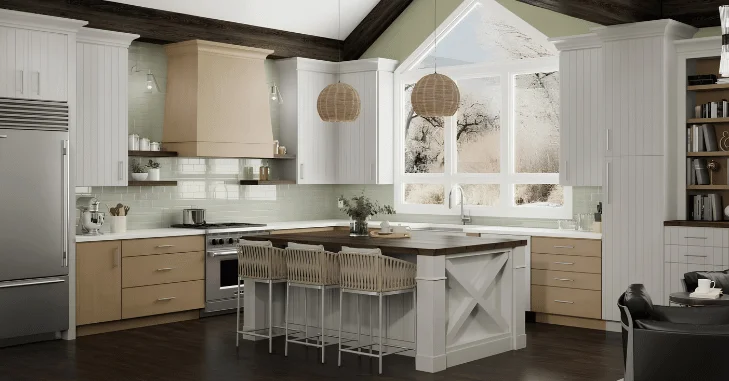
Several product types can work, but they do not offer identical preparation requirements or finishes. A purpose-made cabinet product often simplifies the project for less experienced decorators. Traditional eggshell and satinwood products offer broader color choices but can demand more preparation.
| Option | Typical finish | Main advantage | Main limitation | Good for |
|---|---|---|---|---|
| Specialist cabinet coating | Matt, satin, or gloss | Designed for high-touch surfaces | Color range varies by brand. | Straightforward kitchen makeovers |
| Water-based satin | Satin | Low odor and easy cleaning | Correct primer may be needed. | Busy family kitchens |
| Durable eggshell | Soft sheen | Wide color choice | Preparation usually matters more. | Design-led schemes |
| Chalk-style furniture coating | Matt | Soft decorative appearance | May need extra protection | Traditional or cottage interiors |
| Solvent-based coating | Satin or gloss | Hard, washable finish | Stronger odor and slower cleanup | High-wear cabinetry |
Our recommendation: most UK households should begin with a specialist water-based product designed for cabinets. It reduces guesswork and usually offers easier cleanup than traditional solvent systems. Always confirm that the exact product supports your cupboard material.
Johnstone’s Revive, for example, is marketed for MDF and melamine without a separate primer. The manufacturer describes it as water-based, low odor, and suitable for a smooth satin finish. Ronseal also sells products intended for cupboard surfaces, while Rust-Oleum offers numerous dedicated kitchen colors through UK retailers.
Pros of specialist products
- They are formulated specifically for cabinetry and other high-touch surfaces.
- Some products can go directly onto MDF or melamine after the required cleaning.
- Water-based formulas usually make brushes and rollers easier to clean.
- Several UK retailers offer matt, satin, gloss, and neutral color choices.
Possible drawbacks
Specialist products can have smaller color ranges than standard interior wood finishes. Some also make strong claims about reduced preparation, yet surfaces still need to be clean. Grease, dust, loose material, or failing old coatings can undermine any new finish.
Products also differ considerably between manufacturers. Instructions for sanding, priming, recoating, and curing should therefore come from the exact tin or technical sheet. Treat broad online advice as guidance rather than a replacement for product instructions.
Which Finish Works Best on Kitchen Cupboards?
Satin remains a practical middle ground for many busy kitchens. It reflects less light than gloss but normally wipes more easily than a soft decorative matt surface. The moderate sheen also suits both modern and traditional cabinetry.
Matt finishes have a flatter, contemporary appearance and can suit dark greens, navy, charcoal, and warm neutrals. Check whether the chosen product is designed for repeated cleaning before using it near handles. A beautiful color becomes frustrating if routine marks are difficult to remove.
Gloss provides a brighter, more reflective surface and can make small kitchens feel lighter. It also highlights dents, uneven preparation, and application marks more readily. Careful preparation matters when choosing a high-sheen coating.
Color should work with the rest of the room rather than the cupboard doors alone. Pageify’s beige color guide covers useful neutral pairings for British interiors. Samples should still be viewed beside worktops, flooring, walls, and handles before buying full tins.
Preparing Cupboards Before Painting
Good preparation has more influence on the result than buying the most expensive tin available. Kitchen surfaces collect grease, cooking residue, fingerprints, and cleaning products over time. These contaminants can prevent a fresh coating from bonding correctly.
Remove handles where practical and clean every area thoroughly. Pay extra attention around cookers, bins, kettles, and frequently touched door edges. Allow the surface to dry before moving to repairs or abrasion.
Sand only when the manufacturer recommends it for your chosen surface and product. Light abrasion can provide extra grip on some glossy finishes, but aggressive sanding may damage thin veneers or wrapped surfaces. Remove all sanding dust before applying anything else.
Use a suitable primer whenever the coating system or substrate requires one. Palatine, for example, recommends a compatible primer for bare wood, MDF, or laminate when maximum adhesion is required. A small test area can also reveal compatibility problems before the whole kitchen is committed.
A Practical Painting Method
A controlled process is usually better than trying to finish every door quickly. Remove doors where practical and label hinges so reassembly stays simple. Work in a clean, ventilated space where freshly coated surfaces can remain undisturbed.
- Remove handles and label doors, drawers, and hardware.
- Clean every surface and remove grease completely.
- Repair chips, dents, loose coatings, or damaged edges.
- Sand or prime only as required by the selected coating system.
- Stir the product carefully without introducing unnecessary bubbles.
- Use a quality brush for profiles and a mini roller for larger flat sections.
- Apply thin coats and respect the stated recoating interval.
- Allow additional curing time before heavy cleaning or hard daily use.
Avoid loading too much material onto a roller. Thick coats take longer to harden and can produce runs around edges or profiles. Several controlled passes normally give a neater result than one heavy application.
Use the same direction on final roller passes wherever possible. Check edges before leaving each door to dry because excess product often collects there. Keep children, pets, dust, and cooking steam away from freshly finished pieces.
How Much Will a UK Cupboard Makeover Cost?
Material costs depend mainly on kitchen size, product choice, tools, and preparation needs. Many current 750ml specialist products sell for around £18 to £26 through major UK retailers. You may also need degreaser, abrasives, primer, rollers, brushes, masking materials, and replacement handles.
Measure the doors, drawer fronts, side panels, and other surfaces you plan to coat. Then check the manufacturer’s stated coverage and the number of required coats. Buying based only on the number of doors can lead to shortages because door sizes vary considerably.
Painting is still normally far less disruptive than replacing an entire fitted kitchen. You can also combine the project with smaller functional changes. Pageify’s spice rack buying guide offers storage ideas for reorganizing cupboards after decorating.
Another option is improving the worktop area at the same time. Pageify’s boiling water tap guide covers an upgrade that can reduce countertop clutter. Planning cosmetic and functional changes together can produce a more coherent finished room.
Common Mistakes That Cause Poor Results
Rushing preparation is one of the easiest ways to waste time and materials. A surface can look clean while still carrying cooking grease near handles and door edges. Wash those areas carefully instead of relying on sanding to remove contamination.
Another mistake is assuming “no primer required” means “no preparation required.” Manufacturers can formulate products for direct application, but the substrate must still meet their stated conditions. Loose old coatings and dirt remain weak foundations.
Rehanging doors too quickly can also damage an otherwise successful finish. Touch-dry does not always mean fully hardened for everyday knocks and cleaning. Follow the stated drying and curing guidance before treating newly finished cupboards normally.
Frequently Asked Questions
Does cupboard paint need a primer?
Not always, because several specialist products are designed for direct application to certain surfaces. Johnstone’s Revive states that a separate primer is unnecessary on supported cupboard surfaces. Other systems may require primer, especially on bare, glossy, stained, or difficult substrates.
Can you paint melamine kitchen cupboards?
Yes, many products are specifically intended for melamine. The surface still needs thorough cleaning and must be sound before application. Check the product instructions because preparation requirements differ between brands.
Is satin or matt better for cabinets?
Satin is often easier to specify for frequently handled kitchen units because it balances appearance and practical cleaning. Matt can create a softer modern look but should still be rated for cabinetry. Choose performance first and sheen second.
Can I use ordinary wall emulsion on cupboards?
Standard wall emulsion is generally not intended for the repeated handling, grease, and cleaning kitchen doors receive. A coating designed for woodwork, furniture, or cabinets is a safer choice. Check its compatibility with the existing substrate before buying.
How long should newly painted cupboards dry?
Drying and curing are different stages, so there is no single universal time. Some products become touch-dry within hours but need longer before normal hard use. Follow the exact manufacturer’s guidance rather than judging readiness by touch alone.
Give Existing Cupboards a Better Second Life
Painting existing cabinetry can make a dated kitchen feel significantly fresher without removing usable units. Success comes from identifying the surface, preparing it properly, and choosing a coating designed for daily wear. Colour is important, but adhesion and durability should guide the purchase first.
Start with one door or a discreet test area before committing to the entire room. Check adhesion, colour, sheen, and application quality once the sample has dried properly. When those details work together, a relatively modest decorating project can produce a convincing kitchen update.