
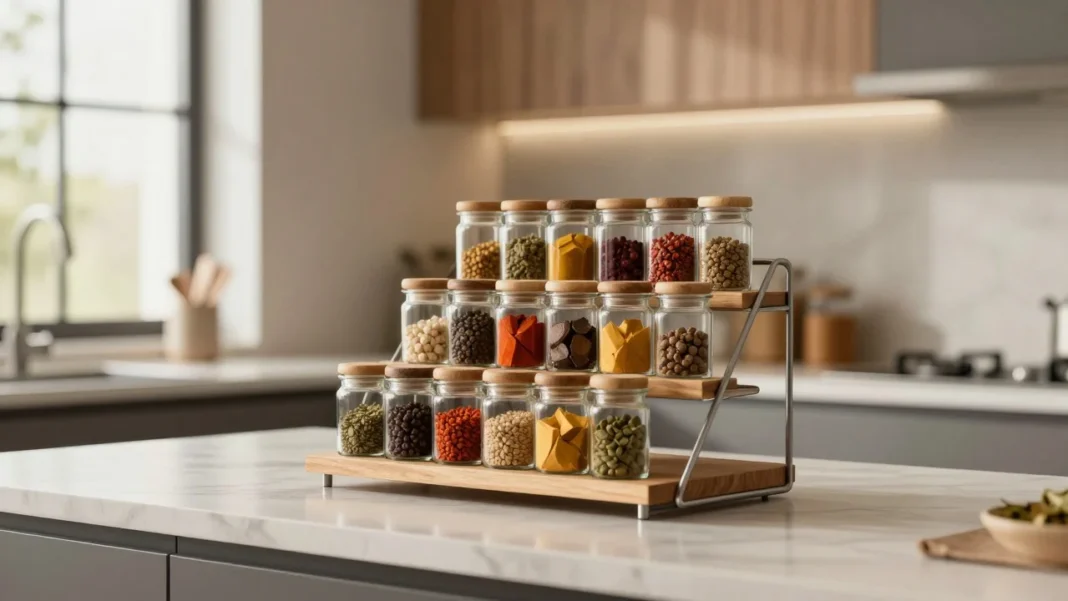
A spice rack can turn a crowded collection of jars into storage that is easy to scan and use while cooking. The right design depends on your available space, how many seasonings you own and whether you want them on display or hidden away.
UK shoppers can choose from countertop, tiered cupboard, drawer, rotating, wall-mounted and under-shelf designs. Current retailers and buying guides show all of these formats, so there is no single layout that suits every kitchen. We cover this in more depth in Air Bed.
| Key consideration | What to check before buying |
|---|---|
| Location | Worktop, cupboard, drawer, wall or shelf |
| Capacity | Count the jars you use regularly |
| Dimensions | Measure width, depth and height |
| Accessibility | Make sure labels stay visible |
| Installation | Freestanding, adhesive, hanging or screwed |
| Material | Metal, wood, bamboo or plastic |
| Jar compatibility | Check jar diameter and height |
| Best fit | Match the organiser to your cooking habits |
Quick answer: For most kitchens, choose storage based on where unused space already exists. A tiered cupboard organiser suits deep shelves, drawer inserts keep worktops clear, rotating designs improve access, and wall-mounted models save horizontal space. Measure the intended area and your tallest jars before buying.
What Type of Spice Rack Works Best?
The best choice is the one that makes every jar visible without wasting useful kitchen space. Current UK buying guides commonly divide organisers into freestanding, drawer, rotating and wall-mounted formats. Elsewhere on the site: Shed Paint for UK Gardens.
Here is how the main options compare.
| Type | Best for | Main advantage | Possible drawback |
|---|---|---|---|
| Tiered cupboard organiser | Deep cabinets | Makes rear jars easier to see | Needs enough shelf height |
| Drawer organiser | Clear worktops | Labels are visible from above | Uses drawer space |
| Rotating carousel | Frequent cooks | Quick access from several sides | Occupies worktop or shelf space |
| Wall-mounted holder | Compact kitchens | Frees cupboards and counters | May require drilling |
| Under-shelf organiser | Crowded cupboards | Uses otherwise empty space | Capacity can be limited |
| Freestanding rack | Everyday seasonings | Simple and easy to move | Leaves jars visible |
| Magnetic storage | Small spaces | Uses vertical metal surfaces | Jar compatibility matters |
Tiered cupboard organisers
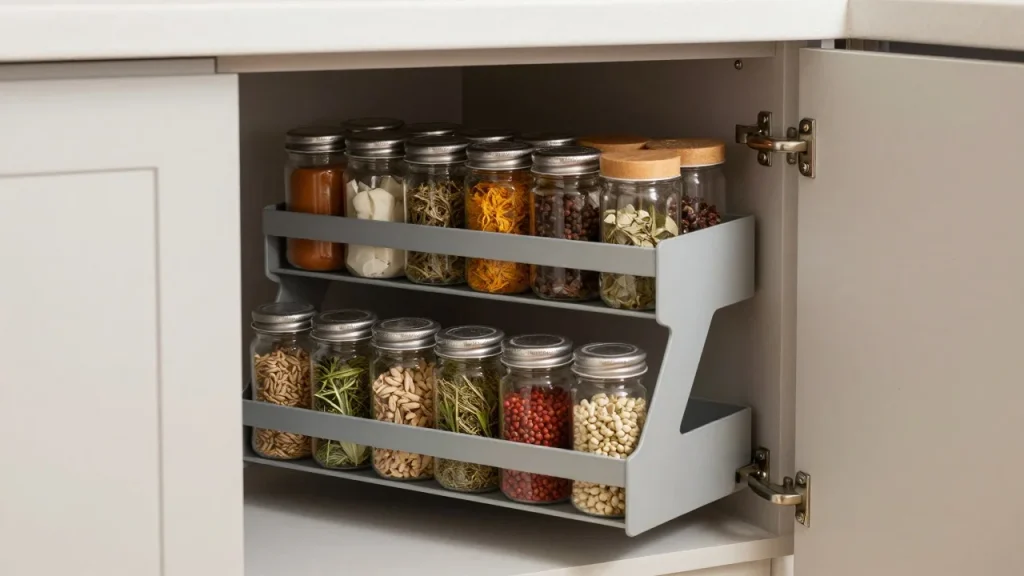
A stepped organiser raises each row above the one in front. This works well when jars disappear behind one another in a deep kitchen cabinet.
It is especially practical if you already have enough cupboard width but struggle with visibility. Some current UK models are designed to hold around 15 to 20 small jars, though capacities vary by product.
Pros: no installation, jars remain together, and labels are easier to scan.
Cons: tall bottles may block shelves above, and fixed-width designs can waste space in narrow cupboards.
Drawer organisers
Drawer storage suits households that prefer clean worktops and closed cupboards. Angled inserts let you read labels without lifting every container.
Before buying, measure the internal drawer width, depth and height. Include the height of your jars once they sit at an angle. Expandable inserts can help with unusual drawer widths.
Pros: tidy appearance, easy label visibility and no wall fixing.
Cons: you give up drawer capacity, and deep or unusually tall jars may not fit.
Rotating carousels
A rotating organiser works well when you use many different seasonings during cooking. Turn the base rather than reaching behind several containers. Filled carousels are also widely sold in Britain. Next currently lists rotating designs, while other UK retailers offer sets supplied with labelled jars and herbs.
Pros: fast access and useful storage within a relatively small footprint.
Cons: the base still occupies permanent surface space, and pre-filled sets may include flavours you rarely use.
Wall-mounted storage
Wall-mounted holders can make sense in smaller rooms where every cabinet and worktop is busy. They also keep frequently used jars at eye level.
Check the fixing method carefully. Screwed models require a suitable surface, while adhesive designs depend on the wall finish and stated load limit.
Renters should also consider whether drilling is permitted before installing permanent storage.
Pros: saves horizontal space and keeps jars visible.
Cons: installation takes more planning, and spices should not sit beside a hot hob or in strong sunlight.
Under-shelf organisers
An under-shelf model hangs beneath an existing cupboard shelf, creating storage in space that might otherwise remain empty.
For example, Joseph Joseph’s CupboardStore design is made to attach below a shelf rather than occupy the main shelf surface. UK listings show that capacity and cupboard-size requirements can be more restrictive than standard tiered organisers.
This format works best for a smaller set of frequently used herbs rather than a large collection.
How to Choose the Right Size
Start with the jars, not the organiser.
Count every seasoning you regularly use and set aside duplicates or rarely used packets. Then measure the tallest and widest containers.Next, measure the intended storage area in centimetres. For a cupboard, record width, usable depth and clear height. For a drawer, check internal dimensions rather than the outside cabinet size.
Leave a little room for removing jars comfortably. An organiser that technically fits but leaves no finger space can become annoying in daily use.Capacity figures also deserve care. A product advertised for 20 containers may reach that number only with small, matching bottles. Mixed supermarket jars often need more room.
Where Should You Store Herbs and Spices?
Choose a cool, dry position away from direct sunlight, excess heat and steam. A rack beside the hob may be convenient, but repeated exposure to heat and moisture is not ideal for dried seasonings.
Cupboards, drawers and pantry shelves often provide better conditions. A worktop can also work when it sits away from the cooker and strong sunlight. Current UK buying advice similarly recommends dry storage away from heat and steam. If you are reorganising the wider room, Pageify’s guide to a boiling-water tap for a less cluttered kitchen offers another way to rethink worktop use.
Home cooks comparing appliances can also read Pageify’s dual air fryer guide, while broader household projects are covered in its Home Improvement section and Food section.
Material: Metal, Wood, Bamboo or Plastic?
Material affects appearance, cleaning and weight more than the basic storage principle.
Metal suits modern kitchens and can support slim wall-mounted frames. Check whether coated steel is intended for humid rooms and wipe it dry after cleaning.
Wood and bamboo bring a warmer look to open shelves or worktops. Avoid leaving them in persistently damp areas.
Plastic is often lightweight and suits drawer inserts, tiered shelves and adjustable organisers. Check care instructions because not every model is dishwasher safe.
Rather than choosing by appearance alone, consider how often you will move or clean the unit.
A Simple Layout for Different UK Kitchens
For a small flat with limited worktop space, start with a drawer insert or wall-mounted option. If drilling is not suitable, use a cupboard shelf organiser instead. In a family kitchen with a large seasoning collection, combine storage methods. Put everyday jars in an accessible tiered unit and keep refills or specialist ingredients on a higher pantry shelf.
Frequent cooks may prefer a compact carousel for their eight to twelve most-used seasonings. Less-used ingredients can stay in a cupboard. This two-zone approach prevents one oversized organiser from dominating the room while keeping daily ingredients close to hand.
Our Verdict
There is no universal winner. For most households, a tiered cupboard or drawer organiser is the safest starting point because both improve visibility without requiring permanent installation.
Choose a rotating model when speed of access matters more than clear worktops. Pick wall storage when cupboards and drawers are already full.
The most important step is measurement. Match the organiser to your real jars and available space rather than relying on an advertised capacity alone.
How to Organise Your Jars Once the Rack Is Installed
A good arrangement should be easy to maintain after the first week.You can organise alphabetically if you own a large collection. This makes unfamiliar ingredients easier to find. Another option is frequency. Keep salt, pepper, paprika, chilli, cumin and other everyday choices in the easiest positions. Grouping by cuisine can work for enthusiastic cooks. For example, keep ingredients commonly used for curries together and store baking spices in a separate row.
Make Your Kitchen Storage Work Harder
A well-chosen organiser should save searching, not add another obstacle to your kitchen. Start by counting your jars and measuring the space where you want to store them. Then choose the format that keeps labels visible and seasonings easy to reach. Once those basics are right, material and style become much easier decisions.
Frequently Asked Questions
Drawer, wall-mounted and under-shelf organisers usually use limited space efficiently. The best option depends on whether you have spare drawer capacity, a suitable wall or unused cupboard height.
Yes, particularly when several jars need to remain accessible. A carousel lets you bring rear containers forward without moving the ones in front.
It is better to keep dried herbs and seasonings away from regular heat, steam and direct sunlight. Choose a nearby cupboard or another dry storage position where possible.
Count the containers you use before shopping. Choose capacity based on those jars and leave some spare room for new additions.
No. Matching containers can create a neat appearance, but they are not necessary. If you use mixed supermarket jars, measure the largest ones before choosing a holder.