
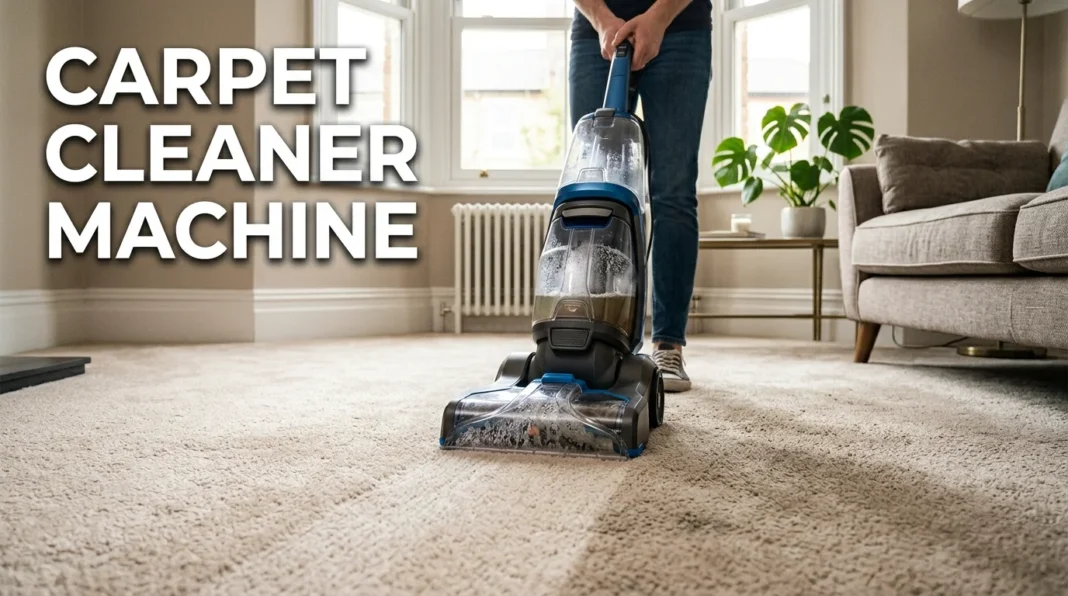
A carpet cleaner machine can remove embedded dirt, stains, and residue that ordinary vacuuming leaves behind. The right model depends on your carpeted area, storage space, pets, stains, and how often you clean. UK buyers should compare full-size washers, compact spot cleaners, and hire machines before spending money.
Direct answer: For most UK homes with several carpeted rooms, a full-size upright washer offers the best balance of coverage and convenience. A portable spot cleaner suits spills, stairs, cars, and smaller homes, while hiring makes more sense for infrequent whole-house deep cleaning.
| Buying factor | What to check | Why it matters |
|---|---|---|
| Machine type | Upright, portable spot cleaner, or hire machine | Determines cleaning area and storage needs |
| Clean-water tank | Capacity and refill frequency | Larger tanks reduce interruptions |
| Dirty-water tank | Capacity and ease of emptying | Affects cleaning speed and maintenance |
| Brush system | Fixed, rotating, or powered brushes | Helps loosen soil from carpet fibres |
| Hose and tools | Stair and upholstery attachments | Adds flexibility beyond floors |
| Drying features | Extraction strength and dry modes | Helps rooms return to use sooner |
| Weight | Empty and filled weight | Important on stairs and between rooms |
| Cleaning solution | Approved detergents and availability | Protects performance and warranty conditions |
Key takeaways
- Choose an upright washer for regular cleaning across several carpeted rooms.
- Pick a portable spot cleaner for spills, stairs, upholstery, cars, and smaller areas.
- Bigger tanks reduce refilling but make the appliance heavier when full.
- Strong water recovery matters because less retained moisture usually means easier drying.
- Check carpet-care labels before using water extraction on delicate or specialist fibres.
- Buying often suits families, pet owners, and homes that get cleaned several times a year.
- Hiring can save storage space when you only need an occasional deep clean.
How to choose a carpet cleaner machine for a UK home
Start by deciding what you expect the appliance to clean most often. A large upright unit makes sense when bedrooms, hallways, and living rooms all have fitted carpet. A portable cleaner is easier when your main problems are isolated stains or upholstered furniture.
Think about where the appliance will live between cleaning sessions. Full-size models need cupboard or utility-room space and can feel cumbersome in smaller British homes. Compact machines sacrifice floor coverage but are easier to carry, store, and prepare.
Your flooring should shape the decision too. Carpet washers use water and detergent, so they work differently from standard dry vacuum cleaners. For everyday crumbs and loose debris, Pageify’s guide to handheld vacuum cleaning explains where compact vacuuming equipment fits.
Full-size, spot cleaner, or hire machine?
No single format suits every household. The UK market includes powerful upright models, compact portable cleaners, and professional-style equipment available to hire. Major retailers currently stock both full-size and spot-cleaning formats, reflecting these different needs.
| Option | Best for | Main advantages | Main drawbacks |
|---|---|---|---|
| Upright carpet washer | Several carpeted rooms | Wide cleaning path, powered brushes, larger tanks | Bulky, heavier, needs storage |
| Portable spot cleaner | Spills, pets, stairs, sofas, cars | Compact, quick to prepare, easy to carry | Slow for whole rooms |
| Hire machine | Occasional deep cleaning | No permanent storage, commercial-style capacity | Collection, return, and time limits |
| Professional service | Large or difficult jobs | Minimal household effort | Higher recurring cost |
Upright carpet washers
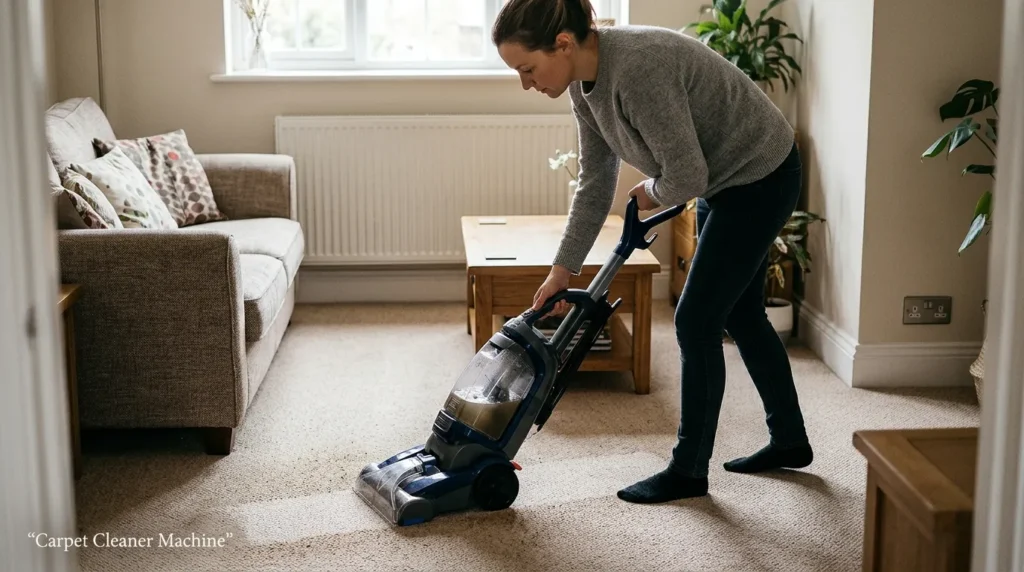
An upright washer is usually the strongest choice for households with substantial carpet coverage. It resembles a large vacuum but sprays cleaning solution before recovering dirty water. Powered brush systems can help loosen soil that has settled into the pile.
The main disadvantages are size and weight when full. A generous clean-water tank saves refilling, but every litre of water also adds roughly one kilogram. Buyers with stairs should check the carrying weight before choosing a larger model.
Pros.
- Efficient across complete rooms
- Larger tanks than compact cleaners
- Often includes powered agitation
- Suitable for scheduled deep cleans
Cons.
- Needs more storage space
- Can be heavy when filled
- Less convenient for quick spills
Portable spot cleaners
A portable extractor works well for households dealing with muddy footprints, drink spills, pet accidents, and furniture marks. Most use a hose and small cleaning head rather than a wide floor nozzle. This format also works well for stairs and vehicle interiors.
Portable units are not ideal for cleaning several large rooms in one session. Their small heads require more passes, and their tanks need refilling more often. They are best considered problem-solvers rather than replacements for full-width machines.
Pros.
- Easy to store
- Useful on stairs and upholstery
- Fast to set up for fresh stains
- Easier to carry around the home
Cons.
- Small cleaning path
- More refilling on larger jobs
- Less practical for whole-house cleaning
Seven buying checks that matter most
1. Match tank size to your cleaning area
Tank capacity affects how often you stop during a cleaning session. Large clean-water tanks suit bigger rooms because fewer refills are needed. Smaller tanks reduce the appliance’s weight and suit compact homes.
Separate clean and dirty tanks are preferable because they keep recovered wastewater isolated. Look at both capacities instead of comparing only the advertised clean-water figure. A tiny recovery tank can still interrupt a job even when the fresh-water tank is generous.
2. Check extraction and drying performance
A washer cleans with water, but effective recovery matters just as much. Better extraction removes more moisture after each pass and can shorten the drying process. Several slow dry passes can also recover additional water after you stop using detergent.
Drying time changes with carpet thickness, ventilation, room temperature, and water use. Open windows where conditions allow and follow the manufacturer’s guidance. Pageify’s UK dehumidifier guide also explains how indoor moisture control works.
3. Look at brushes, tools, and hose reach
Powered brushes can agitate carpet fibres as the machine moves across the floor. This helps with embedded soil, but delicate flooring may need gentler treatment. Always check the carpet’s care requirements before deep cleaning.
Attachments add value for stairs, sofas, pet beds, or car interiors. A useful hose should reach awkward areas without forcing you to balance the main unit nearby. Check whether the tools you need come included or cost extra.
4. Consider pets and recurring stains
Pet households often need more than occasional whole-room washing. Mud, hair, food, and accidents can create small messes that need quick attention. A portable extractor may therefore complement a larger upright unit.
Look for tools designed to reach edges and fabric surfaces. Removable brush covers can also make post-cleaning maintenance easier. Cleaning performance still depends on treating stains promptly and using an appropriate solution.
5. Check the machine’s filled weight
Retail specifications often emphasise empty weight, but the appliance gets heavier when filled. A three-litre tank can add about three kilograms before considering recovered water. This difference matters when moving between floors.
Balance capacity with manoeuvrability rather than automatically choosing the largest tank. A lighter appliance used comfortably is more practical than a larger one you avoid carrying. Small homes can gain more from convenience than maximum capacity.
6. Confirm suitable cleaning solutions
Manufacturers often specify which detergents are approved for their machines. Using too much detergent can leave residue and create unnecessary foam. Follow the dilution and solution instructions supplied with your model.
More detergent does not automatically clean carpet better. Correct dosing, steady passes, agitation, and water recovery matter more. Test products in an inconspicuous area when you’re unsure about colourfastness or material compatibility.
7. Compare purchase cost with likely use
Buying is easiest to justify when you expect regular use. Families, pet owners, landlords, and heavily carpeted households may clean often enough to value permanent access. Storage and maintenance should still be included in the decision.
Hiring suits homes that need one major clean each year. You avoid storing a bulky appliance and can choose a larger machine for a concentrated job. The trade-off is collecting, using, cleaning, and returning it within the hire period.
How much should you spend?
UK carpet-cleaning equipment spans a broad price range. Basic compact machines can cost under £100, while premium uprights can reach several hundred pounds. Current Currys listings, for example, show models ranging from lower-cost compact machines to premium upright cleaners around £300–£400.
Price alone does not reveal whether a model suits your home. Tank capacity, accessory range, weight, warranty, and cleaning format can matter more than extra headline features. Compare specifications against the jobs you will perform most frequently.
A mid-range model can be sensible when you need regular whole-room cleaning without professional equipment. Smaller households may get better value from a compact spot unit instead. The right purchase is the machine you can store, carry, maintain, and use regularly.
Do carpet cleaning machines really work?
Water-extraction machines can remove soil and staining that dry vacuuming cannot lift. They apply cleaning liquid, agitate the surface, and recover contaminated water into a separate tank. Results depend on the carpet, stain type, detergent, machine design, and technique.
They cannot restore fibres that are permanently bleached, worn, or physically damaged. Old stains may also need specialist treatment instead of repeated wet cleaning. Aim for realistic improvement rather than expecting every mark to disappear.
Routine floor care still matters between deep cleans. Vacuum first so loose grit and hair do not interfere with washing. This keeps deep cleaning focused on embedded material rather than ordinary surface debris.
Can you use a steam cleaner instead?
A steam cleaner and a carpet extractor perform different jobs. A carpet extractor applies solution and recovers liquid, while steam equipment produces heated vapour. They aren’t interchangeable.
Which? advises checking suitability before using steam on carpet, because materials and backing systems vary. Always follow both the carpet manufacturer’s care guidance and the appliance instructions. When uncertain, use a method specifically approved for that flooring.
For other surface-care decisions around the home, Pageify also covers cleaner selection for bathrooms. Its bathroom floor tile guide explains why cleaning methods should match the surface material.
Should you buy or hire?
Buy if you expect to clean several times each year and have suitable storage. Permanent ownership lets you deal with seasonal dirt, children, pets, and accidental spills without arranging a rental. It also gives you time to clean one room at a comfortable pace.
Hire when deep cleaning is rare and cupboard space is limited. Rental equipment can also suit end-of-tenancy work or a one-off refresh before moving. Before comparing costs, check hire periods, detergent charges, deposits, collection arrangements, and return conditions.
Recommendation: most carpeted family homes will benefit most from a good upright washer. Choose a portable model when stains and upholstery are the priority. Rent one instead if you expect to deep-clean only occasionally.
How to use a carpet washer safely
Prepare the room before adding any water. Vacuum thoroughly, remove small furniture, and check the flooring’s cleaning instructions. Pre-treat specific stains only with products suitable for the carpet and machine.
Work methodically and avoid soaking the pile. Follow the machine’s prescribed wet passes, then use dry recovery passes where recommended. Empty dirty water before it reaches the maximum line and rinse tanks after use.
Keep people and pets away until the carpet is dry. Good airflow helps moisture leave the room, particularly in cooler UK weather. Don’t replace proper ventilation or repair work with appliances if persistent damp has another cause.
Common buying mistakes to avoid
Many disappointing purchases come from buying for specifications rather than actual household needs. Large numbers on a product page can look impressive but may bring extra size and weight. Think about handling and storage before focusing on capacity.
Don’t assume a portable stain remover can efficiently clean several large rooms. The opposite mistake is buying a full-size unit for one sofa and occasional drink spills. Matching the format to the job prevents wasted money and cupboard space.
Also check consumable costs and access for maintenance. Tanks, brush covers, filters, and nozzles should be straightforward to clean. A machine that is difficult to maintain may become unpleasant to use after only a few sessions.
Frequently asked questions
What is the best carpet cleaner machine for home use?
The best carpet cleaner machine depends on how much carpet you need to wash. Upright models generally suit several carpeted rooms, while portable machines suit spills and stairs. Compare capacity, weight, recovery performance, tools, and storage before choosing.
Is a carpet cleaner better than a spot cleaner?
Neither format is universally better because they solve different problems. Carpet washers cover large floor areas more efficiently. Spot cleaners are easier to store and more convenient for isolated stains, stairs, cars, and upholstery.
How long does carpet take to dry after cleaning?
Drying may take several hours and varies by material and conditions. Water quantity, extraction strength, ventilation, temperature, and carpet thickness all influence the result. Avoid replacing furniture or walking heavily on the surface until it feels dry.
Should I vacuum before using a carpet washer?
Yes, vacuuming first removes loose hair, dust, grit, and crumbs. The washer can then focus on embedded dirt and stains. Skipping this step can make wet cleaning less efficient.
Are carpet washers suitable for every carpet?
No, some carpets and rugs need specialist methods. Natural fibres, delicate dyes, handmade rugs, and certain backing materials may react badly to wet extraction. Always check care labels or manufacturer instructions before cleaning.
Is hiring cheaper than buying?
Hiring is often economical for occasional deep cleaning because it requires no long-term storage. Buying can be more convenient if you use the equipment repeatedly. Compare expected annual use rather than only the upfront price.
Final verdict
Choose according to cleaning frequency, floor area, and the messes you face most often. A full-size upright is the strongest all-round choice for regularly cleaned carpeted homes. Portable equipment suits targeted cleaning, while rental machines make sense for infrequent larger jobs.
Do not let tank size or motor figures decide the purchase alone. Check weight, attachments, water recovery, storage, carpet compatibility, and consumable costs together. Those practical details determine whether the machine remains useful after the first deep clean.
For more practical advice on maintaining and improving UK homes, browse Pageify’s Home Improvement content. Compare several suitable models before buying, then follow the manufacturer’s care instructions from the first use. A well-matched machine should make routine deep cleaning easier without taking up more space than its usefulness warrants.