
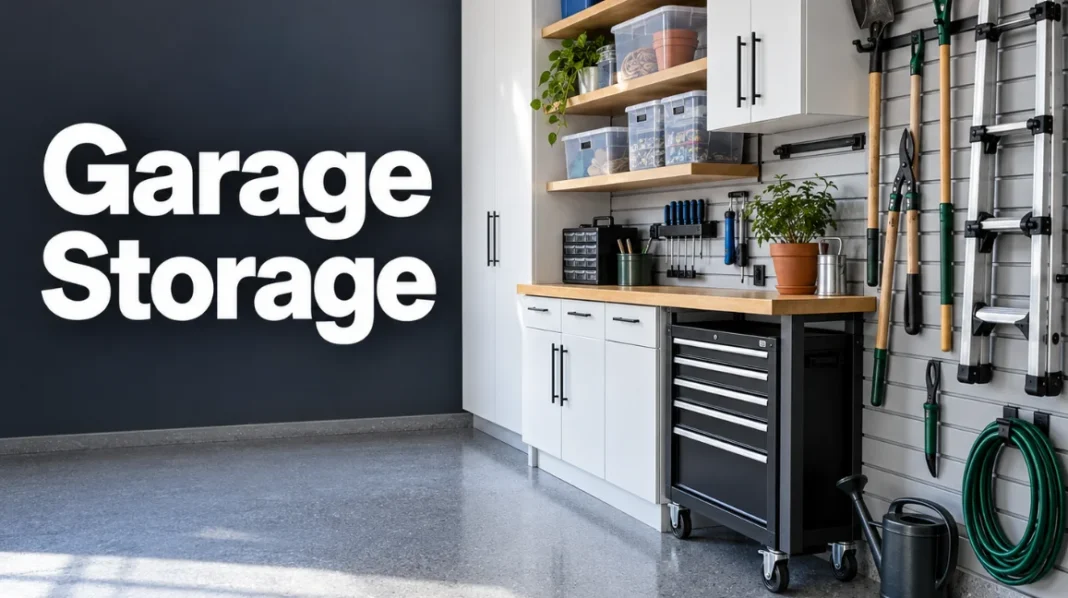
A cluttered garage can lose useful floor space surprisingly quickly. Good garage storage gives every item a sensible place without blocking doors, cars, or work areas. The most effective setup uses walls, shelving, labelled containers, and carefully chosen overhead space.
You do not need expensive fitted cabinets to make a major difference. Start by deciding what belongs in the room and how often you use it. Then match each group of items to the safest and most accessible position.
| Key decision | Practical choice |
|---|---|
| Frequently used tools | Pegboard, hooks, shallow shelves, drawers |
| Heavy equipment | Low shelves or sturdy floor-level racking |
| Seasonal items | High shelves or suitable overhead storage |
| Bikes | Wall rack, vertical hook, or floor stand |
| Small loose items | Labelled boxes, drawers, divided organisers |
| Damp-sensitive belongings | Sealed containers or storage elsewhere |
| Hazardous products | Secure storage following product and official guidance |
| Limited floor space | Wall-mounted and vertical systems |
Quick answer: Start by clearing the floor, sorting belongings into practical zones, and measuring available walls. Put heavy items low, everyday items within easy reach, and lighter seasonal belongings higher. Use sealed containers where moisture is a concern. Keep walkways, doors, sockets, and vehicle access clear throughout the layout.
Key Takeaways
- Sort belongings before buying shelves, cabinets, or boxes.
- Keep heavy equipment low and close to strong supports.
- Use walls before sacrificing more valuable floor area.
- Store seasonal belongings higher than regularly used items.
- Choose lidded plastic containers for dusty or damp conditions.
- Keep frequently used tools visible and easy to reach.
- Leave safe access around doors, vehicles, sockets, and appliances.
- Check fixing methods and stated load limits before installation.
Plan Your Garage Storage Before Buying Anything
Buying containers first often creates more clutter rather than solving it. Begin by removing obvious rubbish, duplicates, and belongings that should live elsewhere. You can then see how much usable space remains. Divide what stays into categories such as DIY tools, gardening equipment, sports gear, car products, and seasonal belongings.
Keep related items together instead of spreading them across several shelves. This makes finding and returning items much easier. Measure each wall before choosing any large unit. Record ceiling height, door movement, sockets, windows, pipes, and other obstacles. Pageify’s broader Home Improvement section can also help when planning connected household projects.
A simple five-step process works well:
- Empty enough of the room to see the available floor and walls.
- Remove broken, unused, duplicated, or unsuitable belongings.
- Sort everything remaining into clear activity-based groups.
- Measure walls, corners, door clearances, and usable height.
- Choose storage equipment only after assigning each category a zone.
This order prevents shelves from becoming another place to hide unsorted belongings. It also helps you buy the correct size instead of estimating. Good organization starts with the layout, not the product catalogue.
Which Storage Type Works Best?
Different systems solve different problems, so most garages benefit from a combination. Open shelving suits bulky boxes, while cabinets protect smaller belongings from dust. Hooks and racks work better for awkward items that waste shelf space.
| Storage type | Best for | Main advantage | Main consideration |
|---|---|---|---|
| Metal shelving | Boxes, tools, garden supplies | Strong and flexible | Check shelf load ratings. |
| Closed cabinets | Tools, chemicals, valuable items | Cleaner appearance and protection | Needs floor or wall space |
| Pegboard | Hand tools and accessories | Easy visibility | Needs secure wall fixing |
| Wall hooks | Ladders, hoses, garden tools | Uses vertical space | Match hook to item weight. |
| Bike racks | Bicycles | Clears valuable floor area | Allows a safe lifting room. |
| Stackable boxes | Seasonal and grouped items | Easy labeling | Avoid unstable tall stacks. |
| Overhead racks | Light, rarely used items | Uses otherwise empty space | Fixing and headroom matter. |
Freestanding metal shelving is often a practical starting point. It can hold several categories without permanent wall installation. Anchor tall units when the manufacturer instructs you to do so. Closed cabinets work well where dust or visual clutter is a problem. Lockable models can also restrict access to sharp tools or unsuitable products. They should not replace proper safety procedures for hazardous substances.
Pegboards and wall tracks suit frequently used equipment. You can see tools immediately instead of searching through deep boxes. They also keep benches available for actual work.
Use the Walls Without Making Them Unsafe
Wall space is valuable because it does not reduce the central walking area. Long-handled tools, folding chairs, ladders, and bicycles can consume significant floor space. Suitable wall supports can move many of these objects out of the way. Choose fixings for the wall material rather than the item alone. Masonry, timber framing, and lightweight lining systems need different fixing methods.
Follow the hardware maker’s installation and load instructions. Keep heavier belongings below shoulder height whenever practical. This reduces awkward lifting and makes accidental drops less likely. Light objects can usually occupy higher positions more comfortably.
Avoid filling every wall simply because space exists. Leave room around switches, sockets, windows, meters, and equipment requiring maintenance. A clear route from the main entrance should remain available.
Make Floor Shelving Easier to Live With
Deep shelving can hold plenty, but it can also hide belongings at the back. Choose shelf depth around the containers and equipment you already own. Shallow storage often works better for frequently used objects. Place the heaviest containers on lower shelves. Medium-weight belongings can sit around waist or chest height. Reserve upper shelves for lighter objects you need only occasionally.
Clear plastic boxes help you identify contents quickly. Opaque boxes look tidier but need accurate labels. Whichever style you choose, use lids where dust or moisture can reach the contents. Avoid keeping cardboard cartons directly on a garage floor. Moisture and minor water ingress can quickly weaken the base. A raised shelf and suitable lidded container provide better protection.
Use Ceiling Space Carefully
High-level storage can work well for lightweight seasonal belongings. Camping equipment, empty luggage, and festive decorations may suit this location. Items needed every week usually belong somewhere easier to reach. Check the structure before fitting any ceiling-mounted system. Never assume plasterboard or another ceiling finish can carry significant weight.
Use only suitable supports and follow the system manufacturer’s instructions. Consider how the garage door moves before planning overhead racks. Up-and-over and sectional doors need clear operating space. Stored belongings should never interfere with tracks, mechanisms, lighting, or vehicle clearance.
A step ladder may also be needed for access. Store it somewhere convenient rather than behind the items it serves. High storage stops being useful when reaching it becomes difficult or unsafe.
Protect Belongings From Damp and Condensation
Garages can experience more temperature and humidity changes than heated living rooms. That makes paper, fabrics, electronics, and untreated materials harder to store safely. Consider keeping vulnerable belongings indoors instead. Use sealed plastic containers for items that can tolerate garage temperatures but need dust protection. Keep containers raised if water could enter under the door.
Do not tightly pack damp belongings before they have dried. Ventilation and moisture control can help where condensation is an ongoing problem. Pageify’s guide to dehumidifiers and indoor moisture explains how removing excess humidity differs from cooling a room. Fix leaks or water entry rather than relying on storage boxes alone.
Metal tools also benefit from dry storage. Wipe wet garden tools before putting them away. Regular checks can catch corrosion, mould, or damaged packaging before the problem spreads.
Give Bikes, Ladders, and Garden Tools Their Own Zones
Bicycles become difficult to manage when several lean against each other. Wall-mounted or vertical systems can make each bike easier to access. A floor stand may suit households that cannot drill into walls. Long ladders usually fit better on strong horizontal wall hooks. Keep them away from door tracks and frequently used walkways. Secure placement also prevents them from falling when other items are moved.
Spades, rakes, brushes, and similar tools work well on dedicated hooks or tool rails. Place sharp edges where people cannot walk into them. Keep children’s equipment in a separate accessible area. Creating specific zones reduces random stacking. Family members can also see where each item should return after use. That routine matters more than having perfectly matching containers.
Add Lighting Where Storage Creates Dark Corners
Tall shelving can block light that used to reach the back of the room. Check visibility after the main units are positioned. Good lighting makes labels, tools, and trip hazards easier to see. Fixed electrical work should be suitable for the space and completed safely. For smaller areas, suitable battery-powered fittings may offer another option. Pageify’s battery-operated wall lights guide covers brightness, controls, batteries, and mounting considerations.
Do not hide extension leads beneath boxes or route cables through busy walkways. Keep switches and sockets accessible after installing shelving. Storage should make the room easier to use, not harder to inspect.
Store Fuel and Hazardous Products Safely
Petrol needs different treatment from ordinary household belongings. The Health and Safety Executive describes it as highly flammable and warns about easily ignited vapour. HSE guidance says petrol should not be taken into a house, flat, or living space. Government guidance also recommends suitable containers and good ventilation. Petrol should remain away from heat and possible ignition sources.
Specific legal requirements apply to domestic quantities and larger amounts. Read labels before storing paints, solvents, garden chemicals, batteries, or pressurised products. Keep incompatible materials apart when their instructions require separation. Do not move hazardous liquids into unlabelled food or drink containers.
A tidy cabinet does not automatically make dangerous products safe. Follow current manufacturer instructions and official guidance for each substance. Dispose of unwanted products through an appropriate local route.
Keep the System Working After the First Weekend
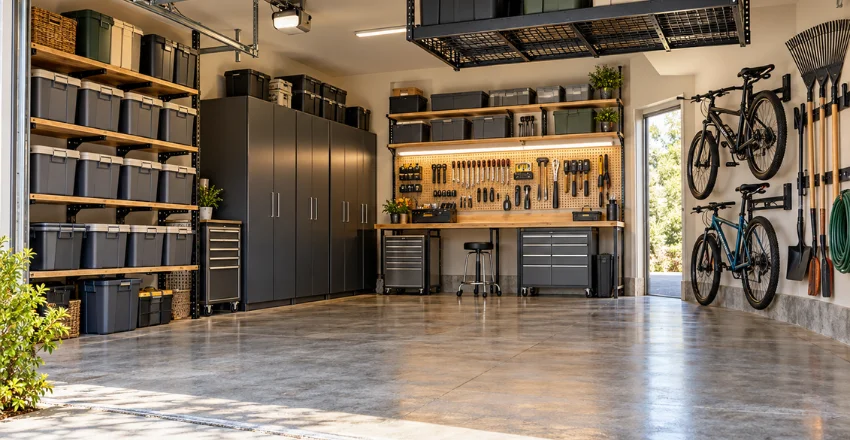
The best organised space will deteriorate if returning items is inconvenient. Keep everyday objects closest to where you naturally use them. Put rarely used belongings farther away or higher up. Leave a little free shelf capacity after reorganising. Filling every space immediately leaves nowhere sensible for new purchases. Spare capacity also makes cleaning and rearranging much easier.
Review the room 2 or 3 times a year. Remove empty containers, broken tools, and belongings that have stopped being useful. Seasonal changes provide an obvious time for these checks. You can also photograph the finished shelves. A reference picture makes it easier to restore the layout after a large DIY project. It can reveal slow clutter growth before the problem becomes obvious.
A Simple Layout for a Small UK Garage
Start with one full-height shelving zone along a suitable wall. Keep heavy DIY and garden items on the lowest levels. Place lighter seasonal boxes above them. Use another wall for bikes, ladders, and long tools where safe. Keep the centre clear if you want vehicle access or a usable work area. Avoid creating narrow gaps that are difficult to walk through.
A small workbench can occupy the best-lit section. Put hand tools on a wall board above it and small fixings in labelled drawers. This keeps project equipment together without spreading it across the room. If you are planning several household improvements together, Pageify’s Home Improvement guides can help connect storage with lighting and moisture control.
Treat the garage as a working part of the property. A functional room usually stays tidier than an unplanned dumping area.
Frequently Asked Questions
What is the best garage storage for a small space?
Wall shelving, hooks, tall racking, and labelled boxes usually make the strongest starting combination. Keep the centre clear before adding extra floor cabinets. Choose systems around your actual belongings rather than filling every available surface.
How do I organise a garage cheaply?
Start by decluttering before buying anything new. Reuse sound containers, add clear labels, and group existing shelves into practical zones. Spend first on equipment needed for safe weight support or secure wall mounting.
Should garage shelves be metal or wood?
Both materials can work when correctly specified for the environment and expected load. Metal racking is widely available and suits many heavy-duty storage needs. Timber systems need suitable construction and protection where moisture may be present.
What should not be stored in a damp garage?
Avoid using a damp garage for belongings easily damaged by moisture or temperature changes. Paper records, valuable fabrics, and sensitive electronics may need indoor storage. Manufacturer instructions should guide any product needing specific environmental conditions.
Is ceiling storage a good idea?
It can be useful for light belongings that are needed infrequently. Structural fixing, garage-door movement, access, and headroom must all be considered first. Heavy or frequently used objects are usually better positioned lower down.
How can I keep a garage organised long term?
Give each category a fixed zone and leave some empty capacity. Return belongings after each job instead of creating a temporary pile. A short seasonal clear-out prevents small amounts of clutter from becoming a full reorganisation.
Make Every Part of the Garage Earn Its Place
A useful garage is not the one with the most shelves. It is the one where belongings are easy to find, lift, replace, and protect. Walls, floors, and higher spaces should each serve a clear purpose. Start with decluttering and measurements before spending money. Build outward from the belongings you genuinely need to keep. Then review the layout as your household, hobbies, or equipment change.
The result should leave safer movement and clearer access throughout the room. It should also reduce time spent searching through unlabelled boxes. A simple, maintainable system usually outperforms an elaborate one nobody follows.