
Introduction
How to Get Rid of Rats in the Garden? To get rid of rats in the garden, it’s essential to combine prevention, deterrence, and humane control methods. This involves removing food and water sources, sealing potential entry points, maintaining garden cleanliness, and using natural or humane solutions.
Whether it’s through sanitation measures, natural deterrents, or consistent monitoring, a well-planned approach ensures a rodent-free, healthy garden environment. Rats in the garden can be a significant problem, causing damage to plants, spreading diseases, and creating unsanitary conditions.
Understanding their behavior and implementing strategic control measures can effectively eliminate them.
Here’s a structured table summarizing the information:
| Section | Key Points |
| How to Get Rid of Rats in the Garden? | Rats in gardens can damage plants, spread diseases, and cause unsanitary conditions. Effective management involves prevention, deterrence, and humane control methods. |
| Rat Attraction | Rats are opportunistic feeders attracted to food, water, and shelter. |
| Signs of Rat Presence | Droppings, Gnaw Marks, Burrows, Runways |
| Sanitation Measures | Secure Waste Disposal, Remove Food Sources, Eliminate Water Sources |
| Exclusion Techniques | Seal Gaps and Holes, Elevate Compost Bins, Maintain Vegetation. |
| Natural Deterrents | Peppermint oil, planting herbs, garlic, and onion. |
| Trapping Methods | Live Traps, Snap Traps. |
| Avoiding Harmful Chemicals | Avoid rodenticides as they can harm non-target animals and the environment. |
| Regular Monitoring | Routine Inspections, Garden Maintenance, Secure Structures. |
Natural and Practical Strategies to Keep Rats Out of Your Garden
Keeping rats out of your garden requires a combination of practical prevention and thoughtful maintenance that targets the conditions these pests thrive on. Rats are attracted to easily available food sources, cluttered hiding spots, and dense vegetation where they can nest and move undetected. By removing fallen fruit, securing compost bins, and trimming thick ground covers, gardeners reduce the appeal of their outdoor spaces to rodents. Additionally, sealing potential entry points, such as gaps under fences or sheds, and maintaining tidy garden beds can help eliminate the sheltered areas rats use for nesting. Incorporating these natural and practical strategies not only protects plants and produce but also fosters a healthier, pest-resistant garden overall.
How to Get Rid of Rats in the Garden?
How to Get Rid of Rats in the Garden? It requires a strategic combination of prevention, deterrence, and humane control methods. Start by removing potential food and water sources, such as fallen fruits, uncovered pet food, or standing water, as these attract rats.
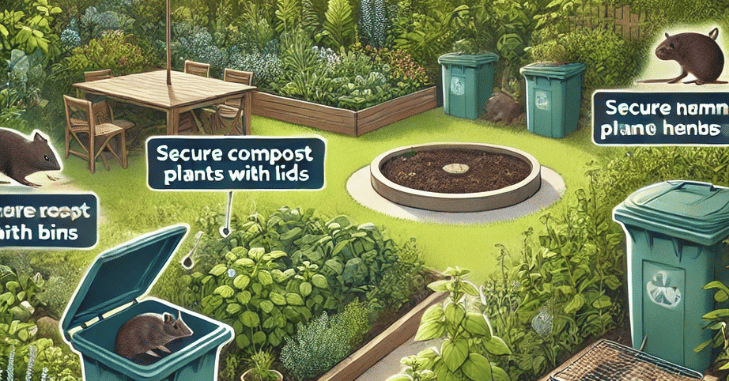
Secure compost bins with tight-fitting lids and ensure waste is disposed of in sealed containers. To deter rats naturally, use strong-scented repellents like peppermint oil or plant rat-repelling herbs like mint, garlic, or basil around the garden.
Additionally, seal entry points in garden structures and maintain tidy vegetation to reduce hiding spots. If needed, humane traps can be used to capture and relocate rats safely. Regular monitoring and garden upkeep are essential to prevent future infestations, ensuring your garden remains a safe, rodent-free space.
Rat Behavior and Attraction
Rats are opportunistic feeders and seek environments that provide food, water, and shelter. Gardens can inadvertently offer these necessities through accessible food sources, water features, and hiding spots. Recognizing what attracts rats is the first step in implementing effective control measures.
Signs of Rat Presence
Before taking action, it’s crucial to confirm rat activity in your garden. Common indicators include:
- Droppings: small, dark, cylindrical droppings approximately 15 mm long and 5 mm wide.
- Gnaw Marks: Evidence of chewing on wood, plastic, or garden produce.
- Burrows: tunnels or holes in the ground, often near compost heaps, sheds, or dense vegetation.
- Runways: well-worn paths along fences or walls where rats frequently travel.
Sanitation Measures
Maintaining a clean garden environment is fundamental to deterring rats.
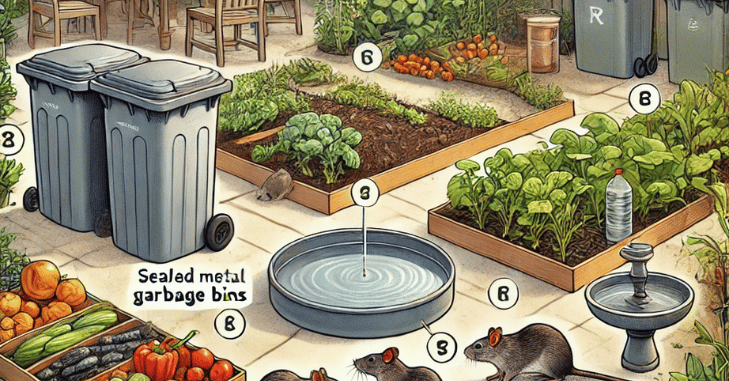
- Secure waste disposal: Use rat-resistant metal garbage cans with tight-fitting lids. Place garbage out close to pickup time rather than the night before to minimize exposure.
- Remove Food Sources: Promptly harvest ripe fruits and vegetables. Avoid leaving pet food or birdseed exposed, and store them in sealed containers.
- Eliminate Water Sources: Fix leaky faucets, remove standing water, and ensure proper drainage to reduce water availability.
Exclusion Techniques
Preventing rats from entering your garden involves sealing potential entry points.
- Seal Gaps and Holes: Inspect and repair any openings in fences, walls, or garden structures. Rats can squeeze through holes as small as 1/2 inch.
- Elevate and Protect Compost Bins: Use rat-proof compost bins with secure lids, and consider elevating them to prevent access.
- Maintain Vegetation: Trim overgrown plants and keep grass short to reduce cover and nesting sites.
Natural Deterrents
Utilizing natural repellents can discourage rats without harming the environment.
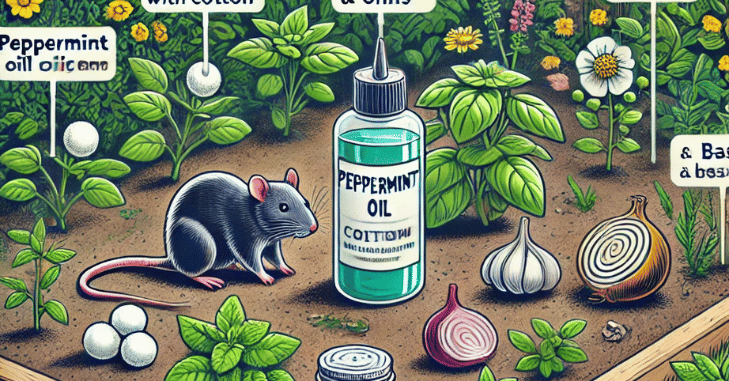
- Peppermint Oil: Rats dislike the strong scent of peppermint. Soak cotton balls in peppermint oil and place them around the garden, refreshing them regularly.
- Planting Herbs: cultivate herbs such as mint, basil, echinacea, garlic, and thyme, which are known to repel rats. Planting these around the garden’s perimeter can serve as a natural barrier.
- Garlic and Onion: The pungent smell of garlic and onion can deter rats. Placing slices in areas of activity or mixing crushed garlic with water to spray around the garden can be effective.
The Importance of Long-Term Rat Prevention
Successfully removing rats from a garden is only part of the solution; long-term prevention is equally important to stop future infestations. Rats are highly adaptable creatures and may return if favorable conditions remain. Establishing a routine of regular garden maintenance, inspecting vulnerable areas, and promptly addressing potential attractants can significantly reduce the risk of recurring problems.
Homeowners should also monitor seasonal changes, as rats often seek shelter during colder months or periods of heavy rainfall. By focusing on prevention as an ongoing process rather than a one-time task, gardeners can maintain a healthier outdoor environment and protect their plants, structures, and wildlife from rodent-related damage.
Humane Trapping Methods
When necessary, humane traps can help control rat populations.
- Live Traps: Use live traps to capture rats without harming them. Release them at least a mile away from your property to prevent return.
- Snap Traps: If using snap traps, place them in areas inaccessible to children and pets and check them regularly.
Avoiding Harmful Chemicals
While rodenticides are available, they pose risks to non-target animals, pets, and the environment. Opting for natural and humane methods is safer and often equally effective.
Regular Monitoring and Maintenance
Consistent vigilance is key to preventing re-infestation.
- Routine Inspections: Regularly check for signs of rat activity and address issues promptly.
- Garden Maintenance: Keep the garden tidy, remove debris, and store materials like firewood away from the ground and structures.
- Secure Structures: Ensure sheds, greenhouses, and other garden buildings are well-maintained and sealed.
Conclusion
How to Get Rid of Rats in the Garden?, Effectively managing rats in the garden requires a multifaceted approach that emphasizes prevention, natural deterrents, and humane control methods.
By maintaining cleanliness, securing potential entry points, and utilizing natural repellents, you can create an environment that is unappealing to rats, ensuring a healthy and thriving garden.
If you want to read an interesting article about it, explore our “Home Improvement” category.
FAQs
The newest and most efficient rodent traps are thought to be electronic rat traps.
As a natural way to keep rats away, think about using citronella’s strong scent. Rats can’t use their great sense of smell to travel because of its overwhelming aroma.
If set up correctly and several traps are employed, snap-type traps are one of the fastest and most efficient ways to kill rats.
Common signs include burrow holes, gnaw marks, droppings, damaged plants, and tracks along fences or walls.
Rats are attracted to gardens because they offer food sources, shelter, and water. Fallen fruit, compost, bird feed, dense plants, and sheds create ideal conditions for them.