
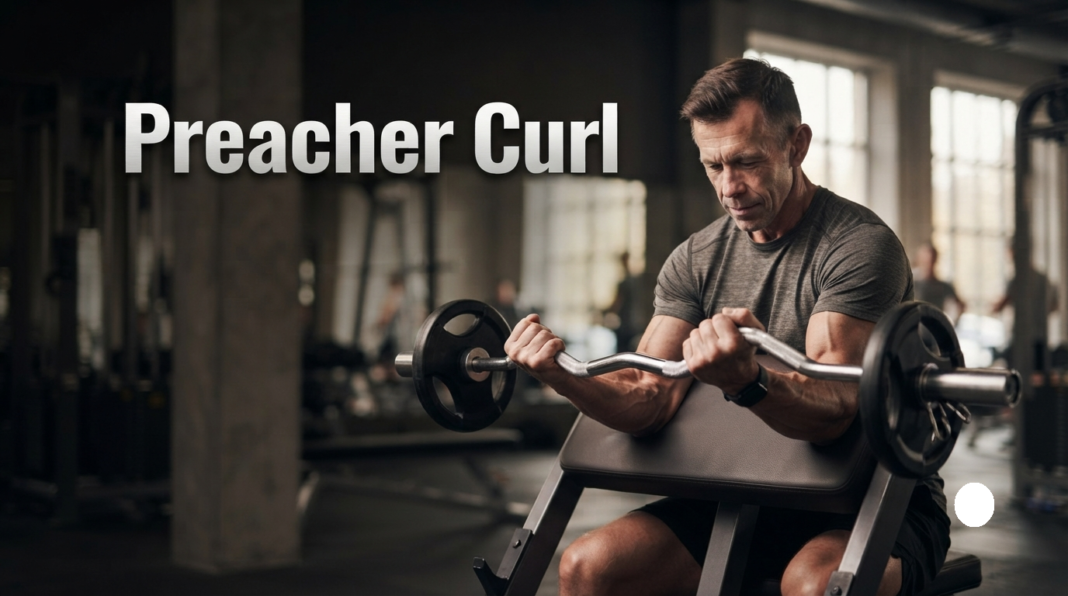
The preacher curl is a popular arm exercise that helps build stronger, bigger, and more defined biceps by keeping the upper arms supported throughout the movement. It is suitable for all fitness levels: beginners perform 2–3 sets of 10–15 reps, intermediate lifters perform 3–4 sets of 8–12 reps, and advanced lifters perform 4 sets of 6–10 reps.
The guide explains the correct technique, muscle groups worked, mathematically justified benefits, recommended rest periods of 60–120 seconds, and safe progression by increasing resistance 2. Also know about daily protein intake of 1.6–2.2 g/kg, recovery for 48–72 hours, sleeping 7–9 hours, weekly training recommendations, common mistakes to avoid, muscle relaxation tips, and a practical 7-day workout plan to get the best results from the preacher curl.
| Basics | Details |
| Exercise purpose | Isolates biceps using angled support |
| Beginner volume | 2–3 sets, 10–15 reps |
| Intermediate volume | 3–4 sets, 8–12 reps |
| Advanced volume | 4 sets, 6–10 reps |
| Muscle growth rest | 60–90 seconds between sets |
| Strength rest | 90–120 seconds between sets |
| Weight progression | Increase 2.5–5% gradually. |
| Extra progression | Add 1–2 reps before weight. |
| Protein intake | 1.6–2.2 g/kg body weight |
| Recovery period | Rest muscles 48–72 hours. |
| Sleep requirement | Sleep 7–9 hours nightly |
| Weekly frequency | Train biceps 1–2 times weekly. |
| Weekly volume | Complete 10–20 working sets |
| Stretch duration | Hold stretches 20–30 seconds. |
| Movement technique | Slow lowering maintains muscle tension. |
| Training outcome | Consistency improves size and strength. |
Understanding the Preacher Curl Exercise?
This exercise is designed to isolate the biceps by keeping the upper arms supported on an angled bench throughout the movement. The fixed position limits body momentum and increases muscle engagement during every repetition. It is suitable for beginners, intermediate lifters, and experienced athletes. Regular practice improves arm strength, lifting control, muscle balance, and overall upper-body performance while reducing unnecessary movement.
Benefits
- The curl improves biceps isolation by keeping the upper arms stable throughout the exercise.
- This position increases muscle tension and reduces the use of momentum,
- Allowing the biceps to perform most of the work.
- Regular training can improve muscle size, increase arm strength, enhance definition, support balanced muscle development,
- Improve performance during pulling exercises, rows, chin-ups, and other upper-body movements.
How to Perform?
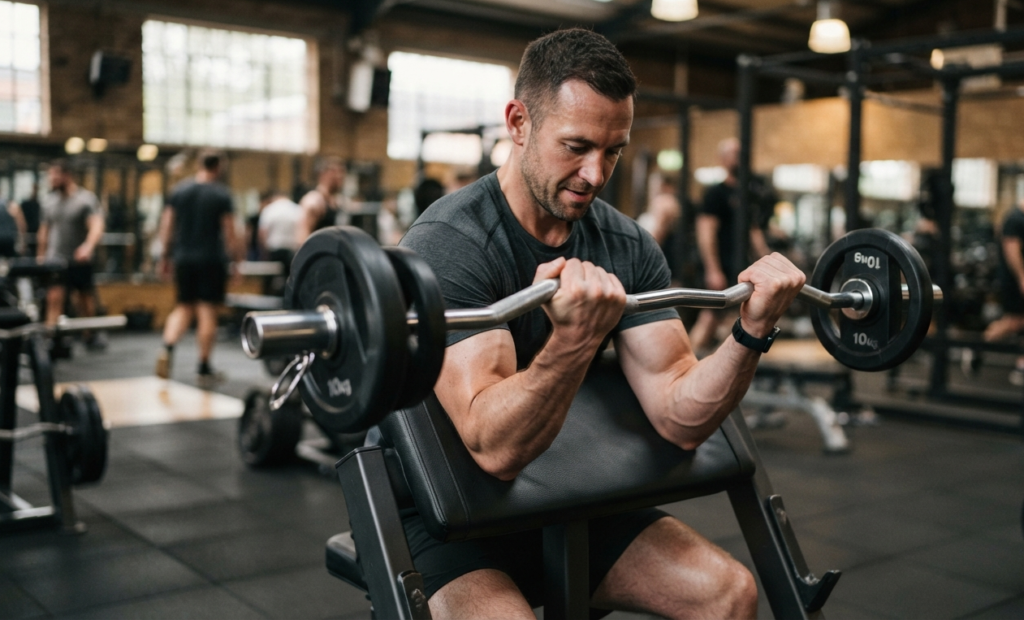
The preacher curl begins with sitting comfortably on the bench, your upper arms resting firmly against the pad. Hold the bar using a shoulder-width grip and extend your arms without locking the elbows. Curl the weight towards your shoulders while keeping your elbows still. Pause briefly at the top, then lower the weight slowly over three seconds to maintain continuous muscle tension and proper technique.
Muscles Worked
The primary muscle targeted is the biceps brachii, which flexes the elbow and contributes to upper-arm size. The brachialis works underneath the biceps and helps increase overall arm thickness. The brachioradialis in the forearm also assists during the movement. Smaller stabilising muscles around the wrists and elbows remain active, improving joint stability, lifting control, grip strength, and overall arm function during resistance training.
Repetitions
The preacher curl delivers effective results when performed with the correct training volume. Beginners should complete 2 to 3 sets of 10 to 15 repetitions using lighter resistance. Intermediate lifters often perform 3 to 4 sets of 8 to 12 repetitions. Advanced lifters may complete 4 sets of 6-10 repetitions while maintaining strict technique and controlled movement throughout each repetition.
Rest Between Sets

Rest periods should match your training objective to maximise results. For muscle growth, resting for 60-90 seconds helps maintain training intensity while allowing partial recovery. Strength-focused workouts often require 90 to 120 seconds of rest between sets. Shorter recovery periods improve muscular endurance, while longer breaks support heavier lifting and better performance during demanding resistance training sessions.
Equipment Options
Several equipment options are available, depending on your training goals and the facilities you have. An EZ bar reduces wrist strain and provides a comfortable grip. A straight bar increases forearm involvement. Dumbbells improve muscle balance by training each arm independently. Cable machines provide constant resistance, while resistance bands offer an effective option for home workouts or travel training with limited equipment.
7-Day Schedule
| Day | Preacher Curl Plan | Timeline | Nutrition | Recovery | Focus |
| Day 1 | 3 × 10–12 reps | 35–45 min | Protein 1.6–2.2 g/kg | Stretch 20–30 sec | Learn proper form |
| Day 2 | Light cardio & mobility | 20–30 min | Balanced meals, hydrate | 7–9 hrs sleep | Active recovery |
| Day 3 | 4 × 8–10 reps | 40–45 min | Protein + carbs | Foam rolling | Build strength |
| Day 4 | Walking & arm stretching | 20–30 min | Healthy fats, water | 48–72 hrs recovery | Reduce soreness |
| Day 5 | 4 × 6–10 reps | 40–50 min | Carbs pre, protein post | Stretch + hydration | Progressive overload |
| Day 6 | Upper-body + 3 × 10–12 reps | 45–60 min | Balanced high-protein diet | Foam rolling | Muscle development |
| Day 7 | Complete rest | Full recovery | Nutritious meals, hydrate | 7–9 hrs sleep | Muscle repair |
Progressive Overload
The preacher curl becomes more productive with gradual progression rather than sudden increases in weight. Increase resistance by 2.5%-5% after completing each planned repetition with good form. Another effective method is adding one or two extra repetitions before increasing the weight. Slowing the lowering phase also increases muscle tension and supports long-term muscle growth without compromising technique.
Nutrition for Better Results
- Proper nutrition supports muscle growth, recovery, and consistent training performance.
- Most active individuals aiming to build muscle benefit from consuming around 1.6 to 2.2 grams of protein per kilogram of body weight each day.
- Carbohydrates provide energy for workouts, while healthy fats support recovery and hormone production.
- Drinking enough water also helps maintain muscle function and improves overall exercise performance.
Recovery
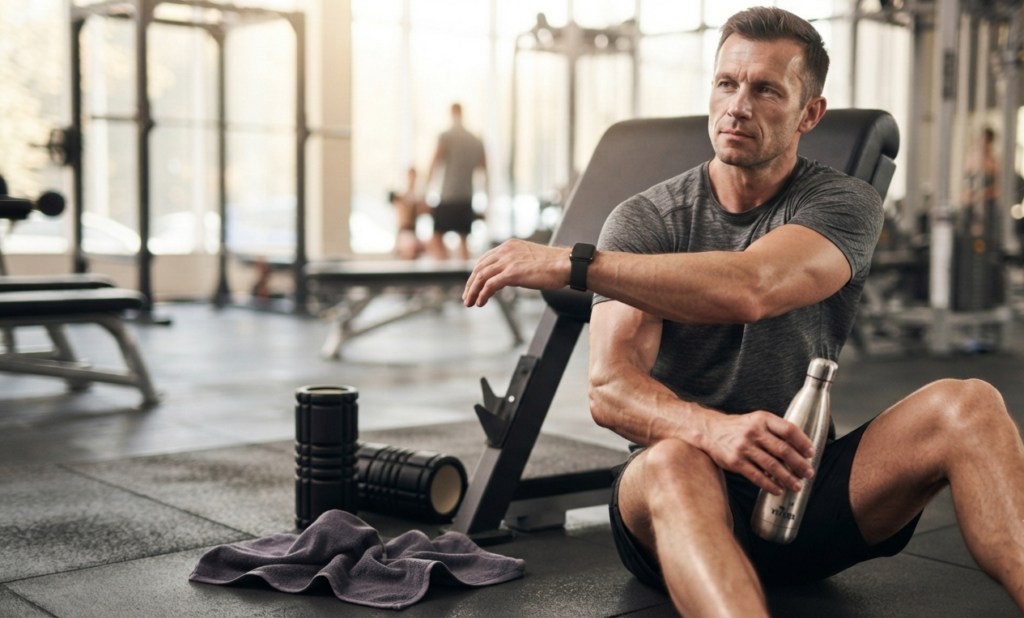
The preacher curl places significant tension on the biceps, making recovery essential for muscle growth. Allow 48 to 72 hours before training the same muscle group again. Getting seven to nine hours of sleep each night supports tissue repair. Gentle stretching, light movement, foam rolling, proper hydration, and balanced meals all help reduce soreness and prepare the muscles for the next training session.
Common Mistakes to Avoid
- Using excessive weight is one of the most common mistakes because it reduces muscle activation and increases the risk of injury.
- Avoid lifting your elbows away from the pad or swinging your upper body to move the weight.
- Lowering the resistance too quickly also reduces muscle tension
- . Focus on controlled repetitions, full range of motion, and proper technique to achieve better long-term progress.
Weekly Training Frequency
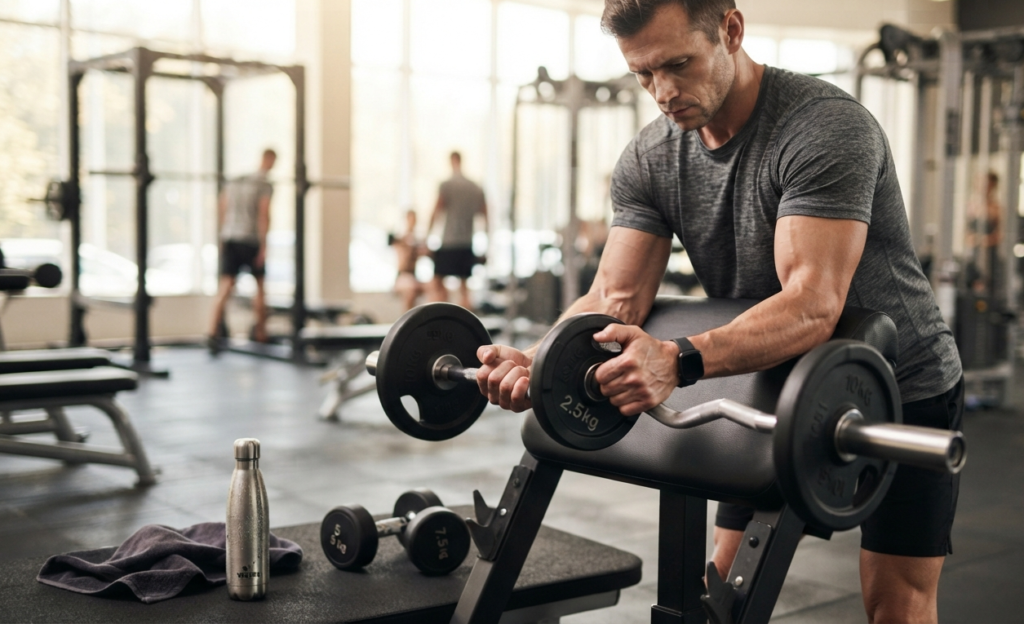
The preacher curl fits well into most upper-body or arm training programmes one or two times each week. Most people achieve good biceps muscle growth by completing 10 to 20 total working sets each week. Combining this exercise with compound pulling movements creates balanced arm development while allowing sufficient recovery for consistent strength gains and improved muscular performance.
Muscle Relaxation
After training, stretch the biceps for 20 to 30 seconds to improve flexibility and reduce muscle tightness. Foam rolling the upper arms and forearms may improve blood circulation and reduce post-workout stiffness. Light walking and gentle arm movements also encourage recovery. Proper hydration, balanced nutrition, and quality sleep remain important for reducing soreness and supporting muscle repair after resistance training.
Training Tips
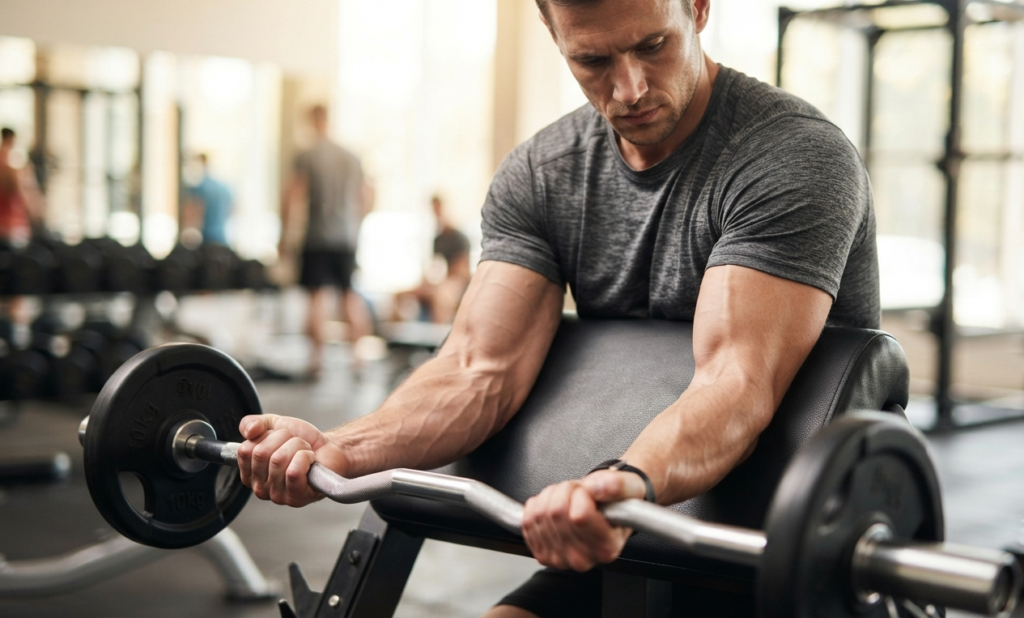
- The preacher curl produces the best results when every repetition is performed with strict form and complete control.
- Focus on smooth lifting and slow lowering rather than using excessive weight.
- Track your progress, gradually increase resistance, and remain consistent with your training, recovery, and nutrition.
- Following these habits supports steady improvements in arm strength, muscle size, definition, and overall fitness performance.
Conclusion
In conclusion, the preacher curl is an effective exercise for building strong, well-shaped biceps when performed with proper form and controlled movement. It works best when performed with 2–4 sets, 6–15 reps, and short rest periods of 60–120 seconds depending on goals. Consistent practice, along with 48–72 hours of recovery and 7–9 hours of sleep, supports muscle growth and repair. Gradually increasing weight by 2.5–5% also improves progress. Overall, the curl helps enhance arm strength, size, and definition when combined with proper training, nutrition, and recovery habits.
Want to know about Cancer Maintenance and Care: Protecting Remission and Strengthening Long-Term Health Check out our Health category.
FAQs
Arm-focused workouts are generally recommended once or twice per week, allowing sufficient recovery time between sessions for muscle repair, growth, and improved overall performance.
Progressive resistance, controlled movement, proper nutrition, sufficient protein intake, and consistent training all work together to effectively enhance muscle size, strength, and long-term physical development.
Rest allows muscle fibers to recover and rebuild stronger, reduces fatigue, prevents overtraining, and supports better performance in future workouts when proper recovery time is maintained.
Common mistakes include using heavy weights, rushing repetitions, and poor posture, all of which reduce muscle engagement and increase the risk of strain or injury.