

Buying a new home while selling your current one can be a challenging and time-consuming process, especially when faced with property chains, delayed buyers, and uncertain market conditions. A part-exchange house scheme offers a simpler alternative by allowing homeowners to use their existing property as part payment for a new-build home. This approach can speed up the transaction, reduce stress, and provide greater certainty throughout the moving process.
In this guide, you’ll learn everything you need to know about a part exchange house, including how it works, property valuations, eligibility requirements, costs, mortgage options, key benefits, potential drawbacks, and expert tips to help you make an informed decision.
| Aspect | Overview |
| What Is a Part Exchange House? | A scheme where a developer buys your existing home and uses its value as part of the payment for a new-build property. |
| How It Works | The developer values your home, makes an offer, completes legal checks, and completes both transactions together. |
| Eligibility | Suitable for owner-occupied homes in good condition with clear legal ownership and acceptable market value. |
| Property Requirements | Standard construction, good condition, valid EPC, clear title, and up-to-date legal documents. |
| Valuation | Based on independent property valuations, market conditions, location, and the property’s overall condition. |
| Costs Involved | May include legal fees, stamp duty, mortgage exit charges, moving costs, and mortgage arrangement fees. |
| Costs You Can Avoid | Estate agent fees, advertising costs, multiple viewings, and property chain delays. |
| Key Benefits | Faster completion, guaranteed buyer, no property chain, reduced stress, and easier budgeting. |
| Potential Drawbacks | Lower sale price limited eligible properties, fixed offers, and developer-specific criteria. |
| Mortgage Options | Fixed-rate, variable-rate, tracker, offset mortgages, and first-time buyer or shared equity schemes. |
| Best For | Homeowners looking for a quicker, more convenient, and more predictable move to a new-build home. |
What Is a Part Exchange House?
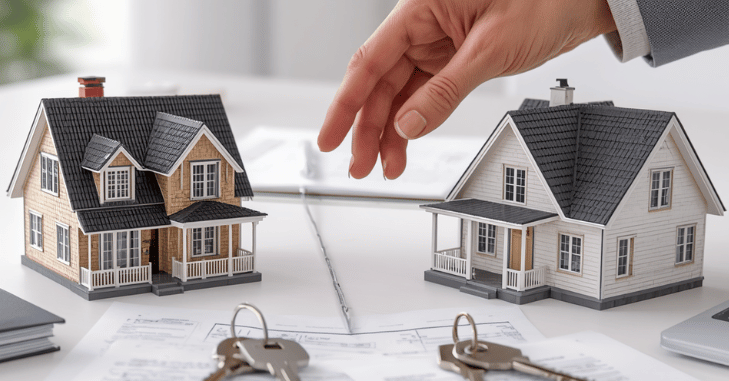
A part-exchange house is a property-buying arrangement in which a homebuilder purchases your existing home and uses its value as partial payment for a new build property. Instead of selling your home on the open market, you trade it directly with the developer, making the moving process quicker and more convenient.
For example, if your current home is valued at £260,000 and your chosen new-build costs £420,000, the developer deducts the value of your existing property from the purchase price, leaving you to pay the remaining £160,000 through savings, a mortgage, or a combination of both. A part exchange house can help reduce delays, avoid property chains, and provide greater certainty when buying a new home.
How Does the Part Exchange Process Work?
The part exchange process is designed to make moving home faster and less stressful. It usually follows a series of straightforward stages from choosing a new-build property to completing the purchase.
Choose a New-Build Property
Select a qualifying new-build home from a developer that offers a part-exchange scheme.
Browse eligible new-build developments.
Confirm that the property qualifies for part exchange.
- Reserve your preferred home, subject to the developer’s approval.
Initial Property Assessment
The developer reviews your current property to determine whether it meets their eligibility requirements.
Factors they consider include:
- Property location
- Overall property condition
- Current market demand
- Legal ownership status
- Estimated market value
- Local housing market trends
Independent Valuation
- Two or three independent valuers assess your home.
- Valuation reports help establish a fair market price.
- The developer makes a formal part-exchange offer based on these reports.
Accept the Offer
- Review the offer carefully.
- Accept the proposed purchase price.
- The developer usually reserves your chosen new-build home.
Legal Process
Once the offer is accepted, solicitors manage the legal aspects of both transactions.
This typically includes
- Property searches
- Preparing and reviewing contracts
- Completing mortgage paperwork
- Transferring ownership
- Agreeing on completion dates
Completion
- Ownership of your current property transfers to the developer.
- You complete the purchase of your new home.
- Move directly into your new property without waiting for a separate buyer.
How Is a Part-Exchange House Valued?

The part exchange process starts by choosing a qualifying new-build home from a developer offering the scheme. The developer then assesses your current property based on its location, condition, market value, legal status, and local demand before arranging independent valuations to determine a fair price.
Once everything is complete, both the sale of your existing home and the purchase of your new property are finalized on the same day, allowing you to move without the delays of a traditional property chain.
Who Is Eligible for Part Exchange?
- The home is owner-occupied.
- The property has no major structural issues.
- Clear legal ownership.
- No ongoing legal disputes.
- Acceptable mortgage balance.
- Suitable location.
- Property value falls within the builder’s limits.
- Many builders only accept homes worth 65%–75% of the new property’s purchase price.
Requirements for a Part-Exchange Property
Good Overall Condition
Your property should be well-maintained and in good overall condition. Homes that require only minor cosmetic improvements are generally more attractive to developers.
No Major Structural Defects
Most developers will not accept properties with significant structural problems, such as foundation issues, severe subsidence, or major roof damage, as these can reduce resale value.
Standard Construction
Properties built using standard construction methods are usually preferred because they are easier to value, finance, and resell.
Marketable Location
Your home should be located in an area with steady buyer demand. Properties in desirable neighborhoods are more likely to qualify for part exchange.
Registered Ownership
You must be the legal owner of the property, with clear proof of ownership and no unresolved ownership disputes.
No Short Lease Issues
If the property is leasehold, the remaining lease should generally be long enough to meet the developer’s requirements.
Up-to-Date Legal Documents
All essential legal documents, including planning approvals and building regulations certificates, where applicable, should be available and up-to-date.
Mortgage Redemption Figure
If your property has an existing mortgage, you should be able to provide an accurate mortgage redemption statement showing the outstanding balance.
Energy Performance Certificate (EPC)
A valid Energy Performance Certificate (EPC) is usually required before the transaction can proceed.
Clear Property Title
The property should have a clear legal title without disputes, restrictions, or unresolved legal issues that could delay the sale.
Listed Buildings
Listed properties may be declined because of additional legal restrictions and maintenance requirements.
Shared Ownership Properties
Many developers do not accept shared ownership homes due to the complexity of ownership arrangements.
Homes with Japanese Knotweed
Properties affected by Japanese knotweed are often rejected because of the potential cost of treatment and impact on resale value.
Costs Involved in Part Exchange

- Legal Fees: Solicitor fees remain payable.
- Mortgage Exit Charges: Your lender may charge an early repayment fee.
- Stamp Duty: Applicable when purchasing the new property, depending on local tax rules.
- Moving Costs: Removal companies, packing, and storage.
- Mortgage Arrangement Fees: If taking a new mortgage.
Costs You May Avoid
- Estate agent commissions
- Property advertising costs
- Multiple viewings
- Home staging expenses
- Price negotiations with buyers
- Long sales chains
Benefits of Part Exchange
- Many homeowners choose part exchange because it offers greater certainty.
- Faster Completion: The entire process often completes within a few weeks instead of several months.
- No Property Chain: One of the biggest causes of delays is eliminated.
- Less Stress: No constant property viewings.
- Guaranteed Buyer: The developer becomes your buyer, reducing uncertainty.
- Easier Budget Planning: You know exactly how much your existing property contributes toward your new purchase.
- Better Moving Experience: Buying and selling happen together, reducing temporary accommodation needs.
- Reduced Risk of Sale Collapse: Private buyers frequently withdraw. With part exchange, the risk is much lower.
Part Exchange vs Traditional Home Sale
| Feature | Part Exchange | Traditional Sale |
| Speed | Fast | Slower |
| Property Chain | None | Usually present |
| Estate Agent Needed | No | Yes |
| Viewings | None | Multiple |
| Sale Price | Slightly lower | Full market value possible |
| Certainty | High | Lower |
| Stress Level | Lower | Higher |
Mortgage Options for Part Exchange Buyers

Most buyers purchasing through a part exchange house scheme still need a mortgage to cover the remaining balance after the value of their existing property has been deducted. Common mortgage options include fixed-rate mortgages, which provide predictable monthly payments for a set period, variable-rate mortgages with interest rates that can rise or fall over time, and tracker mortgages that follow the lender’s base rate.
Some buyers may benefit from an offset mortgage, where savings are used to reduce mortgage interest, while first-time buyers may qualify for special mortgage deals and developer incentives.
Tips to Increase Your Part-Exchange Offer
You cannot control the housing market, but you can improve your property’s appeal.
Improve Kerb Appeal
Simple landscaping and exterior maintenance create a stronger first impression.
Complete Minor Repairs
Fix:
Broken doors
Loose handles
Leaking taps
- Cracked tiles
- Damaged paintwork
Deep Clean
A clean property appears to be better maintained.
Organize Documentation
Prepare:
- EPC
- Building certificates
- Warranty information
- Planning approvals
- Mortgage details
Common Mistakes to Avoid
Avoid these errors during the process.
Accepting the first offer without comparison
Ignoring independent valuations
- Forgetting mortgage exit fees
- Underestimating legal costs
- Not checking developer incentives
- Delaying paperwork
- Hiding property defects
- Failing to review contract terms carefully
Disadvantages of Part Exchange
While part exchange offers convenience and speed, it also comes with some potential disadvantages:
Lower Sale Price: Developers typically offer less than the full market value of your property to cover resale costs and potential risks.
Limited Choice: Part exchange is usually available only on selected new-build homes and developments.
- Developer Conditions: Each house builder has its own eligibility criteria, which your property must meet to qualify.
- Less Negotiating Power: Offers are often fixed, leaving little room to negotiate a higher purchase price.
- Restricted Property Types: Older, unique, leasehold with short leases, or difficult-to-sell properties may not be accepted under the scheme.
Conclusion
A part-exchange house scheme can be an excellent option for homeowners who want a faster, simpler, and more predictable way to move into a new-build property. By eliminating lengthy property chains and providing a guaranteed buyer, it helps reduce stress and makes the home-buying process more efficient.
While you may receive slightly less than full market value for your existing home, the convenience, speed, and certainty often outweigh the difference for many buyers. Before committing, compare offers from different developers, understand all associated costs, and seek professional legal and mortgage advice to ensure a part-exchange house arrangement is the right choice for your financial situation and long-term property goals.
Apart from that, if you want to know about How Regional Trends Are Reshaping the UK Property Market then please visit our Real Estate Category.
FAQs
If convenience, quickness, and certainty are important to you, part-swapping your home, where a developer purchases your existing property to offset the cost of new construction, is a terrific idea.
Your present house must typically be worth between 70% and 80% less than the cost of the new home you are buying to be eligible for a part exchange.
Yes, when purchasing a part-exchange property, you usually have to pay Stamp Duty Land Tax (SDLT).
If you place a high importance on speed, certainty, and avoiding the trouble of a property chain, it may be worthwhile to accept a lower price on a part-exchange (PX) home.