
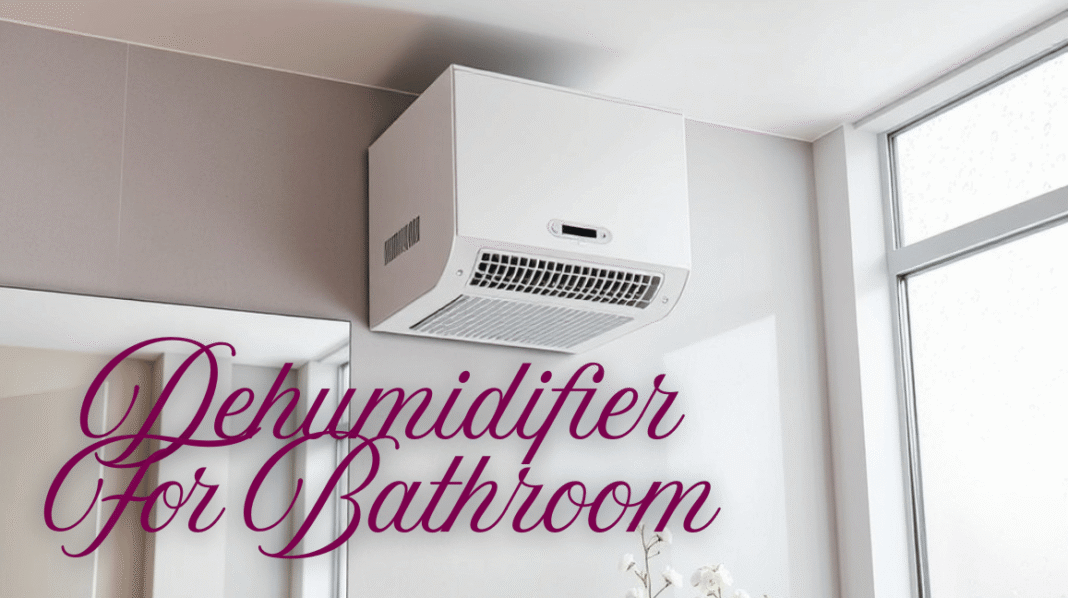
Dehumidifier for Bathroom
A dehumidifier for bathroom is one of the most practical investments homeowners can make to combat moisture, fog, and mold. Bathrooms are naturally prone to high humidity due to daily showers, poor ventilation, and confined spaces, all of which create ideal conditions for condensation on walls and mirrors, mildew growth, and even paint or grout deterioration.
Over time, unchecked humidity doesn’t just affect comfort; it can also damage fixtures, cause unpleasant odors, and shorten the lifespan of your bathroom finishes. By installing a dehumidifier for the Bathroom, you can efficiently remove excess moisture from the air, keeping your walls, mirrors, and tiles dry and free from mold.
| Section | Quick Overview |
| Purpose | Controls bathroom humidity and prevents mold, fog, and surface damage. |
| How It Works | Removes moisture using a CO₂ compressor or desiccant system; ideal humidity: 40–60% RH. |
| Portable Models | Compact, affordable, and with auto shutoff; best for small- to medium-sized bathrooms. |
| Desiccant Units | Quiet, effective in cold rooms, lightweight, and low energy efficiency. |
| Wall-Mounted / Ducted | Permanent, quiet, and drains to plumbing; higher cost, needs professional installation. |
| Whole-House Systems | Centralized humidity control; costly and best for large homes. |
| Capacity Guide | Tiny: 10–20 pints/day • Small: 20–30 • Medium: 30–50 • Large: 50+ or ducted. |
| Cost Range | depending on model; average running cost £4.05–£4.86/month. |
| Installation Tips | Ensure airflow, proper drainage, and GFCI safety; professional setup for built-in units. |
| Maintenance | Clean the tank, filters, and vents regularly; annual service for fixed systems. |
| Fog-Free Tips | For a routine unit before/after showers, use FAA n, anti-fog mirrors, or lower water temperature. |
| Key Features | Humidistat, timer, auto mode, noise control, continuous drain, portability. |
| Conclusion | A dehumidifier for the Bathroom ensures comfort, cleanliness, and long-term moisture protection. |
How a Dehumidifier Works?
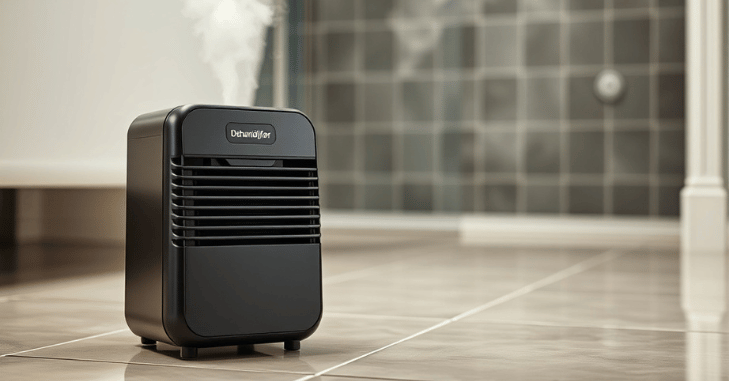
The Dehumidifier for Bathroom operates on a simple yet effective principle designed to reduce moisture and maintain a healthy indoor environment. Most household dehumidifiers use a refrigeration (compressor-based) system that cools incoming air until the moisture in it condenses on cold coils.
This condensed water then collects in a tank or is drained away through a hose. This method is highly efficient for typical home temperatures and provides consistent humidity control in bathrooms, especially after showers or baths.
A smaller, quieter alternative is the desiccant dehumidifier, which functions differently. Instead of using cold coils, it absorbs moisture from the air onto a special drying material and later releases it as warm air for disposal.
Desiccant models are ideal for small or unheated bathrooms where temperatures can drop, as they perform efficiently even in cooler conditions.
Which Dehumidifier Types Work Best In Bathrooms?
Compact portable compressor dehumidifiers are among the most common and practical choices for everyday bathroom use. These units are best suited for small to medium bathrooms, typically ranging from 10 to 50 ft² (1–5 m²).
They work efficiently at standard home temperatures and are both affordable and user-friendly. Most models come with an automatic shut-off feature once the water tank is full, ensuring hassle-free operation.
Desiccant Dehumidifiers
Desiccant dehumidifiers are ideal for very small bathrooms, unheated spaces, or colder environments, where traditional compressor models may struggle to perform efficiently. These units are lightweight, quiet, and highly effective at low temperatures, making them a good fit for homes in cooler climates.
While they offer impressive performance in compact spaces, desiccant models are less energy efficient at high humidity levels and have a smaller moisture removal capacity compared to compressors.
Wall-Mounted or Inline (Ducted) Dehumidifiers
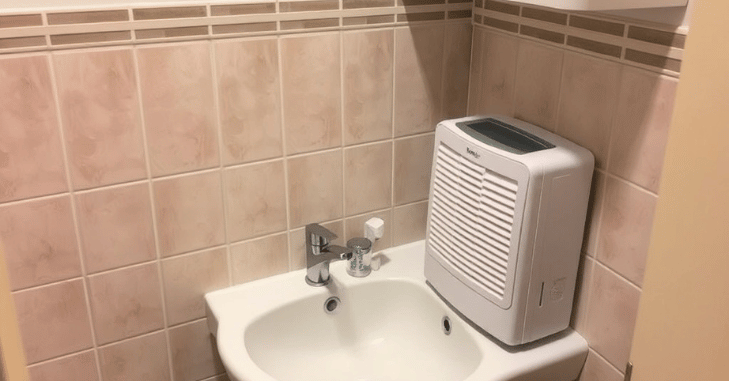
Wall-mounted or inline (ducted) dehumidifiers are high-end, permanent solutions for bathrooms with persistent humidity problems or multi-bathroom setups. They are designed for homeowners seeking an elegant, out-of-sight installation that integrates seamlessly into the room’s design.
These systems are quieter, as the main unit is installed away from the bathroom and can drain directly into the home’s plumbing, eliminating the need for manual water disposal. However, the initial cost is higher, and they require professional installation.
Heat Pump / Whole-House Dehumidifiers
Heat pumps or whole-house dehumidifiers represent the most powerful and comprehensive solution for controlling humidity throughout an entire home. They are best suited for houses with systemic moisture issues or very large bathrooms connected to HVAC systems.
These units offer centralized humidity control, are energy efficient, and can significantly improve overall air quality when paired with a central HVAC setup. On the downside, they come with a high installation cost and are often overkill for single bathrooms.
Typical costs and running cost expectations
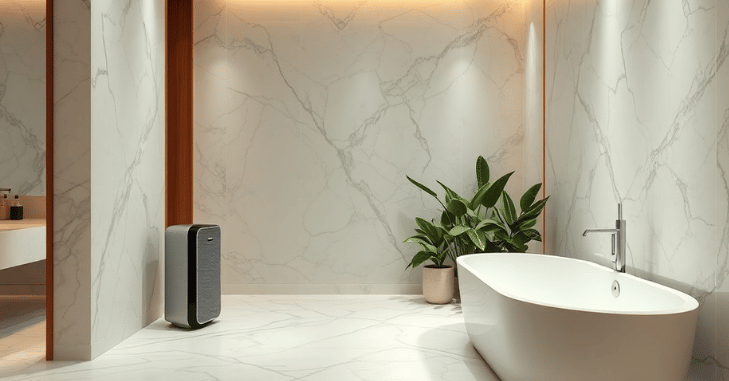
Small portable dehumidifiers designed for compact bathrooms generally or approximately £50–£120 / PKR equivalent. These models are lightweight, easy to move, and perfect for smaller spaces that need occasional moisture control.
If you prefer better build quality and advanced features like a built-in humidistat or multiple speed settings, expect to pay around £114–£266 for a mid-range portable unit. For larger spaces or a more permanent installation, large-capacity or wall-mounted dehumidifiers range from £912 to £266, with installation fees added separately.
These are ideal for homeowners who want a long-term, low-maintenance humidity solution. At the higher end, whole-house dehumidifiers can cost anywhere between £760 and £2,660
or more, depending on model capacity and integration with existing HVAC systems.
Installation & placement
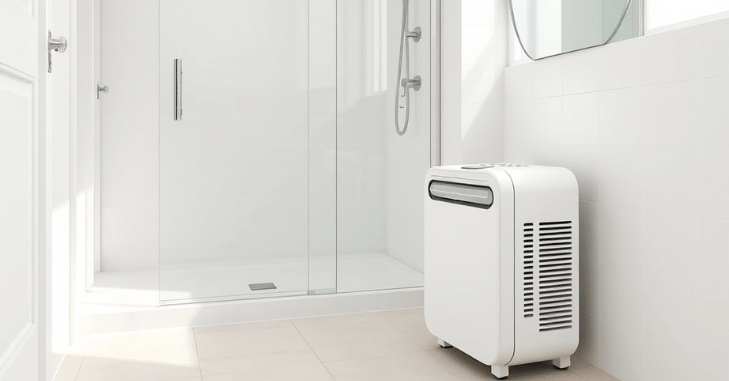
Quick portable setup
Choose location: Place on a stable, level surface at least 6–12 inches from walls/fixtures for airflow.
Near shower/bath: The unit should be close enough to remove steam quickly but not where it will get splashed.
Drain option: If the model supports continuous drainage, connect a hose to the drain outlet and route it to a floor drain or sink. Gravity drain only—check the unit manual.
Power: Plug into a GFCI outlet (required in bathrooms for safety). Avoid extension cords.
Wall-mounted or plumbed installation (professionally recommended)
Select position: higher on a wall near the shower/runoff or in an adjacent closet where noise and drainage are less intrusive.
Electrical: Must be wired to a GFCI-protected circuit per electrical codes.
Drainage: Hard-piped to a floor drain, trap, or plumbing stack (may require venting and check valves).
Mounting and sealing: Properly mount and insulate to prevent vibration and ensure weatherproofing.
Daily habits and tips to keep walls and mirrors fog-free
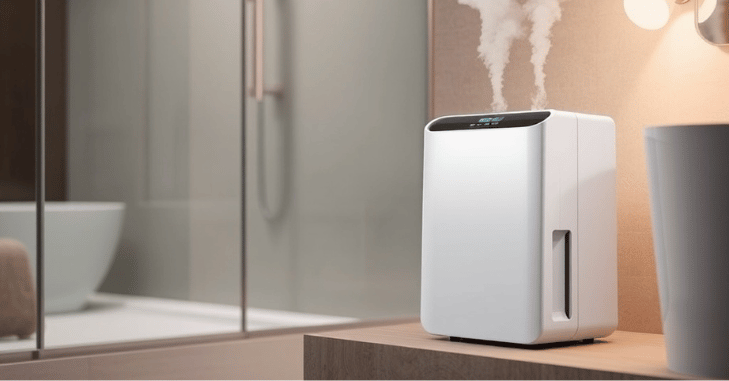
- Run the dehumidifier during and after showers: Start it a few minutes before a hot shower to pre-condition the space, and leave it running 20–60 minutes afterward, depending on humidity.
- Wipe mirrors quickly: Use a microfiber cloth after showers for instant anti-fog; adding a tiny amount of shaving foam and buffing it off leaves a short-term fog barrier.
- Lower the shower temperature slightly: hotter water produces more steam. Try lukewarm settings to reduce condensation.
- Use exhaust fans when available: Even with a dehumidifier, a fan removes steam at the source. Combine both for the best effect.
- Keep the bathroom door slightly ajar after use: This helps moisture disperse into the larger home, where it’s easier to manage.
- Install anti-fog mirror film or heated mirrors if fogging is a persistent problem. These add upfront cost but largely eliminate fogging.
Maintenance: keep your unit working efficiently
- Empty and clean the tank weekly (or more often with heavy use). Use mild detergent and rinse.
- Clean air filters monthly to maintain airflow and efficiency.
- Check coils and vents for dust; vacuum gently if needed.
- Inspect the drain hose for kinks or clogs if using a continuous drain.
- Service annually for wall-mounted/ducted systems; check seals and fan operation.
Common Mistakes to Avoid When Using a Bathroom Dehumidifier
One of the most overlooked aspects of using a bathroom dehumidifier is improper usage and placement, which can significantly reduce its effectiveness. A common mistake is placing the unit too close to walls or corners, which restricts airflow and prevents proper moisture circulation.
Another issue is running the dehumidifier only after visible condensation appears, instead of starting it before or during showers when humidity begins to rise. Many users also forget regular maintenance, such as cleaning filters and emptying water tanks, which can reduce efficiency over time. Additionally, relying solely on a dehumidifier without combining it with ventilation methods like extractor fans can limit overall moisture control.
Noise, aesthetics & practical features to look for
- Noise: Look for units with dB ratings. Small desiccant units may be near-silent; compressor units often register 40–55 dB (comparable to an office).
- Humidistat & Auto mode: Essential for energy savings, the unit runs only when RH exceeds your setpoint.
- Timer & sleep/night mode: Reduces noise and runtime during sleeping hours.
- Continuous drain vs. auto-shutoff: For bathrooms you’ll use regularly, continuous drain is less hassle; for occasional use, auto-shutoff is fine.
Conclusion
A dehumidifier for Bathroom is more than just a comfort upgrade; it’s a long-term solution to one of the most common household challenges: excess moisture. From fogged mirrors and damp towels to mold growth and peeling paint, unchecked humidity can quickly damage surfaces and compromise air quality.
Installing the right dehumidifier for Bathroom not only eliminates these problems but also enhances the overall hygiene, appearance, and longevity of your space. The best part is that the benefits start almost immediately.
Whether you opt for a portable, wall-mounted, or whole-house system, the results are visible in just a few days: clearer mirrors, drier walls, and fresher air. For most homes, a compact portable unit offers a cost-effective solution, delivering efficient moisture removal without major installation.
Want to know about Choosing a Roof Tile for Any Building Project Check out our Home Improvement category.
FAQs
While a dehumidifier can assist in reducing moisture in a bathroom, it is not always the best or safest solution for bathroom humidity.
Extractor fans are an excellent alternative for windowless bathrooms.
No, a dehumidifier does not eliminate mold.