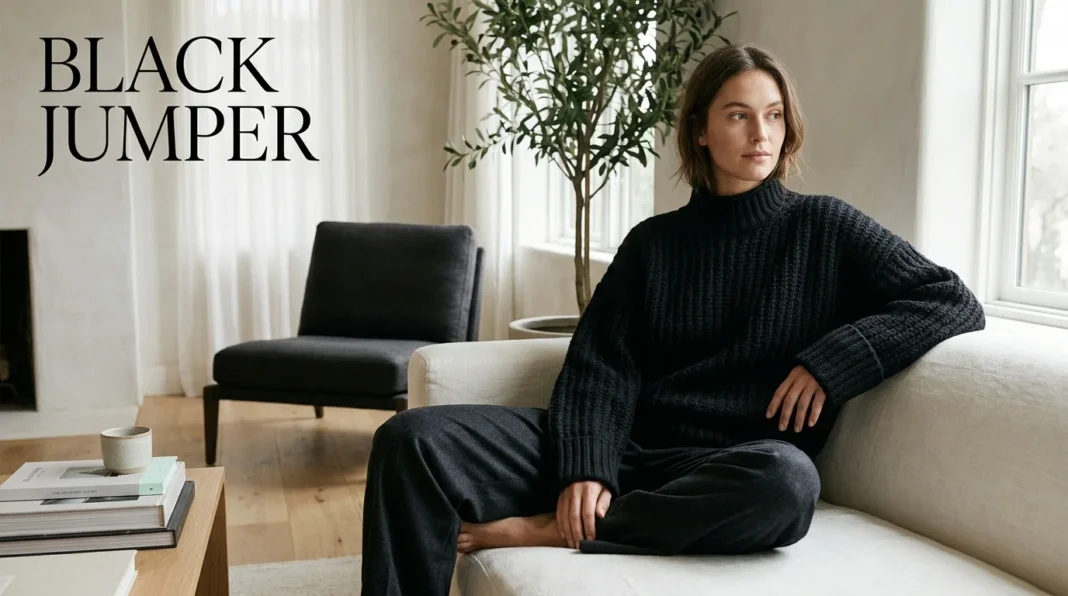
A black jumper earns its place in almost any UK wardrobe because it works across seasons, outfits, and occasions. The right one can sit under a coat, sharpen casual denim, or polish workwear. Choosing the right one comes down to fabric, fit, neckline, weight, and how you plan to wear it.
| What to consider | Practical choice |
|---|---|
| Best everyday shape | Crew neck or simple V-neck |
| Easy year-round fabric | Cotton or a cotton blend |
| Best for colder weather | Wool or a warm wool blend |
| Smartest finish | Fine knit with a clean, regular fit |
| Relaxed option | Oversized or chunky knit |
| Easy colours to pair | Grey, cream, navy, beige, denim |
| Useful UK price range | About £15 to £70 for many everyday options |
| Premium choice | Merino, cashmere, or higher-wool-content knitwear |
Direct answer: Choose a dark knit that suits your usual layers, climate, and wardrobe. Cotton works well across changing UK temperatures, while wool provides more warmth. A crew neck is versatile, while V-necks and roll necks create smarter looks. Check the fit, fibre content, care label, and construction before buying.
Black Jumper Buying Guide: What Should You Check First?
Start by thinking about where you’ll wear the knit most often. A lightweight piece works for offices, layering, and mild autumn days. A thicker knit makes more sense for winter walks, colder commutes, and less heated spaces.
Next, look at the silhouette rather than choosing only by size. Regular fits suit many everyday outfits and usually layer cleanly beneath coats. Oversized designs create a softer appearance but need more room under outerwear.
The neckline also changes how useful the garment becomes. Crew necks work with T-shirts, shirts, scarves, and most jackets. V-necks suit collared shirts, while roll necks create extra warmth around the neck.
Which Material Is Best?
Fabric changes warmth, texture, breathability, care needs, and price. There is no single fibre that suits every buyer. Your best choice depends on temperature, skin sensitivity, budget, and washing preferences.
| Material | Main advantages | Possible drawbacks | Best suited to |
|---|---|---|---|
| Cotton | Breathable, familiar, easy to layer | Less insulating than wool | Everyday and transitional wear |
| Wool | Warm and naturally insulating | Can feel itchy for some wearers | Autumn and winter |
| Merino wool | Fine, warm, lighter feeling | Usually costs more | Smart layering and travel |
| Cashmere | Soft and lightweight | Expensive and needs careful care | Premium wardrobes |
| Acrylic | Affordable and easy to find | Can pill and retain less natural feel | Budget knitwear |
| Wool blend | Balances warmth and practicality | Performance varies by blend | General cold-weather use |
Cotton is the easiest starting point if you want something adaptable. It feels familiar and works well under a jacket without adding excessive bulk. A midweight cotton knit can also remain useful beyond winter.
Wool is a stronger choice when warmth is the priority. Current UK ranges include pure wool, wool blends, and premium merino options at different prices. Always check the percentage composition because two similar-looking garments may feel quite different.
Synthetic fibres can help keep prices lower and may make care simpler. They can also change how a knit feels after repeated wear. Check the care label and construction instead of judging quality from the fibre name alone.
Which Neckline Should You Choose?
Neckline can change both comfort and styling possibilities. It also determines what you can wear underneath without creating an awkward shape. These are the most useful options for a UK wardrobe:
- Crew neck: The safest everyday choice for jeans, trousers, skirts, shirts, and coats.
- V-neck: Useful when you want to show a shirt collar or create a smarter finish.
- Roll neck: Adds warmth and works well under structured coats or jackets.
- Half zip: Offers adjustable coverage and suits relaxed or sporty outfits.
- Polo neck: Creates a neat shape that works with tailored trousers and smarter footwear.
- Boat neck: Offers a wider neckline and suits more feminine styling.
A crew neck offers the greatest flexibility if you are buying one piece first. You can wear it alone, over a shirt, or beneath outerwear. Its simple shape also makes it easier to switch up accessories.
Choose a higher neckline when winter warmth matters more than layering freedom. Roll necks pair especially well with long coats and tailored trousers. Half-zips provide a less formal alternative with more temperature control.
How Should a Knit Fit?
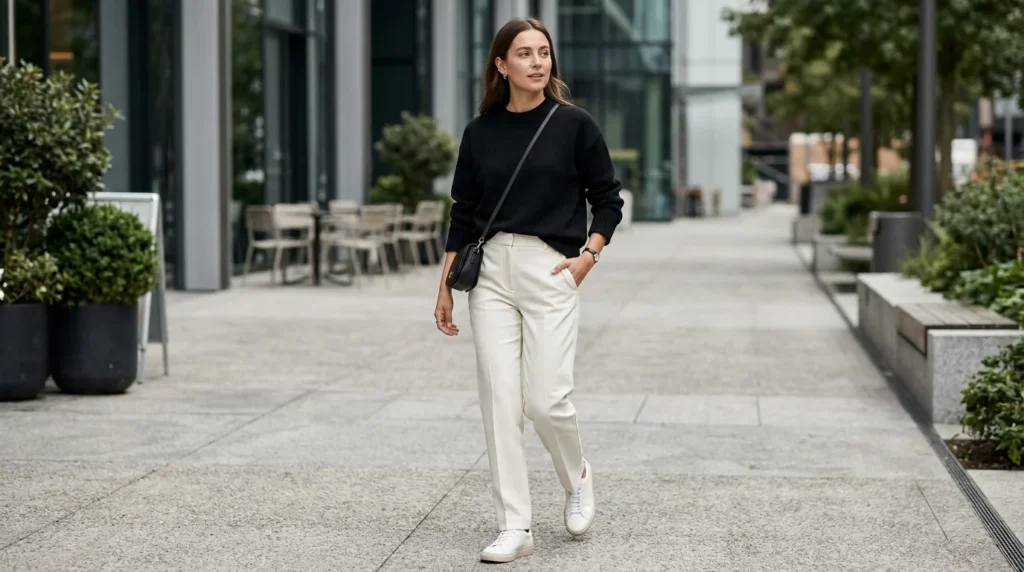
A good fit should allow enough movement in your shoulders and arms without losing its intended shape. On a regular design, shoulder seams usually sit near your natural shoulder. Dropped seams are normal on intentionally oversized pieces.
Check the hem length before deciding whether a style suits your wardrobe. Shorter shapes pair easily with high-waisted trousers and skirts. Longer versions work well with straight-leg trousers, jeans, and leggings when the cut allows.
Sleeves also deserve attention because excess fabric can affect layering. Cuffs should remain comfortable beneath a coat or jacket. If sleeves bunch heavily, the garment may feel awkward to wear day to day.
What Should You Pay in the UK?
Current UK retail listings show a wide spread between basic knits and premium fibres. Affordable everyday styles can start below £20, while wool and designer pieces can exceed £100. Price alone still does not tell you how often you will wear the item.
| Budget | What you can commonly expect |
|---|---|
| Under £25 | Acrylic, cotton blends, basic crew necks, fashion-led styles |
| £25–£60 | Better fabric choices, varied necklines, stronger everyday selection |
| £60–£120 | More wool, merino options, premium finishes, selected brands |
| £120+ | Cashmere, designer labels, specialist wool, luxury construction |
Spend more when the fabric and construction support how often you expect to wear it. A simple piece worn twice weekly can offer better value than a distinctive knit worn twice yearly. Check seams, ribbing, shape, and washing instructions before comparing prices.
Seasonal sales can make higher-quality fibres more accessible. Compare the reduced price with similar garments rather than focusing on the original ticket. A discount matters only if the item fits your wardrobe.
7 Easy Ways to Style a Dark Knit
A neutral knit becomes useful because the surrounding pieces can change its character. Start with clothing you already own before buying new accessories. These seven combinations cover casual days, workwear, evenings, and colder UK weather.
- Blue jeans and trainers: Add straight-leg denim and simple white or dark trainers for an easy weekend outfit.
- Grey trousers and loafers: Choose tailored trousers for work or a smarter daytime look.
- Black trousers and boots: Mix different textures so the outfit has visible depth.
- Midi skirt and ankle boots: A satin, pleated, or wool skirt creates contrast with simple knitwear.
- White shirt underneath: Let the collar and cuffs show for a sharper layered finish.
- Wide-leg trousers and a long coat: Keep the jumper neat to keep proportions balanced.
- Mini skirt and tights: Add opaque tights and boots during colder months for a practical seasonal combination.
If you enjoy adding richer colour, Pageify’s burgundy tights styling guide offers several cold-weather combinations. Deep wine shades work especially well beside dark neutral knitwear. The pairing introduces colour without requiring a bright top.
Accessories can transform the same outfit without changing the core pieces. Pageify’s flat back earrings guide covers understated jewellery suited to everyday wear. Small metal details can add interest when the rest of an outfit remains simple.
What Colours Work Best With It?
Grey is one of the easiest partners because it keeps the outfit understated. Light grey creates more contrast, while charcoal produces a darker tonal combination. Both work with smart trousers, wool coats, and casual denim.
Cream and beige make a useful alternative when you want more visible contrast. These colours can soften an outfit without making it bright. Tan, camel, and oatmeal shades also sit comfortably beside darker knitwear.
Navy and blue denim create another reliable combination. Mid-blue jeans keep the result casual, while navy tailored trousers feel more polished. You can also add burgundy, forest green, or muted red through smaller accessories.
Should You Choose Regular, Slim, or Oversized?
A regular fit is the strongest all-purpose choice for most wardrobes. It offers enough room for movement while still fitting easily under a coat. It also works with both relaxed and tailored bottoms.
Slimmer styles suit smarter outfits and fine-gauge fabrics. They sit cleanly beneath blazers and structured jackets. Make sure the fabric does not pull across your chest or arms when you move.
Oversized cuts work best when their extra volume appears deliberate. Pair them with straighter or more fitted bottoms if you want clearer proportions. If you enjoy experimenting with silhouettes, Pageify’s dress shopping tips also explain why knowing your preferred shape helps narrow choices.
Our Verdict: Which Type Is the Best All-Round Choice?
For most UK wardrobes, a regular-fit crew neck in cotton, merino, or a practical wool blend is the strongest all-round option. The shape works across casual, smart, and layered outfits. A medium weight also gives you more months of useful wear.
Choose pure wool when warmth is your main concern. Choose cotton when easy layering and transitional use matter more. An oversized synthetic knit can still be a good budget option when you prefer its shape and feel.
The best purchase is not automatically the most expensive garment. It is the one that fits correctly and works with clothing you already wear. Aim for enough versatility that you can create several outfits without buying extra pieces.
How to Keep Dark Knitwear Looking Good
Always start with the care label because fibres require different treatment. Some cotton and synthetic garments can be machine washed. Wool, cashmere, and mixed fibres may need gentler temperatures, specialist cycles, or hand washing.
Wash knitwear only as often as its condition requires. Repeated washing can increase wear, fading, and fibre stress. Airing a garment between wears can help when it is clean but needs refreshing.
Drying technique also matters because wet knitwear can stretch under its own weight. Some pieces should dry flat rather than hanging from a line. Store folded knits, as hangers can distort their shoulders.
Pilling can appear where fibres rub against coats, bags, or each other. A suitable fabric comb can remove surface pills from compatible garments. Work gently and follow the garment maker’s care advice.
Common Buying Mistakes to Avoid
Buying by size alone can lead to disappointing proportions. Two garments with the same label may have different lengths, shoulder widths, and sleeve widths. Check measurements and product photographs whenever the retailer provides them.
Another mistake is choosing a thick garment without considering outerwear. A chunky knit may look appealing but feel uncomfortable beneath your usual coat. Consider the full winter outfit before choosing its weight.
Avoid paying extra for fibre names without reading the full composition. A garment described as wool may still contain several other fibres. The complete percentage breakdown gives you a better basis for comparison.
Black Jumper FAQs
Is a black jumper suitable for work?
Yes, a simple dark knit can work well in many workplaces. Choose a fine- or medium-gauge knit with a clean fit. Pair it with tailored trousers, a skirt, or a collared shirt.
What trousers look good with one?
Grey, beige, navy, blue denim, and black trousers are easy choices. Lighter trousers create stronger contrast, while charcoal produces a darker outfit. Choose footwear that matches the trousers’ formality.
Can you wear black with black?
Yes, but varying texture helps separate each garment visually. Try smooth trousers with a ribbed or brushed knit. Slight differences in shade can also prevent the outfit from appearing flat.
Is wool better than cotton?
Neither fibre is better for every situation. Wool provides stronger insulation, while cotton often feels lighter and works better in transitional weather. Your preferred care routine should also influence the choice.
How often should knitwear be washed?
Wash according to the garment’s condition and care instructions. Knitwear does not always need washing after every wear. Airing it between uses can reduce the need for unnecessary laundering.
What should I look for when buying a black jumper?
Check the fabric, fit, neckline, weight, construction, and care instructions before paying. Think about which trousers, skirts, jackets, and coats will work with it. A versatile choice should fit several existing outfits, not just one look.
Build More Outfits From One Reliable Knit
A black jumper works hardest when its fabric and shape suit your real routine. Choose the neckline, weight, and fibre based on how you already dress. Then test it with several outfits before deciding whether it deserves a place in your wardrobe.
A simple crew neck is a dependable starting point for most people. Wool adds warmth, while cotton provides easier year-round flexibility. Once the basics are right, use trousers, skirts, footwear, jewellery, and seasonal accessories to change the look.
You do not need several versions to create variety. One well-chosen knit can move from casual weekends to office layers and evening outfits. Browse Pageify’s fashion guides for more practical UK styling ideas.