
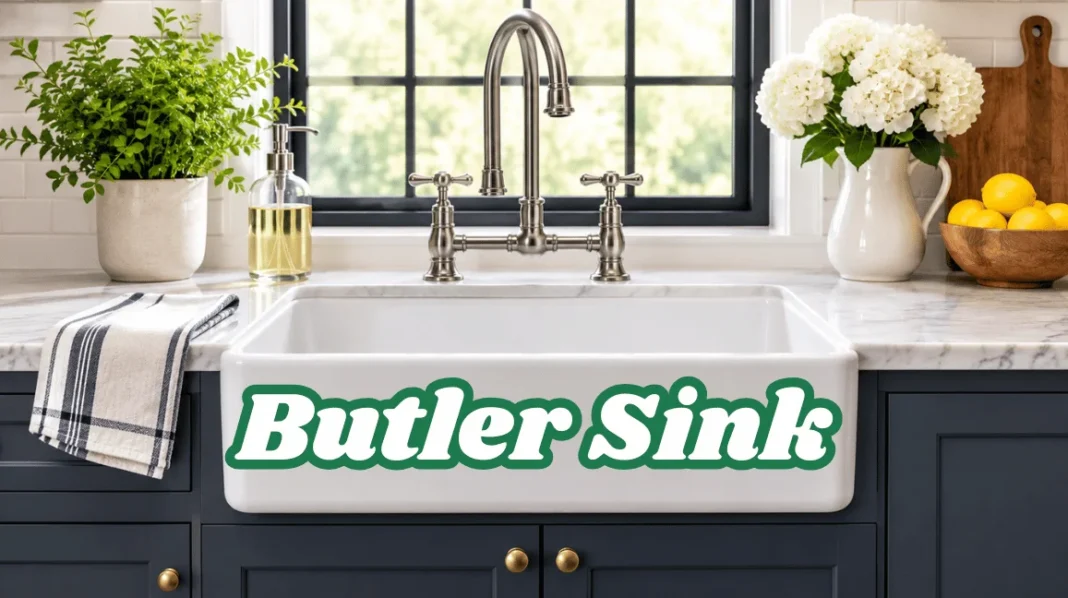
A butler sink is a deep, exposed-front kitchen sink that combines generous capacity with a distinctive traditional appearance. Most UK models use glazed ceramic or fireclay, although stainless-steel versions are also available. Before buying one, check the cabinet width, bowl size, support requirements, worktop design, taps, waste and overflow arrangement.
Quick answer: A butler-style sink suits homeowners who want a deep bowl, a visible apron front, and a strong kitchen focal point. Measure the cabinet before choosing a size, and confirm whether the model needs an overflow waste. Proper support beneath the bowl is essential because ceramic versions can be heavy.
| Buying consideration | What to check |
|---|---|
| Typical widths | Around 595mm for compact single bowls; larger designs approach 800mm or more |
| Common material | Fireclay or glazed ceramic |
| Bowl options | Single, double and some divided configurations |
| Cabinet | Must accommodate the sink and provide strong support |
| Tap position | Usually fitted behind the bowl or into a suitable tap ledge |
| Overflow | Depends on the individual model |
| Style | Farmhouse, Shaker, traditional and selected modern kitchens |
| Worktop planning | Cut-outs and finished edges must suit the chosen installation |
UK retailers currently sell both compact single-bowl designs and larger double-bowl models. Around 600mm and 800mm cabinet formats appear frequently across current ranges. Exact dimensions still vary, so use the manufacturer’s specifications for your final measurements.
What Is a Butler Sink?
This style has a deep rectangular bowl with its front face visible below the worktop. That exposed face is often called an apron front. The design creates a prominent feature rather than hiding the sink inside a conventional worktop cut-out. Traditional examples are closely associated with glazed ceramic and fireclay. These materials give the bowl its familiar smooth finish and substantial feel.
Modern ranges can also include different colours, fluted fronts, double bowls and stainless-steel alternatives. The deep bowl provides useful space for washing large pans, baking trays and bulky kitchen items. Its appearance also suits kitchens where cabinetry forms part of the overall design. Shaker doors, timber details and stone worktops are common companions. For another kitchen-planning consideration, Pageify’s guide to breakfast bar ideas for UK kitchens guides practical sizing and layout decisions.
Butler Sink vs Belfast Sink: What Is the Difference?
Modern UK retailers often use the two names interchangeably. Historically, however, the distinction centred largely on the overflow arrangement. A Belfast design traditionally included an overflow, while a London-style butler version commonly did not. Modern products do not always follow those historical rules. Some products marketed under either name may include an overflow. Buyers should therefore check the specification instead of relying solely on the product title.
| Feature | Traditional butler style | Traditional Belfast style |
|---|---|---|
| Exposed front | Yes | Yes |
| Deep bowl | Yes | Yes |
| Typical material | Ceramic or fireclay | Ceramic or fireclay |
| Traditional overflow | Usually absent | Usually present |
| Modern variations | Common | Common |
The practical buying decision comes down to dimensions, waste position, and installation requirements. During a renovation, bowl depth and cabinet compatibility matter more than the basin’s look. The product drawing should settle any uncertainty before worktops are cut.
What Size Should You Choose?
Start by measuring the available cabinet rather than choosing a sink by appearance. Current UK ranges commonly include models around 595mm wide and larger models around 795mm. Double-bowl designs normally need more cabinet space than compact single bowls. Do not assume a nominal 600mm model will measure exactly 600mm. Fireclay products can have manufacturing tolerances, while cabinet construction also affects usable space.
Give the installer the actual product specification before cabinetry or worktops are finalised. Depth deserves equal attention because a larger bowl occupies more space inside the cabinet. Waste pipes, traps and storage must all fit beneath it. A deep sink can reduce the usable storage below compared with a shallow inset design. Think about how you use the kitchen before choosing a second bowl. One large bowl gives uninterrupted space for trays and pans. Two bowls can separate washing, rinsing, and food preparation tasks.
What Materials Work Best?
Fireclay remains the material most strongly associated with this sink style. It offers the glossy appearance many homeowners expect from farmhouse and Shaker kitchens. Its substantial construction also makes proper cabinet support essential. Ceramic surfaces are straightforward to wipe clean after normal kitchen use.
Heavy cookware can still damage some glazed surfaces. Protective grids or mats may help if large cast-iron pans are used regularly. Stainless steel gives the same exposed-front concept a more contemporary appearance. It can suit industrial, modern,n or transitional interiors better than classic white ceramic. The material choice should match both your kitchen style and cleaning preferences.
How Is a Butler Sink Fitted?
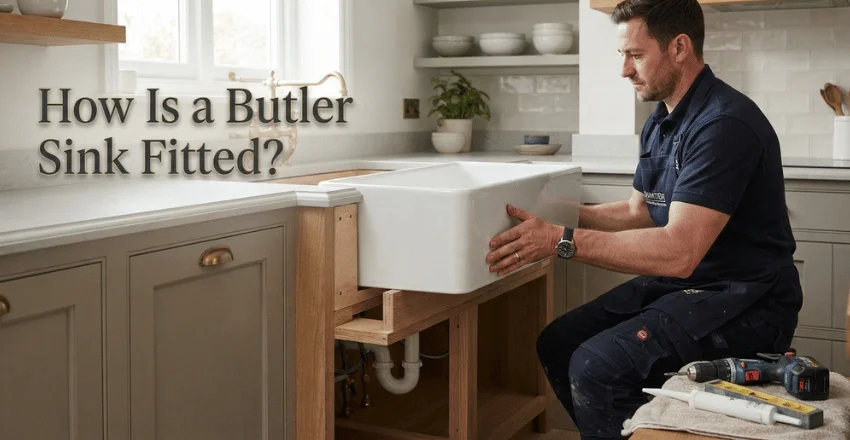
These sinks need reliable support from beneath because the worktop should not carry their full weight. The supporting shelf or frame must also account for water inside the bowl. Current UK fitting guidance consistently highlights this requirement for heavy ceramic models. The visible front usually requires designing or modifying the cabinet around the sink. The worktop then meets the upper edges, following the manufacturer’s approved fitting method. Some installations position the rim slightly below or close to worktop level. Taps need planning before installation begins. Many farmhouse-style bowls have no conventional tap hole in the sink itself. The mixer may therefore need to be mounted through the worktop, a tap ledge, or the wall behind. Waste fittings should also be ordered according to the sink specification. Check the waste size, overflow requirement,t and plumbing position before installation. Doing this early reduces the chance of discovering an incompatible fitting after the sink arrives.
How Much Does One Cost in the UK?
Prices vary widely because material, dimensions, manufacturing method, and brand all affect the final figure. Current UK listings show examples beginning around the high £200s and £300s. Premium fireclay models and larger specialist designs can cost considerably more. The purchase price is only part of the budget. Cabinet alterations, worktop fabrication, plumbing, and new taps can increase the installed cost. Replacing a sink in an existing kitchen may require more adjustment than a sink planned during a new installation. Ask your fitter to review the model before ordering expensive worktops. This helps identify cabinet changes and tap requirements early. It also gives you a more realistic project budget.
Pros and Cons to Consider
The strongest advantage is the combination of capacity and visual impact. A large bowl handles bulky cookware while the exposed front creates a recognisable kitchen feature. The design also works across many traditional and transitional interiors. Its main disadvantages are weight, installation, and space. Heavy ceramic designs require strong support, while deep bowls can reduce cupboard storage. Bespoke worktop or cabinet work can also increase fitting costs. Pros.
* Deep bowl for pans, trays and larger items * Strong farmhouse or Shaker appearance * Single and double-bowl choices * Ceramic, fireclay and alternative material options * Can become a focal point in the kitchen
Cons.
* Heavy models need substantial support * Cabinet modification may be required * Deep bowls reduce storage beneath the sink * Worktop fabrication needs careful measurement * Ceramic surfaces can be vulnerable to severe impacts
For food-preparation planning, Pageify also covers custom-size chopping boards for UK kitchens. Matching preparation accessories to available workspace can make a deep sink easier to live with.
Which Style Works With Your Kitchen?
White fireclay works naturally with painted Shaker units, timber surfaces and traditional hardware. It can also provide useful contrast in darker kitchens. The sink does not need to make the entire room feel traditional. Modern schemes can pair an apron-front bowl with simple cabinetry and understated fittings. Stainless steel offers another route when white ceramic feels too classic. Matt taps and restrained worktops can also update the look. Keep surrounding storage practical because the sink already creates a strong visual feature. Pageify’ss spice rack buying guide provides ideas for organising frequently used ingredients. Good nearby storage helps keep the worktop around the washing area from getting crowded.
What to Check Before You Buy
Measure the cabinet internally and externally before ordering. Then compare those measurements with the manufacturer’s technical drawing. Do not use a retailer’s rounded product name as your installation measurement. Confirm these points before checkout.
* Exact external width, depth and height * Minimum cabinet width * Bowl configuration * Waste position and size * Overflow or no overflow * Tap position * Included accessories * Required support * Worktop compatibility * Delivery access and product weight
Ask whether the waste, overflow kit,t or accessories are supplied with the sink. Some current UK ranges sell certain waste components separately. Checking the box contents early can prevent installation delays.
Our Verdict
Choose this sink style when bowl capacity and visible character matter more than maximum cupboard space. A well-planned ceramic model can suit traditional kitchens without looking old-fashioned. Stainless-steel and simplified designs can work equally well in more modern rooms. For most buyers, the smartest approach is to select the cabinet size first. Then compare compatible sinks by bowl layout, overflow, material, and installation requirements. That process reduces costly changes once cabinetry and worktops have been ordered.
Butler Sink FAQs
Does a butler sink need an overflow?
Not every model includes one, so check the individual specification carefully. The traditional distinction associates an overflow more closely with Belfast designs. Modern product naming is inconsistent, making the technical drawing more reliable than the name.
Can you fit one into a standard kitchen cabinet?
Sometimes, but the cabinet must have suitable dimensions and adequate structural support. The exposed front may also require changes to the cabinet fascia. An installer should confirm compatibility before the worktop is fabricated.
Are these sinks only suitable for traditional kitchens?
No, because the surrounding materials determine much of the finished appearance. Simple cabinetry and modern taps can create a more contemporary result. Stainless-steel apron-front designs push the look further away from traditional farmhouse styling.
Is a single or double bowl better?
A single bowl provides more uninterrupted space for large cookware. A double bowl separates tasks and can make rinsing easier. Your cabinet width and washing habits should determine the better option.
Can laminate worktops be used?
Installation details depend on the sink and the worktop construction. Exposed or vulnerable worktoedges need appropriateee moisture protection.n Always follow the worktop supplier’s and sink manufacturer’s fitting instructions.
Final Buying Checklist
A successful installation starts with measurements, not style alone. Check the cabinet, support, worktop, tap and waste before committing to a particular model. Those decisions matter more than whether a retailer calls the product a Belfast, farmhouse or apron-front design. Once the practical requirements are settled, choose the finish that suits your kitchen. Compare the total installed cost, not just the sink price. A well-planned purchase can deliver generous washing space without creating expensive fitting surprises.