
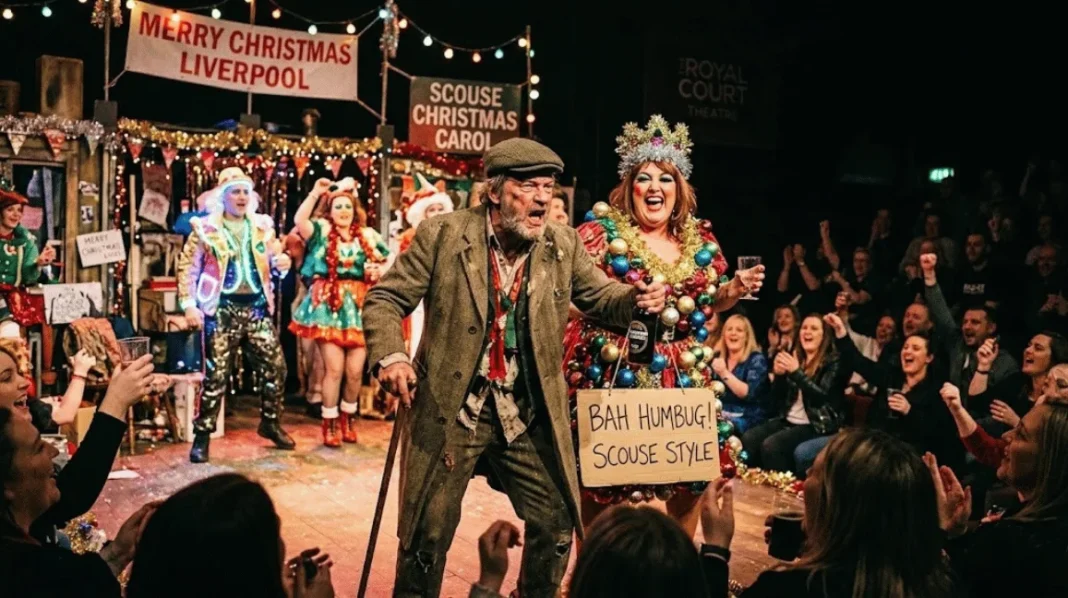
The Scouse Christmas Carol gave Dickens a distinctly Liverpool makeover at the Royal Court Theatre. It mixed a murder mystery with adult comedy, live music, and familiar local humour. The production ran during the 2025 festive season and finished in January 2026.
This was never intended as a traditional Victorian retelling for young children. The Royal Court built the show for an adult audience familiar with its Christmas comedy style. Its result was cheeky, musical, fast-moving, and proudly rooted in Liverpool.
The Royal Court production reworked Dickens through a Liverpool murder mystery, rather than retelling the original story scene by scene. Scrooge became a suspect after Jacob Marley’s death. Comedy, local references, strong language, song-and-dance numbers, and a live band drove the show.
| Key detail | Information |
|---|---|
| Production | The Scouse Christmas Carol |
| Venue | Liverpool’s Royal Court Theatre |
| Original run | 7 November 2025 to 17 January 2026 |
| Extended closing date | 24 January 2026 |
| Writer | Kevin Fearon |
| Style | Adult festive comedy and musical murder mystery |
| Setting | A Liverpool-flavoured version of Dickensian Britain |
| Age guidance | 16+ advisory for strong language |
| Main elements | Comedy, live music, dance, local references and murder mystery |
| 2026 Royal Court Christmas show | The Scouse Nativity |
The original advertised run covered 7 November 2025 through 17 January 2026. Strong ticket demand led to an extra week. Contemporary theatre listings recorded the extended closing date as 24 January 2026.
What Was the Scouse Christmas Carol About?
The production began with a major change to the familiar Dickens story. Jacob Marley was dead, but his death had become a mystery rather than a supernatural backstory. His widow wanted answers, and Ebenezer Scrooge became the obvious suspect.
That premise gave writer Kevin Fearon room to reshape familiar characters. The Scratchitt family and Mr Kettiwig joined the scheme surrounding Scrooge. Ghostly ideas remained, but the plot leaned heavily towards farce and comic deception.
The production still kept the central idea of Scrooge facing his behaviour. It simply approached that lesson through jokes, music, romance, and criminal suspicion. Reviewers also recognised a generosity theme beneath the production’s louder comedy.
How Different Was It From Dickens’ A Christmas Carol?
Dickens’ novella uses supernatural visitors to confront Scrooge with his past, present, and possible future. The Royal Court version treated that structure much more freely. Its creators used the original characters as ingredients for a new Liverpool comedy.
The most obvious change involved Jacob Marley and his widow. Marley’s death became the starting point for a murder mystery involving Scrooge. That shift allowed the production to create new motives, relationships, and comic situations.
The tone also separated the show from many family Christmas adaptations. Strong language, risqué jokes, local football references, and Liverpool culture appeared throughout. One contemporary review described it as an adult panto packed with Scouse humour.
Who Was in the Cast?
The confirmed cast included Helen Carter, Paul Duckworth, Lindzi Germain, Adam McCoy, and Lydia Rosa Morales-Scully. John-Paul Birss, Keddy Sutton, Jhanaica Van Mook, and Lenny Wood completed the announced company. The Royal Court creative team began rehearsals before the November opening.
Lindzi Germain had particular significance for regular Royal Court audiences. Culture Liverpool reported that she had appeared in every Royal Court Christmas production since 2010. That history linked the new show with a long-running Liverpool festive tradition.
Jhanaica Van Mook played Clara Scratchitt after appearing in Red or Dead earlier in 2025. Liverpool Noise described Clara as a family-minded niece within the reworked story. Van Mook also highlighted the production’s mixture of community, music, and Liverpool identity.
Why Live Music Mattered So Much
Music was not simply added between scenes. A four-piece live band remained part of the production throughout. Reviews highlighted both the musicians and the cast’s vocal performances.
Songs helped turn the production into something closer to a Christmas night out. Reviewers mentioned numbers associated with artists including Meat Loaf, Bon Jovi, Adele, and the Bee Gees. The musical choices supported the production’s deliberate distance from a traditional Dickens adaptation.
The staging also gave the show a larger theatrical feel. Reviews praised Ellie Light’s set and its changing locations. Choreography, costumes, puppetry, and the visible band helped create a busy stage throughout the performance.
Was the Show Suitable for Children?
The production was primarily aimed at adults and older teenagers. Listings carried a 16+ age advisory because of strong language. Children under 12 were not permitted in the auditorium.
That distinction matters because “Christmas Carol” can suggest a family production. The Royal Court show used bawdy jokes, innuendo, profanity, and adult humour instead. Families seeking a conventional Dickens story would therefore have encountered a markedly different experience.
The age guidance also reflected the venue’s established festive style. Royal Court Christmas shows tend to combine local comedy with music and a night-out atmosphere. This production followed that pattern rather than competing directly with a children’s pantomime.
How Did Critics Respond?
Critics generally recognised the cast’s energy and the music. The Guardian described an irreverent production built around slapstick, puns, music, and a highly unconventional Scrooge. Its review also suggested the amount of profanity sometimes competed with the jokes.
Other Liverpool-focused reviews were warmer about the complete experience. Good News Liverpool praised the adaptation, live music, staging, and cast performances. Its reviewer also noted that early reliance on strong language eased as the production gathered pace.
Audience demand supplied another useful measure of its popularity. Culture Liverpool reported before opening that it was already the Royal Court’s fastest-selling festive show in 15 years. The extra week later provided further evidence of strong ticket demand.
Why the Royal Court Christmas Show Matters in Liverpool
The Royal Court began its annual festive run with Merry Ding Dong in 2010. New Christmas productions followed each year, building a recognisable local tradition. The venue combines Liverpool humour, music, and familiar stories rather than staging straightforward seasonal adaptations.
That formula helps explain why the Dickens reworking fitted the theatre. Audiences already knew to expect regional references and deliberate silliness. The familiar source story gave the creative team a framework to reshape.
Liverpool also staged numerous alternative Christmas productions that season. They ranged from mainstream musicals to family pantomimes and other festive theatre. The Royal Court occupied a distinct adult-comedy position within that wider programme.
For another British festive tradition, Pageify readers can also explore the guide to the best mince pies. The history behind seasonal food shows how older traditions frequently change with modern tastes. Liverpool’s theatre culture applies a similar instinct to familiar Christmas stories.
Ticket Prices and Dining During the 2025 Run
Historic ticket listings showed different starting prices as the sales period developed. Culture Liverpool advertised seats from £18 before the production opened. A later Uncover Liverpool listing showed admission from £23.
Stalls customers could also add food before selected performances. The archived event listing recorded £14 for one course and £20 for two courses. Diners were advised to arrive at least one hour before the performance.
Those prices should now be treated as historical information. The production has closed, so they no longer reflect current Royal Court ticket prices. Anyone planning a new visit should check the theatre’s current programme before travelling.
What Is the Royal Court Christmas Show for 2026?
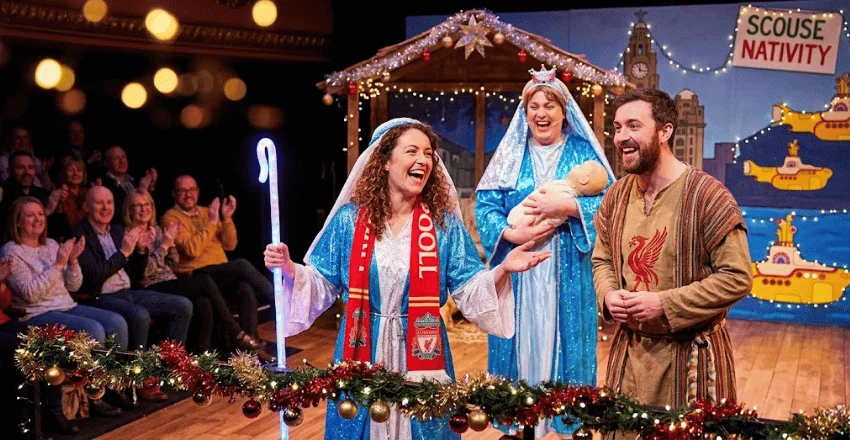
Anyone searching for Christmas 2026 tickets should look for The Scouse Nativity instead. The Royal Court announced its return after the record-breaking previous Christmas season. The new run is scheduled from 6 November 2026 to 16 January 2027.
Kevin Fearon also wrote that production, which was first staged in 2017. The theatre announced tickets starting at £19 when public sales opened in March 2026. Availability and prices may change as performances sell out.
That distinction prevents an easy search mistake. Pages about previous productions remain online even after performances end. Check the year before using an old event listing to plan your festive night out.
Pageify also covers British performers with substantial stage and screen careers. Readers interested in that wider subject can see its Ben Miller film and television guide. There is also a Nicholas Farrell career guide for more British entertainment reading.
Why the Production Stood Out
The central idea was simple enough to understand immediately. Take a story almost everyone knows, change its plot, and filter it through Liverpool humour. That gave the audience both familiarity and surprise.
The murder-mystery element created the clearest point of difference. Live music then made the production feel less like a literary adaptation. Local jokes ensured the humour belonged specifically to the Royal Court and its audience.
Its commercial performance also made the production significant for the venue. Pre-opening reports called it the fastest-selling Royal Court festive production in 15 years. A later extension pushed the run into an additional January week.
Frequently Asked Questions
Is the Scouse Christmas Carol still running?
No, the production is no longer running at Liverpool’s Royal Court. Its 2025 season was extended through 24 January 2026. The venue’s announced festive production for late 2026 is The Scouse Nativity.
Where was the show performed?
The production played on the main stage at Liverpool’s Royal Court Theatre. The venue is on Roe Street in Liverpool city centre. It has hosted its own locally focused Christmas productions since 2010.
Was it a traditional version of A Christmas Carol?
No, the show substantially rewrote Dickens’ plot. Jacob Marley’s death became a murder mystery involving his widow and Scrooge. Music, Liverpool references, adult jokes, and new character relationships moved it further from the original.
Who wrote the production?
Kevin Fearon wrote the Royal Court adaptation. His version prioritised comic invention over close fidelity to Dickens. He also wrote the returning Scouse Nativity production announced for Christmas 2026.
Was the production a pantomime?
It shared several panto qualities, including broad comedy, music, spectacle, and audience-friendly humour. Contemporary coverage often described it in panto terms. Its murder-mystery structure and Dickens source material still gave it a separate identity.
The Last Word
The production succeeded by understanding what its Royal Court audience expected. It provided Liverpool humour, live musicians, big performances, and an aggressively loose approach to Dickens. Strong ticket sales showed that combination found a sizeable festive audience.
Its run has ended, so visitors should not use old 2025 listings as current booking information. Christmas 2026 brings a different Royal Court production and a new set of dates. Checking the current programme before booking will prevent confusion.
For Pageify.uk, the story remains useful as a record of a notable Liverpool Christmas production. It also explains why old search results still attract interest after the final curtain. Readers planning the next festive season can now move from the past production to the Royal Court’s current programme.